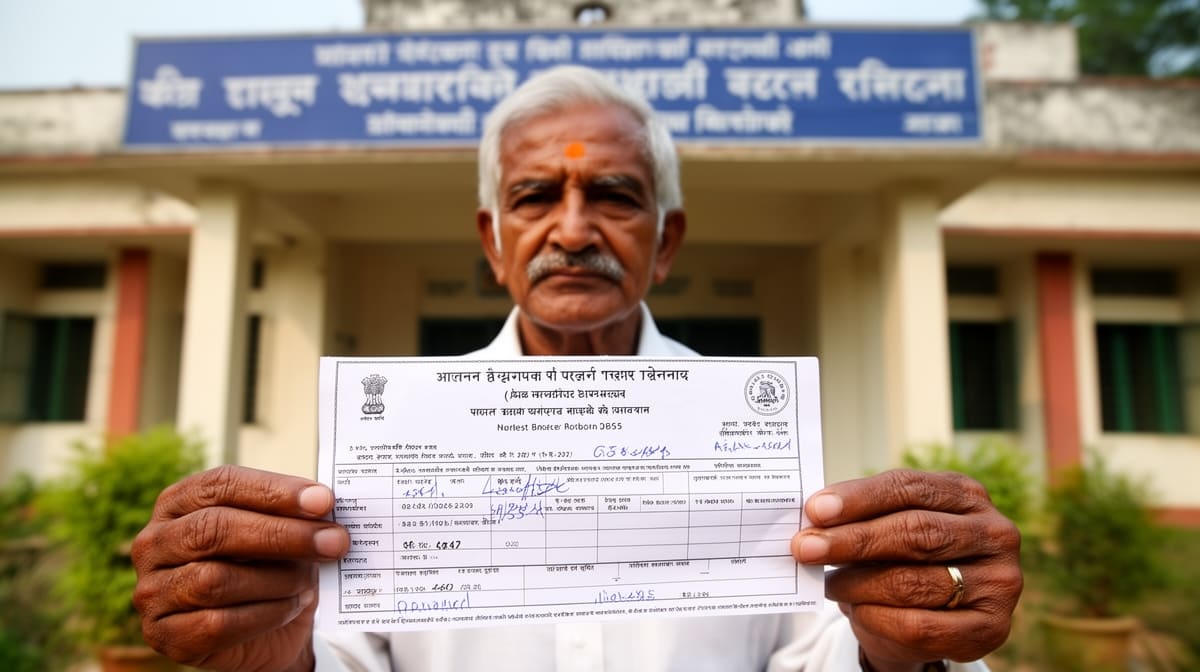
The Calcutta High Court has reaffirmed that gratuity is not a discretionary benefit but a statutory right due immediately upon retirement. The judgment delivers a clear directive against delayed or installment-based payments, reinforcing the principle that public employers cannot impose procedural delays on statutory entitlements.
Background & Facts
The Dispute
The petitioner, Sk. Tabrejulla, served as a clerk in Kontai Municipality and superannuated on 31st July 2024. Upon retirement, he was entitled to a retiring gratuity of Rs. 7,30,000/- as determined by the Directorate of Pension, Provident Fund and Group Insurance through a digitally signed payment order dated 11th December 2024. Despite this formal recognition, the municipality withheld the full amount, making only partial payments of Rs. 50,000/- and another Rs. 50,000/- during the pendency of the writ petition.
Procedural History
- 31 July 2024: Petitioner retired from service
- 11 December 2024: Official pension and gratuity order issued by Directorate
- 2025: Writ petition filed before Calcutta High Court seeking full payment
- 05 February 2026: Hearing conducted before Justice Raja Basu Chowdhury
Relief Sought
The petitioner sought immediate disbursement of the entire outstanding gratuity amount of Rs. 6,30,000/- (after partial payments), along with statutory interest from the date of retirement.
The Legal Issue
The central question was whether gratuity payable under the Payment of Gratuity Act, 1972 can be disbursed in installments by a public employer, or whether it must be paid in full immediately upon retirement.
Arguments Presented
For the Petitioner
The petitioner’s counsel argued that gratuity is a statutory right crystallized upon retirement, not a welfare measure subject to administrative discretion. He cited State of Punjab v. Jagjit Singh to emphasize that delay in payment violates the principle of just and fair procedure under Article 21. He further contended that partial payments made during litigation do not absolve the employer of its obligation to pay the full amount with interest from the due date.
For the Respondent
The municipality acknowledged the petitioner’s entitlement but requested installment payments citing budgetary constraints. It relied on internal administrative instructions to justify staggered disbursement, arguing that large lump-sum payments strain municipal finances. However, it did not dispute the quantum of gratuity or the legality of the payment order.
The Court's Analysis
The Court examined the nature of gratuity under the Payment of Gratuity Act, 1972, particularly Section 4(1), which mandates that gratuity shall be payable on termination of employment after five years of service. The Court held that the statutory language leaves no room for discretion: gratuity is not a loan, advance, or conditional benefit - it is a final settlement due on the day of retirement.
"In matters pertaining to payment of gratuity, ordinarily no installments can be allowed."
The Court rejected the municipality’s financial hardship argument, noting that statutory obligations cannot be deferred on administrative convenience. It distinguished this from discretionary pensions or bonuses, emphasizing that gratuity is a statutory debt. The Court further held that interest at 10% per annum is mandatory under Section 7(3) of the Act, which provides for interest on delayed payments, and that such interest must run from the date the gratuity became due - i.e., the date of retirement.
The Court also noted that the municipality had already acknowledged the liability through the official payment order, making any further delay legally indefensible.
The Verdict
The petitioner won. The Court held that gratuity must be paid in full immediately upon retirement, and no installment payments are permissible. The municipality was directed to disburse the outstanding amount of Rs. 6,30,000/- along with statutory interest at 10% per annum from 31st July 2024, within four weeks.
What This Means For Similar Cases
Gratuity Is Not Subject to Administrative Discretion
- Practitioners must now treat gratuity claims as absolute statutory debts, not pending administrative approvals
- Any delay beyond retirement date triggers automatic liability for interest under Section 7(3)
- Municipalities and public bodies cannot invoke budgetary constraints to justify non-payment
Installment Payments Are Legally Invalid
- Courts will not permit staggered disbursement even if requested by the employer
- Petitioners in similar cases should seek immediate writ relief, not negotiate installments
- Partial payments made during litigation do not extinguish the principal liability or interest accrual
Statutory Interest Is Mandatory, Not Discretionary
- Interest at 10% is not a remedy to be granted at court’s discretion - it is a statutory right
- The period for interest calculation begins on the date of retirement, not the date of the payment order
- This applies even if the employer was unaware of the liability or delayed processing