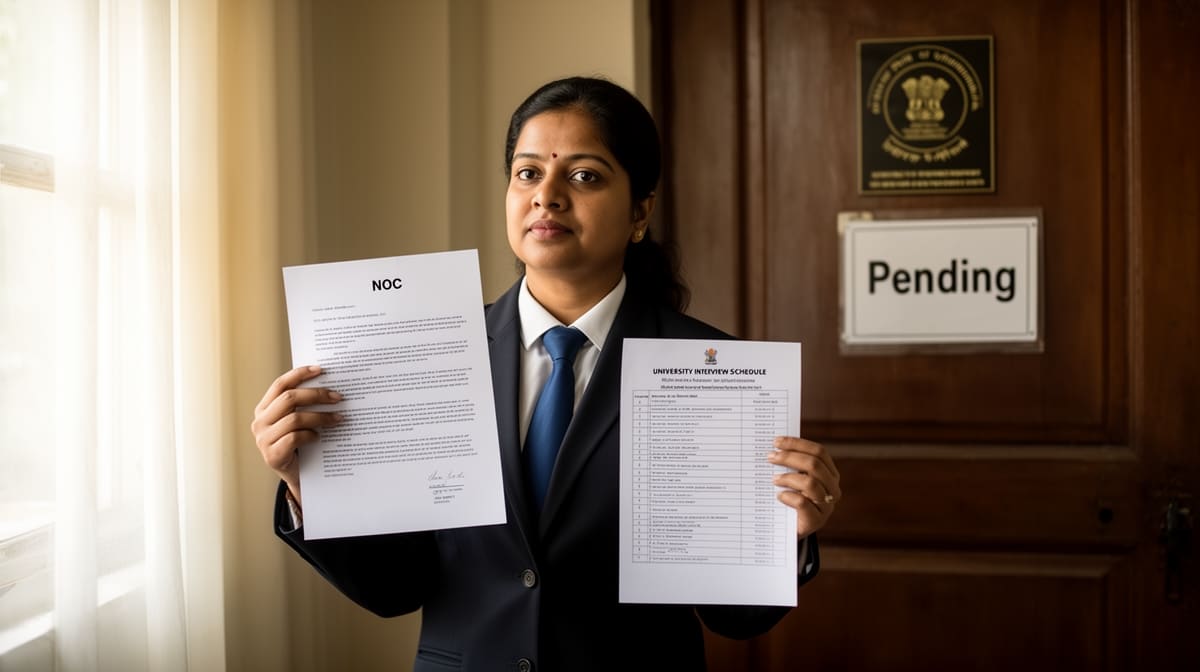
A landmark ruling by the Rajasthan High Court has clarified that government employees need not obtain a No Objection Certificate to apply for competitive posts - mere written intimation to their employer suffices. This decision reinforces the principle that recruitment conditions must be strictly construed as published, and cannot be expanded by administrative discretion.
Background & Facts
The Dispute
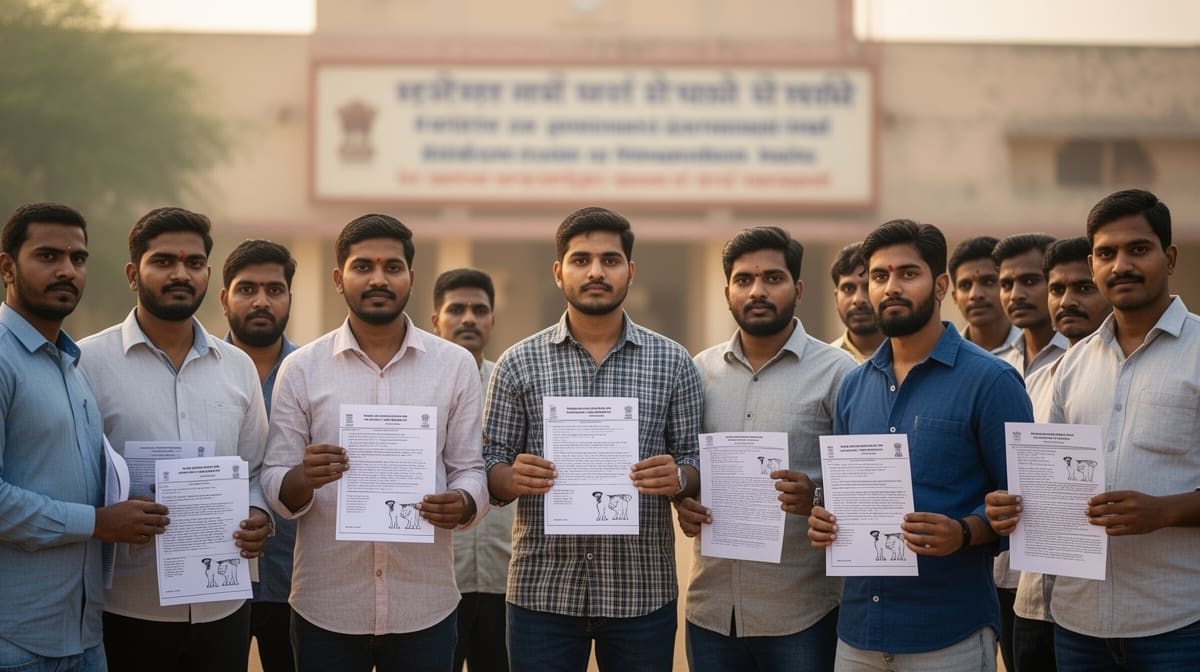
The dispute arose from a 2018 recruitment advertisement issued by the Government of Rajasthan for the post of Pre Primary Education Teacher in Anganwadi Centres. Condition No.14 of the advertisement, in Hindi, required candidates already in government service to inform their employer in writing before applying. The petitioners, all serving Anganwadi workers, complied by submitting written requests for permission or a No Objection Certificate (NOC). When their employers failed to respond, they appeared in the examination, qualified, and were selected.
Procedural History
- August 2018: Recruitment advertisement issued with Condition No.14
- 2018-2019: Petitioners submitted written intimation to their respective authorities
- 2019-2020: Employers remained silent; petitioners appeared and cleared the exam
- 2021: Employers rejected their candidature citing lack of NOC
- 2023: Single Judge of Rajasthan High Court allowed writ petitions, directing authorities to consider their selection
- 2025: State filed appeals challenging the order
Relief Sought
The petitioners sought direction to the State to recognize their selection and issue necessary NOCs for appointment. The State sought to set aside the High Court’s order, arguing that serving employees should not be allowed to compete for posts without formal NOC approval.
The Legal Issue
The central question was whether Condition No.14 of the recruitment advertisement required applicants in government service to obtain a formal No Objection Certificate, or whether mere written intimation to the employer satisfied the condition.
Arguments Presented
For the Appellant
The Additional Advocate General contended that allowing serving employees to compete without NOC would deprive unemployed candidates of fair opportunity. He argued that the State’s silence on the written requests amounted to implied denial, and that NOC was an implied condition for eligibility. He relied on principles of administrative fairness and public interest to justify non-recognition of the petitioners’ candidature.
For the Respondent
The petitioners argued that the advertisement’s language was unambiguous: it required only written intimation, not approval. They cited the doctrine of legitimate expectation and the rule that recruitment conditions must be interpreted strictly as published. They emphasized that their compliance was complete under the stated terms, and that the State’s failure to respond could not be used to impose an additional, unannounced requirement.
The Court's Analysis
The Court undertook a textual analysis of Condition No.14, reproducing the Hindi text verbatim: "सभी आवेदक जो पहले से ही सरकारी नौकरी में है या सरकारी उपक्रमों में नियुक्त है . उन्हें अपने नियोक्ता को इस परीक्षा के लिए आवेदन पत्र प्रस्तुत करने से पूर्व ही लिखित में सूचित करते हुये आवेदन करना चाहिए|" The Court held that the phrase "लिखित में सूचित करते हुये" (inform in writing) was clear and unqualified. There was no mention of "अनापत्ति प्रमाण पत्र" (No Objection Certificate) or any requirement of approval.
"There was no condition to seek a No Objection Certificate and if such certificate is not granted, their candidature will be rejected."
The Court rejected the State’s argument that silence equated to denial, noting that administrative inaction cannot create new eligibility criteria. It emphasized that recruitment processes must be transparent and that candidates must be judged solely on the conditions published. The Court further observed that the State’s failure to respond to written communications did not invalidate the petitioners’ compliance. The principle of audi alteram partem was implicitly invoked: the State could not penalize applicants for its own delay.
The Verdict
The petitioners won. The Court held that written intimation alone satisfies Condition No.14 of the recruitment advertisement, and that no No Objection Certificate is required unless explicitly mandated. The appeals were dismissed, and the Single Judge’s order was upheld.
What This Means For Similar Cases
Written Intimation Is Sufficient Compliance
- Practitioners must advise government employees applying for competitive exams to document written communication to their employer, even if no response is received
- Failure to respond by the employer cannot be used to disqualify a candidate
- Recruitment advertisements must be interpreted literally; implied conditions are invalid
Administrative Silence Cannot Create New Barriers
- Public authorities cannot impose additional eligibility criteria post-application
- Candidates are entitled to rely on the exact wording of published conditions
- Courts will not permit administrative overreach disguised as procedural compliance
Recruitment Transparency Is Non-Negotiable
- All conditions must be explicitly stated in the advertisement
- Ambiguities in recruitment rules must be resolved in favor of the candidate
- This judgment reinforces the doctrine of legitimate expectation in public employment matters