The Calcutta High Court has clarified that the transfer of immovable property by gift deed, even without explicit mention of tenancy rights, automatically confers upon the transferee the legal status of landlord under the West Bengal Premises Tenancy Act, 1997. This holding resolves a long-standing ambiguity regarding the necessity of separate assignment of actionable claims in eviction suits.
Background & Facts
The Dispute
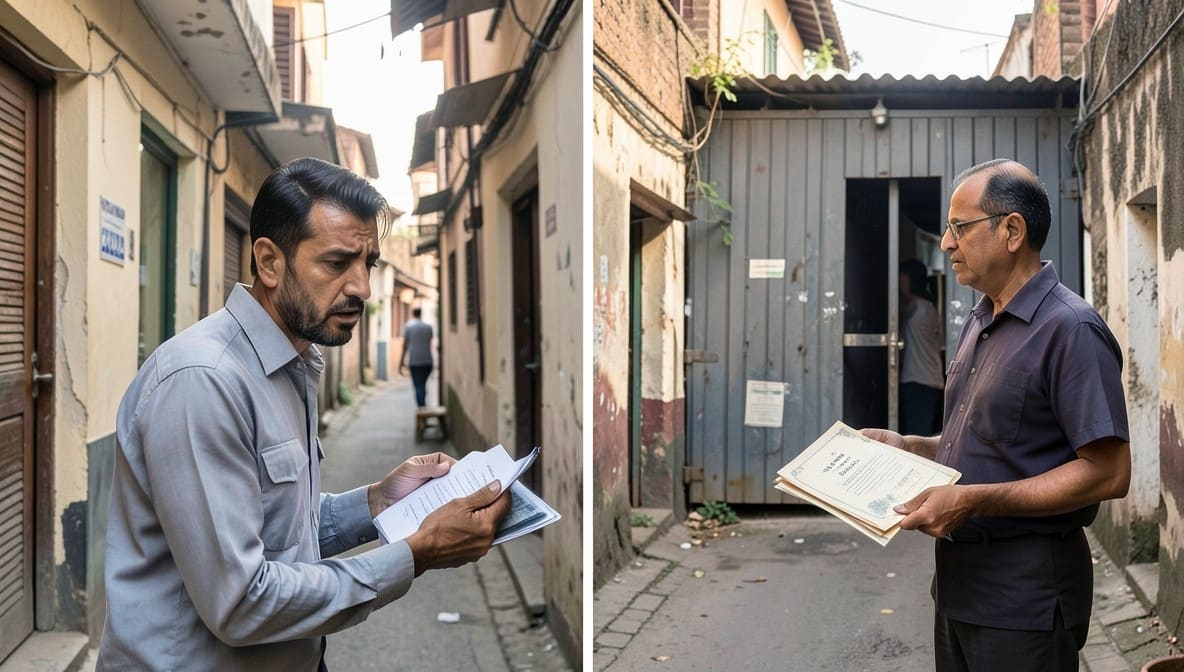
The dispute arose from an eviction suit filed by the respondent, Gobinda Charan Pyne, against the appellant, Krushan Chandra Nayak, for possession of a room with bath and privy situated within a larger property in Kolkata. The respondent claimed ownership through a gift deed executed by his mother, who had acquired her share of a joint family property through an unproduced partition deed. The appellant, son of the original tenant Bhikari Nayak, had been residing in the premises since 1980 and continued to pay rent to the respondent after the death of his parents.
Key Facts
- The original tenant, Bhikari Nayak, died on 26.10.2011.
- His wife, Sita Devi Nayak, died on 22.12.2017.
- The appellant, Krushan Chandra Nayak, is their son and continued to reside in the premises after both parents’ deaths.
- The respondent’s mother acquired a portion of the joint family property through an alleged partition, later gifted to the respondent via a gift deed dated 15.08.2018 (exhibited in suit).
- The gift deed described a property measuring 4 kathas, 3 chitaks and 15 square feet.
- The plaint described the suit property as a single room with bath and privy, bounded on the south and west by the plaintiff’s possession.
- Minor discrepancies existed between the two schedules: the gift deed described the roof as a "tin shed structure", while the plaint described it as "partly tile and partly corrugated".
- The appellant paid rent to the respondent through the Rent Controller, acknowledging him as landlord.
- The appellant’s written statement admitted the deaths of his parents and the payment of rent to the respondent, but did not specifically deny the respondent’s landlordship.
Procedural History
- 20.07.2023: Title Suit No. 2145 of 2023 filed by respondent before the Fourth Bench, City Civil Court, Calcutta.
- 25.09.2025: Trial Court granted decree of eviction, holding appellant a trespasser under Section 2(g) of the West Bengal Premises Tenancy Act, 1997.
- 18.12.2025: Appeal filed before the Calcutta High Court (FAT No. 561 of 2025), 21 days after the 30-day limitation period.
- 26.09.2025: Certified copies of the judgment applied for.
- 28.10.2025: Certified copies received.
- 10.12.2025: Appellant first approached his advocate.
- 23.03.2026: Appeal and condonation application heard together by Division Bench.
Relief Sought
The appellant sought setting aside of the eviction decree on grounds that:
- The gift deed did not transfer the actionable claim to evict.
- The suit property did not match the gifted property.
- Other co-owners were not impleaded.
- The respondent lacked landlord status under the 1997 Act.
The Parties' Positions
- Appellant: Argued that Section 130 of the Transfer of Property Act, 1882, required explicit transfer of actionable claim; that the gift deed was defective; and that co-owners must be joined.
- Respondent: Contended that the appellant was a trespasser, not a tenant, and that admissions in the written statement established his landlordship and the termination of tenancy under Section 2(g).
The Legal Issue
The central question was whether the transfer of immovable property by gift deed, without explicit mention of tenancy rights or actionable claim, automatically confers upon the transferee the right to sue for eviction under the West Bengal Premises Tenancy Act, 1997, and whether Section 130 of the Transfer of Property Act, 1882, applies to tenancy incidents.
Arguments Presented
For the Appellant
The appellant relied on Section 130 of the Transfer of Property Act, 1882, arguing that an actionable claim - such as the right to evict a tenant - must be specifically transferred in writing. He contended that the gift deed did not mention tenancy, nor did it assign the right to sue. He further argued that Section 2(c) of the 1997 Act required a distinct legal relationship of landlord-tenant, which could not be inferred merely from property transfer. He also raised the issue of non-joinder of co-owners and discrepancies in property description.
For the Respondent
The respondent relied on Section 109 of the Transfer of Property Act, 1882, and the Supreme Court’s decision in Gopi v. Ballabh Vyas, arguing that transfer of property automatically transfers all rights of the landlord, including the right to evict. He emphasized that the appellant’s written statement admitted the death of the original tenant, the termination of tenancy under Section 2(g), and payment of rent to the respondent, thereby establishing his landlordship by estoppel. He further argued that Section 130 does not apply to tenancy rights, as they are not actionable claims under Section 3 of the Act.
The Court's Analysis
The Court undertook a detailed statutory interpretation of the Transfer of Property Act, 1882, and the West Bengal Premises Tenancy Act, 1997. It first addressed the applicability of Section 130, which governs the transfer of actionable claims. The Court examined Section 3 of the Act, which defines an actionable claim as a claim to any debt or beneficial interest in movable property not in the claimant’s possession. The Court held:
"The incidents of tenancy in respect of an immovable property are not covered by the said definition, thus taking a situation as the present one beyond the purview of Section 130 of the Act of 1882 itself. The incidents of a tenancy are neither ‘beneficial interest in movable property’ nor a ‘claim to any debt’ or a claim of like nature."
The Court further distinguished between a tenancy, which is a specific encumbrance on immovable property, and an actionable claim, which is an inchoate right to initiate legal action. It held that when the entire property is transferred, the bundle of rights - including the right to evict - automatically passes to the transferee.
The Court then examined Section 109 of the Transfer of Property Act, which provides that upon transfer of leased property, the transferee steps into the shoes of the lessor. It held that the Supreme Court’s ruling in Gopi v. Ballabh Vyas established a first principle applicable across statutes: transfer of property vests the transferee with all landlord rights, irrespective of whether the statute is the Transfer of Property Act or a special tenancy law.
Regarding Section 2(c) of the 1997 Act, which defines landlord inclusively as any person entitled to receive rent, the Court found that the appellant’s payment of rent to the respondent constituted clear acknowledgment of landlordship. The Court emphasized:
"The definition in Section 2(c) of the 1997 Act is not only inclusive but operates in a wide spectrum, to include not only owners but any person who is even entitled to receive the rent for any premises."
The Court also rejected the appellant’s challenge to the property description, noting that minor discrepancies in roof material were immaterial, especially since the suit property was a smaller portion within the larger gifted property. The Court held that failure to raise this objection before the trial court barred its consideration on appeal.
Finally, the Court found that the appellant was not even a tenant protected under Section 2(g) of the 1997 Act, as he failed to deny the plaintiff’s averment that he was not a dependent of the original tenant at the time of his death. The Court concluded:
"The appellant was nothing more than a trespasser, not even being covered by Section 2(g) of the 1997 Act, in view of the doctrine of non-traverse."
The Verdict
The appeal was dismissed. The Calcutta High Court affirmed the eviction decree dated 25.09.2025 passed by the City Civil Court. The appellant was granted 90 days to vacate the suit property. In default, the execution case shall revive, and the respondent shall be entitled to obtain eviction in due process of law. No order as to costs was made.
What This Means For Similar Cases
Landlord Status Is Automatic Upon Property Transfer
- Practitioners must now treat any transfer of leased property - by gift, sale, or inheritance - as automatically conferring landlord rights under special tenancy laws, unless a contrary contract exists.
- No separate assignment of actionable claim is required under Section 130 of the Transfer of Property Act, as tenancy rights are not actionable claims.
Admissions in Written Statement Are Conclusive
- Failure to specifically deny material averments regarding tenancy termination or landlordship in the written statement constitutes admission under Order VIII Rule 5 CPC.
- Courts may decree eviction based on such admissions, even without independent proof of title.
Minor Property Description Discrepancies Are Not Fatal
- Minor variations in property description (e.g., roof material) do not invalidate ownership if the core boundaries and location align.
- Objections to property identity must be raised at trial; appellate courts will not entertain them for the first time.
Non-Joinder of Co-Owners Is Not a Bar
- A co-owner may institute eviction proceedings without impleading other co-owners, unless those co-owners dispute the action.
- The burden lies on the tenant to prove the existence of a dispute among co-owners.
Tenants Must Prove Protected Status Under Special Acts
- To claim protection under Section 2(g) of the 1997 Act, a tenant must establish dependency on the original tenant at the time of death.
- Silence on such averments in the written statement constitutes non-traverse and extinguishes statutory protection.