The Madhya Pradesh High Court has reaffirmed that employment obtained through fraudulent documentation carries no legal protection, even where procedural formalities are claimed to have been violated. The judgment underscores that public employers are not bound to retain personnel whose eligibility rests on forged credentials, regardless of subsequent opportunities to explain.
Background & Facts
The Dispute
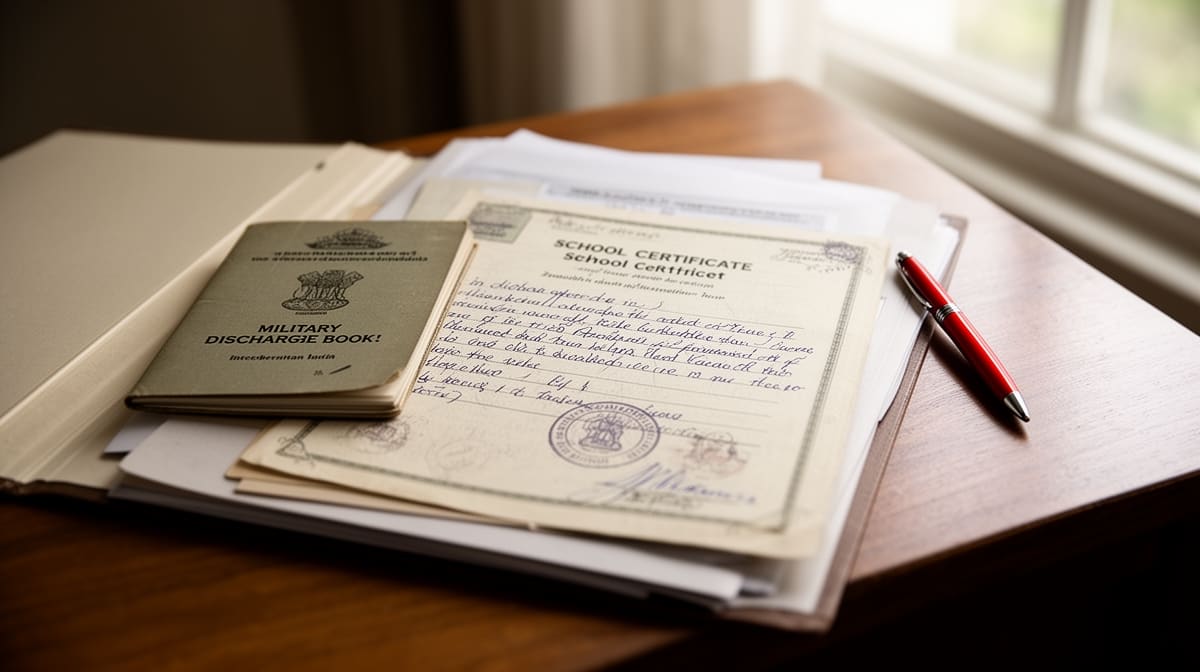
The petitioner, Sanjay Shukla, was appointed as a Line Attendant on a contractual basis by the Madhya Pradesh Electricity Board/MPPKVV Co. Ltd. on 10.01.2014. His appointment was contingent upon verification of his educational qualifications, specifically a certificate issued by the Private Industrial Training Institute (PD ITI), Narkatpur, Dubkiya, Varanasi, Uttar Pradesh, claiming completion of training from 2009 to 2011.
Key Facts
- The petitioner submitted a certificate bearing serial number 111254, allegedly issued by PD ITI, Narkatpur, Dubkiya, Varanasi.
- On 22.08.2014, the Principal of PD ITI, Narkatpur, Varanasi, sent a communication to the employer confirming that no such certificate had ever been issued by the institution and that the document was forged.
- The seal on the petitioner’s certificate matched the seal on the Principal’s communication, confirming the document’s fraudulent origin.
- The petitioner claimed in his reply dated 10.11.2014 that there were two institutions - one at Narkatpur and another at Dubkiya - and that he had studied at Dubkiya.
- No documentary evidence from Dubkiya was ever produced by the petitioner to substantiate his claim.
- The employer’s assistant engineer verified the claim and confirmed that PD ITI had no branch at Dubkiya; the only branch was at Narkatpur.
Procedural History
- 10.01.2014: Petitioner appointed as Line Attendant on contractual basis.
- 22.08.2014: Principal of PD ITI, Narkatpur, informs employer that certificate is forged.
- 27.10.2014: Show cause notice issued to petitioner asking why his services should not be terminated.
- 10.11.2014: Petitioner submits reply claiming he studied at Dubkiya branch.
- 18.12.2014: Petitioner files WP No. 18057/2014 challenging the show cause notice.
- 05.02.2015: High Court disposes of WP No. 18057/2014, directing the employer to consider the petitioner’s reply and afford a hearing before passing a final order.
- 12.02.2015: Impugned order (Annexure P/13) passed dismissing the petitioner from service.
- 15.07.2015: Present writ petition (WP No. 15630/2015) filed challenging the dismissal order.
Relief Sought
The petitioner sought quashing of the dismissal order dated 12.02.2015, reinstatement with back wages, and declaration that his appointment was valid.
The Legal Issue
The central question was whether an employer may lawfully terminate the services of an employee who secured employment through a forged educational certificate, even if the employee was afforded an opportunity to explain after a prior court direction.
Arguments Presented
For the Petitioner
The petitioner’s counsel argued that the dismissal order violated principles of natural justice because no formal inquiry was conducted. Reliance was placed on Rahul Tripathi v. Rajeev Gandhi Shiksha Mission and Vineet Kumar Tripathi v. State of Madhya Pradesh to contend that a full inquiry is mandatory before termination. It was further submitted that the petitioner had clarified the confusion regarding the institute’s name and that the employer failed to verify the Dubkiya branch independently.
For the Respondent
The respondents’ counsel contended that the certificate was conclusively proven to be forged by the issuing institution itself. The Principal’s letter, bearing the same seal as the petitioner’s certificate, was irrefutable evidence of fraud. The petitioner had been given two opportunities to explain - first through the show cause notice and again after the High Court’s direction in WP No. 18057/2014. No further procedural obligation arose because the fraud was established on objective documentary evidence.
The Court's Analysis
The Court examined whether the absence of a formal inquiry invalidated the dismissal. It held that the requirement of a full inquiry under Rahul Tripathi applies where allegations are disputed and require evidentiary resolution. Here, the forgery was not a matter of dispute - it was conclusively established by the institution’s own communication.
"The Principal of the institute itself clarified that the said certificate was never issued by the said institution and the same was forged and fabricated."
The Court emphasized that the petitioner bore the burden of rebutting the allegation of fraud. He failed to produce any document from the alleged Dubkiya branch, nor did he seek a verification letter from that institution. The employer’s assistant engineer’s report confirming the non-existence of a Dubkiya branch further corroborated the forgery.
The Court distinguished Vineet Kumar Tripathi and Nathuram Ahirwar, noting those cases involved ambiguous or unverified claims, whereas here the forgery was proven beyond doubt. The prior court direction to consider the petitioner’s reply did not convert a fraud-based dismissal into a procedural defect. The employer acted within its rights once the fraudulent nature of the document was established.
The Verdict
The petition was dismissed. The Court upheld the dismissal order dated 12.02.2015, holding that the petitioner’s employment was lawfully terminated due to procurement of service through a forged certificate. No reinstatement, back wages, or compensation were awarded. The Court found no legal error in the authority’s decision.
What This Means For Similar Cases
Fraud Nullifies Employment Rights
- Practitioners must advise public sector employers that termination based on proven document forgery does not require a formal departmental inquiry.
- The burden shifts to the employee to prove authenticity once the employer produces conclusive evidence of forgery from the issuing institution.
Verification Is Not a Formality - It Is a Gatekeeper
- Employers may rely on direct verification from educational institutions to establish fraud.
- Claims of "similar names" or "branch confusion" are insufficient without corroborating documentation.
Judicial Directions Do Not Override Fraud
- Courts directing reconsideration of a show cause notice do not convert fraudulent appointments into protected service.
- If the underlying fraud is established, any subsequent hearing is procedural formality, not a substantive right to retain employment.