The Uttarakhand High Court has clarified that at the stage of framing charges, courts must conduct a holistic assessment of all offences disclosed by the evidence, not merely the one initially emphasized in the FIR. This ruling reinforces the principle that mechanical application of charges undermines the integrity of criminal proceedings.
Background & Facts
The Dispute
The applicant filed an F.I.R. against respondent no.2 alleging that she had deliberately and systematically falsified official and public records to record the applicant as her husband, despite the absence of any marital relationship. The applicant claimed this fraudulent misrepresentation caused severe damage to his reputation, social standing, and personal dignity.
Key Facts
- The F.I.R. was lodged under Sections 420, 467, 468, and 469 of the Indian Penal Code
- Respondent no.2 allegedly manipulated multiple government and public documents to falsely list the applicant as her spouse
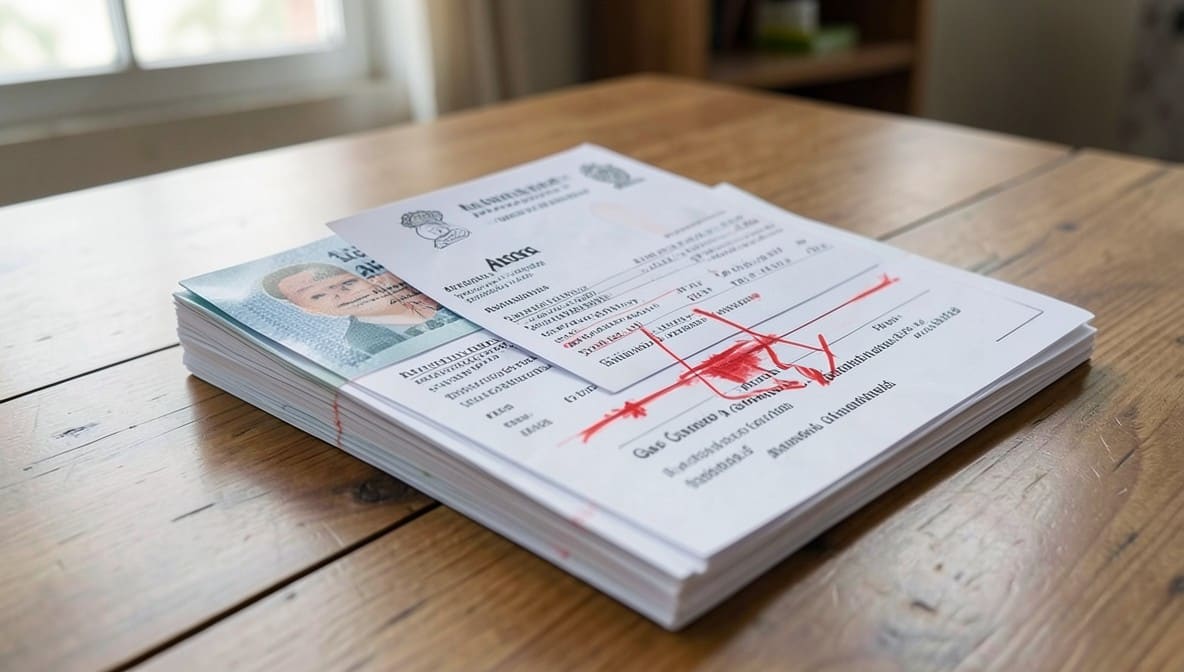
- The manipulated documents include:
- Maternity Card
- Aadhaar Card
- LIC policy records
- Gas connection papers
- These documents were independently issued by different authorities and consistently bore the applicant’s name as husband
- The Investigating Agency filed a charge-sheet only under Section 420 IPC, omitting the other alleged offences
- No counter affidavit was filed by respondent no.2
- No counsel appeared on her behalf during the last two hearing dates
Procedural History
- Date of F.I.R.: Not specified, but investigation concluded prior to 10.05.2022
- 10.05.2022: Learned Trial Court took cognizance and framed charges only under Section 420 IPC
- 06.08.2022: Additional Sessions Judge, Ranikhet, dismissed the applicant’s Criminal Revision, holding that at the charge-framing stage, courts cannot conduct a mini-trial
- 04.05.2026: Criminal Miscellaneous Application filed before the Uttarakhand High Court
Relief Sought
The applicant sought quashing of the order dated 10.05.2022 and the revisional judgment dated 06.08.2022, and directed the trial court to reconsider framing charges under Sections 467, 468, and 469 IPC in addition to Section 420 IPC.
The Legal Issue
The central question was whether, at the stage of framing charges, a court may limit its consideration to only one offence under Section 420 IPC when the material on record prima facie discloses ingredients of multiple cognizable offences including forgery of valuable securities and public documents under Sections 467, 468, and 469 IPC.
Arguments Presented
For the Appellant
Learned counsel argued that the consistent falsification of multiple independent official documents - Maternity Card, Aadhaar, LIC, and Gas records - constitutes a continuing course of conduct, not an isolated act of cheating. He contended that such systematic forgery attracts the specific offences under Sections 467, 468, and 469 IPC, which deal with forgery of valuable securities, forgery for the purpose of cheating, and forgery for the purpose of harming reputation. He emphasized that the trial court and revisional court failed to appreciate the cumulative nature of the evidence.
For the Respondent
No appearance was made by respondent no.2 or her counsel. No counter-affidavit or written submissions were filed. The State, through the Additional Government Advocate, did not oppose the application and acknowledged the absence of contest.
The Court's Analysis
The Court observed that while it is true that at the stage of framing charges, the court does not conduct a detailed trial or weigh evidence exhaustively, it is equally settled that the court must examine the entire material collected during investigation to determine whether a prima facie case exists for any cognizable offence.
"The Court cannot adopt a narrow or truncated approach by confining itself to a single offence, when the allegations and supporting material disclose ingredients of other cognizable offences as well."
The Court noted that the documents cited - Maternity Card, Aadhaar Card, LIC records, and Gas Connection papers - are public documents issued by distinct authorities. The repeated and consistent insertion of the applicant’s name as husband across these documents cannot be treated as an isolated instance of deception under Section 420 IPC. Such conduct, if proven, satisfies the requirements of forgery under Section 467 (forgery of valuable security), Section 468 (forgery for purpose of cheating), and Section 469 (forgery to harm reputation).
The trial court and the revisional court were found to have committed a mechanical exercise of jurisdiction by ignoring the broader context of the allegations. The Court held that failure to consider these additional charges amounted to non-application of mind and a violation of the principle of fair procedure.
The Court emphasized that its observations were strictly limited to the stage of charge-framing and did not prejudge the merits of the case. The trial court was directed to reassess the evidence afresh, independently, and without being bound by prior orders.
The Verdict
The Criminal Miscellaneous Application was allowed. The order dated 10.05.2022 of the trial court and the judgment dated 06.08.2022 of the Additional Sessions Judge were set aside. The matter was remanded to the trial court with a direction to reconsider the framing of charges, including consideration of offences under Sections 467, 468, and 469 IPC, based on the entire investigation record. The trial court was instructed to pass a reasoned order within 60 days of receipt of the order.
What This Means For Similar Cases
Charge Framing Must Reflect All Prima Facie Offences
- Practitioners must ensure that charge sheets and applications for framing charges account for all cognizable offences disclosed by the evidence, even if the FIR initially focuses on one
- Courts cannot mechanically limit charges to the most obvious or commonly charged offence when other serious offences are prima facie made out
Documentary Evidence Demands Broader Legal Scrutiny
- When multiple independent public documents show consistent falsification, courts must treat this as a pattern, not an anomaly
- Forgery under Sections 467, 468, and 469 IPC must be considered alongside cheating under Section 420 IPC where documents are forged to support false claims
Non-Appearance Does Not Preclude Judicial Vigilance
- Even in the absence of a defence, courts have a duty to ensure that charges are framed correctly and comprehensively
- The court’s obligation to examine the entire record remains unchanged regardless of the respondent’s conduct