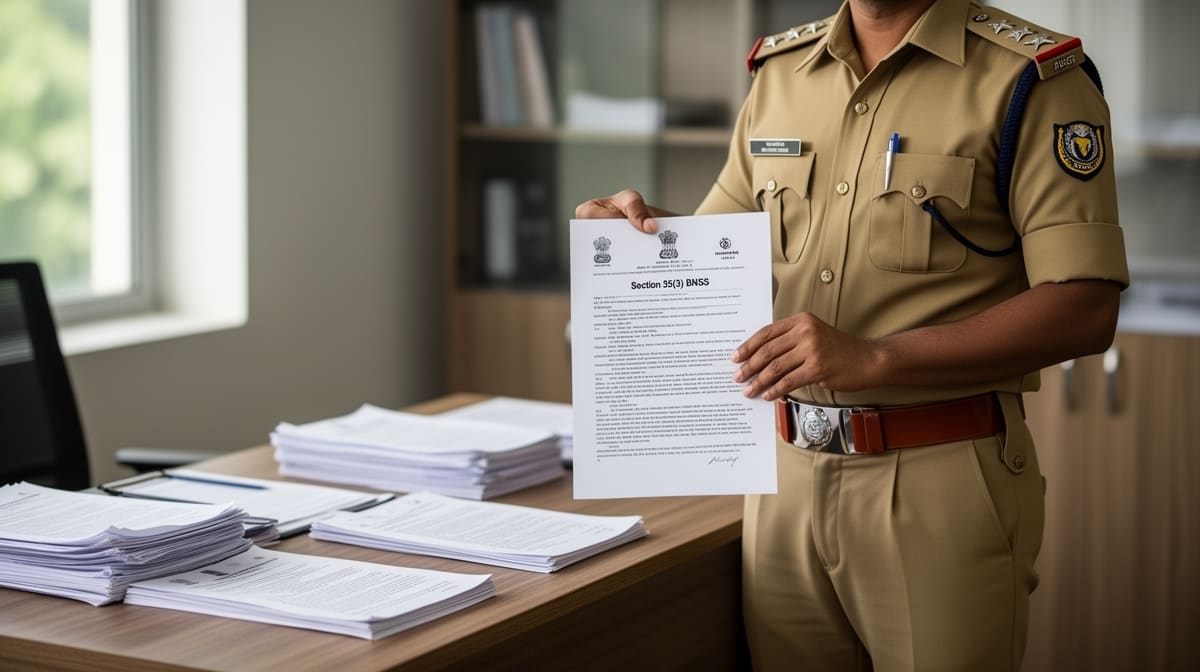
The Delhi High Court resolved a critical procedural question under the Bharatiya Nagarik Suraksha Sanhita (BNSS), 2023, holding that examination of complainant and witnesses on oath must precede notice to the accused under Section 223(1), thereby affirming the legislative intent to prevent frivolous prosecutions through meaningful pre-cognizance hearing.
Background & Facts
The Dispute
Two linked criminal revision petitions challenged orders directing notice issuance to proposed accused in private complaints under BNSS Section 223(1). Crl.M.C. 2551/2025 involved Dr. Rita Bakshi challenging a Judicial Magistrate's order dated 21.01.2025 in CT Case No. 2771/2024 (Dr. Seema Bajaj v. M/s Embryo Health Private Limited). Crl.M.C. 3169/2026 involved Anita Rani Mehra & Anr. challenging an Additional Sessions Judge's order dated 07.04.2026 upholding a Judicial Magistrate's order dated 25.08.2025 in CT Case No. 4100/2025 (Anita Rani Mehra & Ors. v. Neena Kapoor).
Key Facts
- In Crl.M.C. 2551/2025, the learned Judicial Magistrate First Class-03, South District, Saket Courts, directed issuance of notice to Dr. Rita Bakshi under BNSS Section 223(1) on 21.01.2025, providing opportunity to be heard before recording pre-summoning evidence in the private complaint filed by Seema Bajaj.
- In Crl.M.C. 3169/2026, the learned Judicial Magistrate First Class-04, South-East District, Saket Courts, directed issuance of notice to Anita Rani Mehra & Anr. under BNSS Section 223(1) on 25.08.2025, upon receipt of private complaint filed by Neena Kapoor.
- The learned Single Judge referred questions of law on 18.03.2026 after observing conflicting interpretations in Neeti Sharma v. Saranjit Singh (2025 SCC Online Del 2329) and Brand Protectors India Pvt. Ltd. v. Anil Kumar (2025 SCC Online Del 5046), which had held notice should issue after complainant/witness examination.
- The Single Judge also noted Karnataka High Court's decision in Basanagouda R. Patil v. Shivananda S. Patil (2024 SCC Online Kar 96), followed by Allahabad High Court in Prateek Agarwal v. State of UP (2024 SCC Online All 8212) and Kerala High Court in Suby Antony v. Judicial First Class Magistrate III (2025 SCC Online Ker 532), supporting the post-examination notice view.
Procedural History
- 21.01.2025: Judicial Magistrate First Class-03, Saket Courts, issued notice to Dr. Rita Bakshi in CT Case No. 2771/2024
- 25.08.2025: Judicial Magistrate First Class-04, Saket Courts, issued notice to Anita Rani Mehra & Anr. in CT Case No. 4100/2025
- 07.04.2026: Additional Sessions Judge-05, South-East District, Saket Courts, upheld the 25.08.2025 order in Criminal Revision No. 702/2025
- 18.03.2026: Learned Single Judge of Delhi High Court referred questions of law in Crl.M.C. 2551/2025
- 24.04.2026: Learned Single Judge directed Crl.M.C. 3169/2026 to be listed alongside Crl.M.C. 2551/2025
- 29.09.2026: Division Bench pronounced judgment
Relief Sought
Petitioners sought quashing of the orders directing notice issuance, arguing notice must issue only after examination of complainant/witnesses on oath and formation of prima facie opinion, not at the threshold of complaint presentation.
The Legal Issue
The central questions referred by the learned Single Judge were: (i) What stage constitutes 'taking cognizance' of an offence under BNSS Section 223(1) in private complaints, and does 'while taking cognizance' imply examination of complainant/witnesses precedes cognizance? (ii) At what stage must notice be issued to the accused under the first proviso to Section 223(1) BNSS - upon perusal of complaint but prior to recording complainant/witness statements, or after recording such statements but before formal cognizance decision?
Arguments Presented
For the Petitioner
Learned Senior Counsel Mr. Pavan Narang argued that BNSS Section 223(1)'s proviso requiring hearing before cognizance mandates notice issuance only after examination of complainant/witnesses on oath, citing Basanagouda R. Patil (supra), Suby Antony (supra), and Brand Protectors (supra). He contended that notice at the complaint stage would render Sections 225 and 226 otiose, as magistrates could not dismiss frivolous complaints without accused participation. Reliance was placed on Parvinder Singh v. Directorate of Enforcement (2026) INSC 519 and Kushal Kumar Agarwal v. Directorate of Enforcement (2025 SCC OnLine SC 1221) to show the proviso targets threshold jurisdictional objections.
For the Respondent
Learned Counsel Mr. Raajan Chawla contended that Section 223 BNSS substantially corresponds to Section 200 CrPC, with 'having jurisdiction while' merely requiring jurisdictional competence during examination. He argued the first proviso does not alter the cognizance stage, which remains governed by Section 210 BNSS (corresponding to Section 190 CrPC). Reliance was placed on JK Synthesis v. Chief Inspector of Factories (1996) 6 SCC 665 and UOI v. Dilip Singh (2015) 4 SCC 421 to assert proviso operates as exception to main provision without changing procedural sequence.
For the Union of India
Mr. Amit Tiwari submitted that 'while' in Section 223(1) BNSS makes complainant examination part of cognizance process, but left notice timing to magistrate discretion - either before or after examination - citing Kushal Kumar Agarwal (supra) where notice was held mandatory pre-examination in money laundering cases. He argued the proviso does not prescribe precise notice stage, only that accused must be heard.
For the Learned APP
Mr. Aman Usman asserted the legislature consciously mandated hearing before cognizance to prevent false implications, and notice issued pre-examination would defeat the proviso's purpose by restricting accused's ability to challenge complaint maintainability. He emphasized Sections 225 and 226 operate at distinct stages - threshold objections vs merits-based dismissal - and harmonious construction requires notice post-examination but pre-cognizance.
The Court's Analysis
The Court began by noting CrPC Section 190 establishes cognizance as magistrate applying judicial mind to complaint allegations, with Section 200 requiring complainant/witness examination after cognizance (para 49). It then examined BNSS Section 223(1), highlighting two vital changes: insertion of 'having jurisdiction while' and the first proviso prohibiting cognizance without accused hearing (para 52).
Regarding 'while', the Court held it bears temporal meaning - examination occurs during cognizance process, not subsequent to it (para 55). Citing Black's Law Dictionary and Cambridge Guide, it concluded legislature made examination a part of cognizance, not a step after it (para 56). This overturned the CrPC position where examination followed cognizance (para 58).
On the proviso, the Court stressed it is substantive, not merely procedural, conferring a right to hearing as part of fair trial under Article 21 (para 73, quoting Parvinder Singh). It rejected the Union of India's discretion argument, stating: "If the statement of the complainant and the witnesses present is to be recorded, the meaningful notice to the accused will be after such statements have been recorded" (para 68). Notice issued pre-examination would be "futile" and "restrict the right" conferred by legislature (para 66).
The Court emphasized harmonious construction, referencing Prakash Kumar v. State of Gujarat (2005) 2 SCC 409 and Anwar Hasan Khan v. Mohd. Shaji (para 57-58). It held Sections 225 (postponement for inquiry) and 226 (merits-based dismissal) operate after cognizance, while the proviso addresses threshold objections - thus notice must come after complainant examination (to enable accused to challenge maintainability) but before cognizance (para 69-71). Reliance was placed on Karnataka, Allahabad, and Kerala High Court decisions (paras 75-78) which prescribed: complaint presentation → complainant/witness examination on oath → notice to accused → hearing → cognizance decision.
Critically, the Court observed that issuing notice pre-examination would "reduce the safeguard to an empty ritual" and render Sections 225/226 ineffective, as accused could not address unverified allegations (para 17). It concluded the proviso must be construed to "give meaningful effect" to the hearing right and "advance the remedy" per mischief rule (para 67, citing Dr. Lokesh B.H. v. State of Karnataka).
The Verdict
The Court answered: (i) Magistrate can take cognizance only after examining complainant/witnesses present on oath (unless exempted) and giving accused opportunity to be heard; thus examination and hearing are steps prior to cognizance under BNSS Section 223(1). (ii) Notice must be issued after examining complainant/witnesses present on oath and forming prima facie opinion that complaint deserves cognizance, but before formal cognizance decision. Formal cognizance occurs only after granting hearing opportunity.
What This Means For Similar Cases
Notice Timing Is Non-Negotiable
Magistrates in private complaint proceedings under BNSS must now follow a strict sequence: (a) examine complainant/witnesses on oath upon complaint presentation; (b) reduce examination to writing; (c) form prima facie opinion on maintainability; (d) issue notice to accused; (e) grant hearing opportunity; (f) decide on cognizance. Issuing notice at complaint threshold or before examination violates Section 223(1) and risks setting aside cognizance orders. This eliminates magistrate discretion to issue notice pre-examination, which the Court deemed "futile" and contrary to legislative intent.
Threshold Objections Trump Merits-Based Dismissal
The proviso creates a distinct threshold stage for accused to challenge complaint maintainability on grounds like want of sanction, legal incompetence of complainant, or absence of essential offence ingredients - before magistrate considers sufficiency of grounds under Section 226. Accused can now prevent unnecessary procession by demonstrating complaint discloses no offence at face value, aligning with Supreme Court illustrations in Delhi Race Club (2024) INSC 626. Sections 225 and 226 remain available for merits-based assessment after cognizance, preserving the statutory scheme's integrity.
Documentary Complaints Require Adaptation
Where complaints are document-based (e.g., cheque bounce notices), magistrates must still examine complainant on oath unless exempted under Section 223(1)(a)-(b). The hearing opportunity must accompany complaint copy and relied-upon documents, enabling accused to address document authenticity and execution. This prevents mechanical notice issuance in document-driven cases, ensuring accused can challenge document validity before cognizance - a safeguard absent in the pre-amendment CrPC regime where accused had no pre-cognizance hearing right.