The Karnataka High Court has clarified that when a defendant admits receipt of a substantial sum of money, the burden shifts decisively to them to prove the legal basis for retaining it. This principle, grounded in admissions under the Evidence Act, renders unsubstantiated claims of advance payments insufficient to defeat a claim for refund.
Background & Facts
The Dispute
The dispute arose from a financial transaction between M/s ACETECH (plaintiff/respondent) and Team Thermoformings and Allieds (defendants/appellants), a partnership firm and its partners. The respondent paid Rs. 1 Crore to the appellants on 01.08.2019, purportedly as a refundable security deposit under a lease agreement for industrial premises at Plot No. 73, Somapura Industrial Area, Nelamangala. The lease was for 36 months, from 01.08.2019 to 31.07.2022, with no rent payable due to the deposit arrangement. The respondent vacated the premises on 30.06.2022 and demanded refund of the deposit, which was not made.
Key Facts
- The respondent paid Rs. 1 Crore to the appellants via bank transfer on or about 01.08.2019 (Exhibit P4)
- A lease agreement dated 01.08.2019 (Exhibit P2) was produced by the respondent, but the court found it inadmissible due to stamp paper purchased after the date mentioned
- The respondent vacated the premises on 30.06.2022 and demanded refund
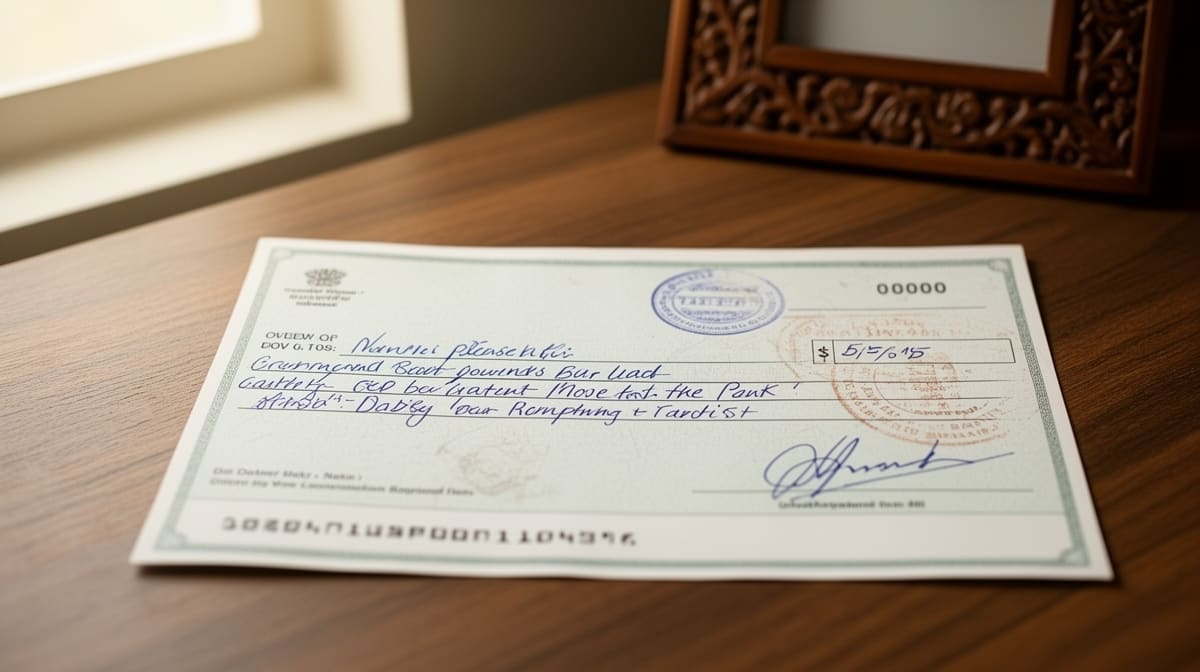
- The appellants issued a cheque for Rs. 1 Crore dated 19.09.2023 (Exhibit P3) towards repayment
- The cheque was dishonored with the reason "payment stopped by the drawer"
- The appellants claimed the Rs. 1 Crore was an advance towards transfer of leasehold rights in a KIADB plot, not a security deposit
- The appellants alleged they incurred expenses for transfer, leaving only Rs. 55,00,000 refundable
- No documentary evidence was produced to substantiate expenses paid to KIADB, transfer agreements, or contractual clauses permitting retention
Procedural History
- 01.08.2019: Payment of Rs. 1 Crore made by respondent to appellants
- 30.06.2022: Respondent vacated leased premises and demanded refund
- 19.09.2023: Appellants issued cheque for Rs. 1 Crore, later dishonored
- 2024: Suit filed by respondent in Commercial O.S. No. 321/2024
- 29.04.2025: Commercial Court decreed suit in part, directing payment of Rs. 1 Crore with 9% interest
- 08.06.2025: Commercial Appeal No. 397/2025 filed before Karnataka High Court
- 18.06.2026: Judgment pronounced by Division Bench
Relief Sought
The respondent sought recovery of Rs. 1 Crore with interest at 9% per annum from the date of filing the suit until realization. The appellants sought dismissal of the suit, contending only Rs. 55,00,000 was refundable after adjusting expenses.
The Legal Issue
The central question was whether, upon admission of receipt of Rs. 1 Crore and issuance of a cheque for the same, the burden shifts to the defendant to prove a lawful basis for retaining the amount, even if the plaintiff’s primary documentary evidence (lease agreement) is inadmissible.
Arguments Presented
For the Appellant
The appellants contended that the Rs. 1 Crore was not a refundable security deposit but an advance payment towards the proposed transfer of leasehold rights in a KIADB industrial plot. They asserted that substantial expenses were incurred for facilitating the transfer, and after adjusting rent and expenses, only Rs. 55,00,000 remained refundable. They relied on WhatsApp messages where the respondent referred to the amount as an "advance" and argued that the inadmissibility of the lease agreement (Ex. P2) destroyed the foundation of the plaintiff’s claim.
For the Respondent
The respondent submitted that the appellants unequivocally admitted receipt of Rs. 1 Crore and issued a cheque for its repayment, which constituted a clear admission of liability. The dishonour of the cheque confirmed the subsistence of a recoverable debt. The respondent argued that the appellants failed to produce any documentary proof of expenses paid to KIADB, transfer agreements, or contractual terms permitting retention. The burden, therefore, lay on the appellants to substantiate their defence, which they failed to do.
The Court's Analysis
The Court rejected the appellants’ argument that the inadmissibility of the lease agreement (Ex. P2) invalidated the entire claim. It held that even without relying on the lease deed, the undisputed facts - the receipt of Rs. 1 Crore and the subsequent issuance of a cheque for the same - were sufficient to establish a prima facie liability.
"The issuance of cheque itself constitutes a significant admission that the amount was repayable and a legally recoverable liability subsisted."
The Court emphasized that while a plaintiff must succeed on the strength of their own case, the law does not permit a defendant to retain funds merely by asserting an alternative character for the payment without proof. The Court relied on Anita Rani vs Ashok Kumar and Others to affirm that when a defendant admits receipt of money and claims it was gratuitous or subject to adjustment, the burden shifts to them to prove such a plea.
Further, the Court invoked Uttam Singh Duggal and Company Limited vs United Bank of India and Nagindas Ramdas vs Dalpatram Ichharam, holding that admissions in pleadings and conduct (such as issuing a cheque) are the best evidence under Section 58 of the Evidence Act (now Section 53 of the Bharatiya Sakshya Adhiniyam, 2023). Facts admitted need not be proved.
The Court noted that the appellants produced no evidence of payments to KIADB, no agreement authorizing forfeiture, no invoices, no correspondence justifying retention, and no claim for set-off of rent or expenses. The assertion of Rs. 55,00,000 as the balance refundable was unsupported by any documentation. The Court drew an adverse inference against the appellants for this failure.
The Court concluded that the Commercial Court correctly applied the law: once receipt and obligation to repay were admitted, the appellants could not evade liability by relying on unsubstantiated assertions.
The Verdict
The appeal was dismissed. The Karnataka High Court upheld the Commercial Court’s decree dated 29.04.2025. The appellants are jointly and severally liable to pay the respondent Rs. 1 Crore with interest at 9% per annum from the date of filing the suit (2024) until realization. No costs were awarded to either party.
What This Means For Similar Cases
Admission of Receipt Triggers Burden Shift
- Practitioners must treat any admission of receipt of funds - whether in pleadings, affidavits, or conduct like issuing a cheque - as a pivotal evidentiary event
- Once admitted, the onus shifts to the defendant to prove lawful retention; mere oral assertions or vague claims of "advance" are insufficient
- In commercial disputes involving large sums, documentary proof of adjustments, expenses, or contractual rights is non-negotiable
Cheque Issuance as Admission of Liability
- Issuing a cheque for a disputed amount, even if later dishonoured, constitutes a clear admission of liability under Section 53 of the Bharatiya Sakshya Adhiniyam, 2023
- This admission can sustain a decree even if the plaintiff’s primary documentary evidence is excluded
- Defence strategies must now focus on proving lawful justification for retention, not merely attacking the plaintiff’s evidence
No Documentary Evidence = Adverse Inference
- Courts will draw adverse inferences against parties who fail to produce documents supporting claims of expenses, transfers, or contractual entitlements
- In KIADB or industrial lease disputes, parties must maintain and produce all correspondence, receipts, and approvals from authorities
- Oral testimony alone, without corroboration, will not suffice to rebut an admission of liability