The Gujarat High Court held that a petitioner who partially complies with a land premium determination order by making payment and seeking time extension waives the right to later challenge that order on grounds of delay or methodology. The court applied principles of estoppel and acquiescence, emphasizing that partial implementation without prejudice reservation triggers specific legal consequences in land revenue matters.
Background & Facts
The Dispute
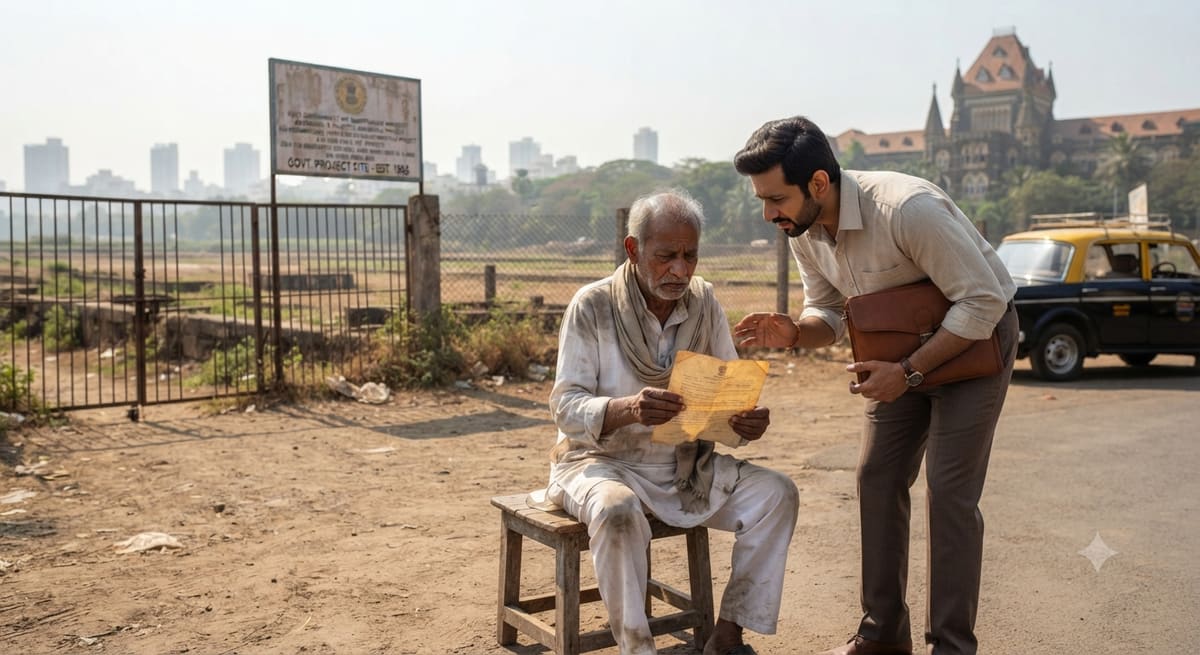
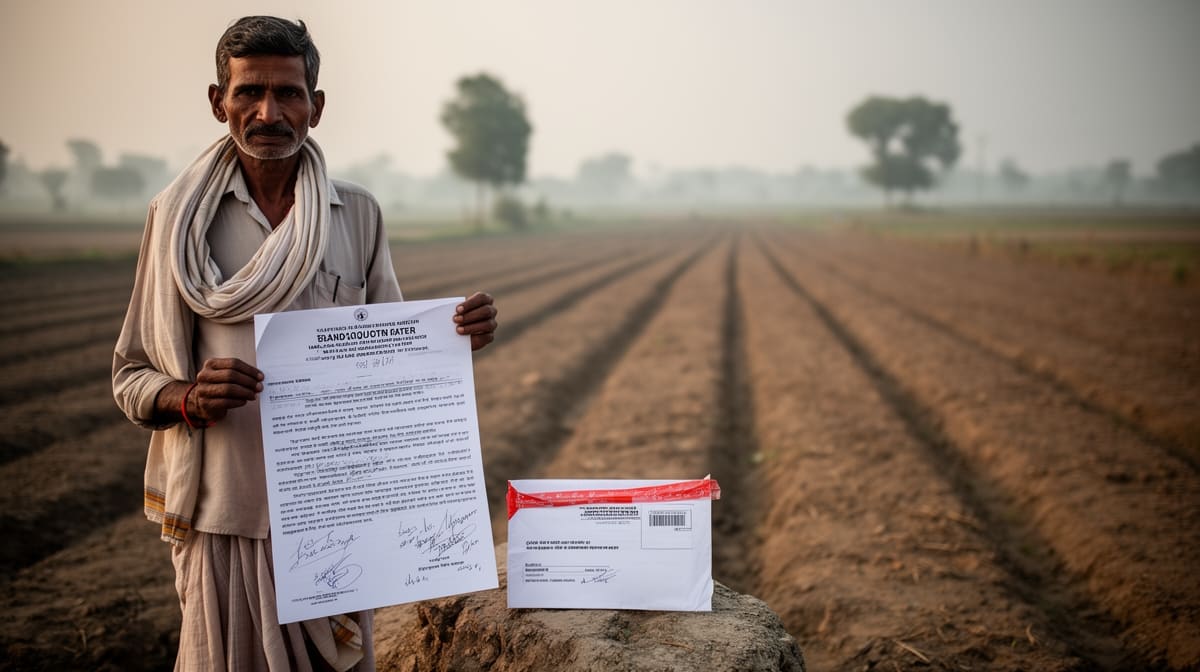
The petitioner, Kanaaiyalal Dhansukhlal Sopariwala, purchased agricultural land bearing Block No. 349 in Village Kadodara, Taluka Kamrej, District Surat from Kevalbhai Sukhabhai Kantharia via registered sale deed dated 09.05.1995. The land was classified as new tenure land requiring permission for non-agricultural use. The core dispute centered on the premium amount payable for land conversion, with the petitioner challenging the Collector's 2006 determination as arbitrary and seeking refund of Rs.15,00,000 paid towards premium.
Key Facts
- The original owner, Kevalbhai Sukhabhai Kantharia, applied for permission to sell the land for non-agricultural purposes on 25.04.1985
- The Deputy Collector, Surat rejected this application on the same date (25.04.1985)
- Upon reapplication on 26.11.1987, the Deputy Collector granted permission on 21.04.1988 and directed deposit of Rs.32,333/- as premium
- Kevalbhai Sukhabhai Kantharia sold the land to the petitioner by registered sale deed on 09.05.1995
- Kevalbhai Sukhabhai Kantharia expired on 09.11.1995
- After approximately 8 years, the Collector, Surat initiated suo motu revision proceedings on 29.06.1996 under Section 211 of the Bombay Land Revenue Act, 1879, setting aside the 21.04.1988 order
- The petitioner preferred revision before the Settlement Officer and Director of Land Records (SSRD)
- The SSRD, by order dated 11.03.1997 (05.04.1997), partly set aside the Collector's order and remanded for fresh decision after issuing notices to legal heirs
- On remand, the Collector, Surat passed an order on 30.09.2006 fixing premium at Rs.1,512/- per square meter after applying 12% annual increase to market value
- The Collector directed the petitioner to deposit Rs.1,04,47,944/- (total premium of Rs.1,04,80,277/- less initial Rs.32,333/- already accounted for)
- The petitioner deposited Rs.15,00,000/- on 20.10.2006 towards the premium
- On 30.10.2006, the petitioner sought a 3-month extension to deposit the remaining amount
- The Collector, by communication dated 29.11.2006, granted 21 days' time to deposit the remaining premium
- The petitioner subsequently challenged the premium determination before the SSRD, alleging lack of hearing and erroneous valuation date
- For comparison, Block No. 350 premium was determined by Government on 15.03.2005 at Rs.500/- per square meter
- The District Assessment Committee met on 17.06.2004 to determine premium for Block No. 350
Procedural History
- 29.06.1996: Collector, Surat set aside the 21.04.1988 order in suo motu revision
- 11.03.1997: SSRD passed order (05.04.1997) partly setting aside Collector's order and remanding for fresh decision
- 30.09.2006: Collector, Surat fixed premium at Rs.1,512/- per sq. mtrs.
- 20.10.2006: Petitioner deposited Rs.15,00,000/- towards premium
- 30.10.2006: Petitioner sought 3-month extension for balance payment
- 29.11.2006: Collector granted 21 days' time to deposit remaining premium
- Date unspecified: Petitioner filed revision before SSRD challenging the order
- 23.09.2026: Present judgment delivered by Gujarat High Court
Relief Sought
The petitioner sought: (A) Quashing and setting aside of orders dated 30-9-2006 and 29-11-2006 passed by Collector, Surat and Principle Secretary to Government of Gujarat, Revenue Department (B) Refund of Rs.15,00,000/- paid towards premium with interest at 12% from date of payment till refund (C) Direction to respondents to desist from coercive measures under the challenged orders (D) Stay of execution, operation and implementation of the challenged orders (E) Award of costs
The Legal Issue
The central question was whether the Collector, Surat lacked jurisdiction to reassess the premium for land conversion after an eight-year delay, and whether the premium should be determined as of the date of initial application (25.04.1985 or 26.11.1987) rather than the date of the Collector's decision (30.09.2006), considering the petitioner's partial compliance with the order.
Arguments Presented
For the Petitioner
The petitioner contended that the Collector's suo motu proceedings initiated after nearly eight years were barred by laches, relying on State of Gujarat vs. Patil Raghav Natha and Others (1969) 2 SCC 187 to argue that powers under Section 211 of the Bombay Land Revenue Act, 1879 must be exercised within few months of the original order. It was submitted that the market price determination for premium was arbitrary and discretionary, and the premium should be calculated based on rates prevailing at the time of the predecessor's applications (25.04.1985 or 26.11.1987). The petitioner further argued that the Collector lacked jurisdiction to grant permission for non-agricultural use, as this authority resided with the Collector at the relevant time.
For the Respondent
The learned AGP for the State supported the Collector's order, contending that the date for application of the premium rate is the date on which sanction is granted by the Collector, not the date of application, citing Gohil Jesangbhai Raysangbhai vs. State of Guajrat (2014) (0) AIJEL - SC 55009. It was argued that the petitioner, by depositing Rs.15,00,000/- and seeking time extension, had accepted the order and was estopped from challenging it. The respondent maintained that no other substantive challenges were raised regarding the premium determination methodology.
The Court's Analysis
The Court examined the undisputed facts and found that the petitioner had deposited Rs.15,00,000/- towards the premium on 20.10.2006 and subsequently sought a three-month extension for the balance payment on 30.10.2006, to which the Collector granted 21 days' time. The Court held that by partly implementing the Collector's order without reserving rights, the petitioner triggered the doctrine of estoppel and acquiescence.
"When applicant partly implements a Collector's premium determination order and later challenges it, it triggers specific legal principles regarding estoppel and acquiescence. The petitioner herein, has waived its right to object in absence of any explicit understanding stating that the partial implementation or payment is without prejudice to legal right and contentions regarding final quantification."
The Court further noted that the petitioner never raised any grievances against the determination of premium itself, only challenging the valuation date. Regarding the comparison with Block No. 350, the Court observed that since the petitioner failed to raise the contention of comparing premium with adjoining land before the Collector at the time of determination, they were now precluded from doing so. The Court relied on the principle that once a party partly implements an order, they cannot later question its validity without explicit reservation of rights. The Court rejected the petitioner's reliance on State of Gujarat vs. Patil Raghav Natha and Others, distinguishing it on the basis that the present case involved estoppel arising from partial compliance, whereas the cited case dealt with delay in initiating proceedings without such compliance.
The Verdict
The petitioner's challenge to the premium determination order was dismissed. The Court held that by depositing Rs.15,00,000/- towards the premium and seeking time extension without reserving rights, the petitioner waived the right to contest the order. Consequently, the prayers for quashing the orders dated 30-9-2006 and 29-11-2006, refund of Rs.15,00,000/- with 12% interest, and direction to desist from coercive measures were rejected. No costs were awarded as the petitioner failed in their challenge.
What This Means For Similar Cases
Estoppel Through Partial Compliance
A party who makes part payment towards a government demand and seeks time extension without explicitly reserving rights to challenge the demand's validity is estopped from later questioning the order. Lawyers must advise clients to either pay under protest with clear reservation of rights or not pay at all if intending to challenge.
Timeliness of Objections
Objections to the substance of an order (such as valuation methodology or rate applicability) must be raised at the first opportunity before the determining authority. Failure to do so during proceedings precludes raising such objections later in appellate or revisional forums.
Land Conversion Premium Determination
The premium for land conversion is to be determined as of the date of the Collector's decision, not the date of initial application, unless statutory provisions specify otherwise. Parties seeking to challenge the valuation date must do so before the order is passed, not after partial compliance.