In a significant ruling on service benefits for temple employees, the Andhra Pradesh High Court dismissed a writ petition as infructuous after the respondents complied with an interim order directing the release of minimum time scale benefits. The judgment reaffirms the principle of equal pay for equal work, as established by the Supreme Court, ensuring that contractual employees performing regular duties are entitled to corresponding pay scales and benefits.
Background & Facts
The Dispute
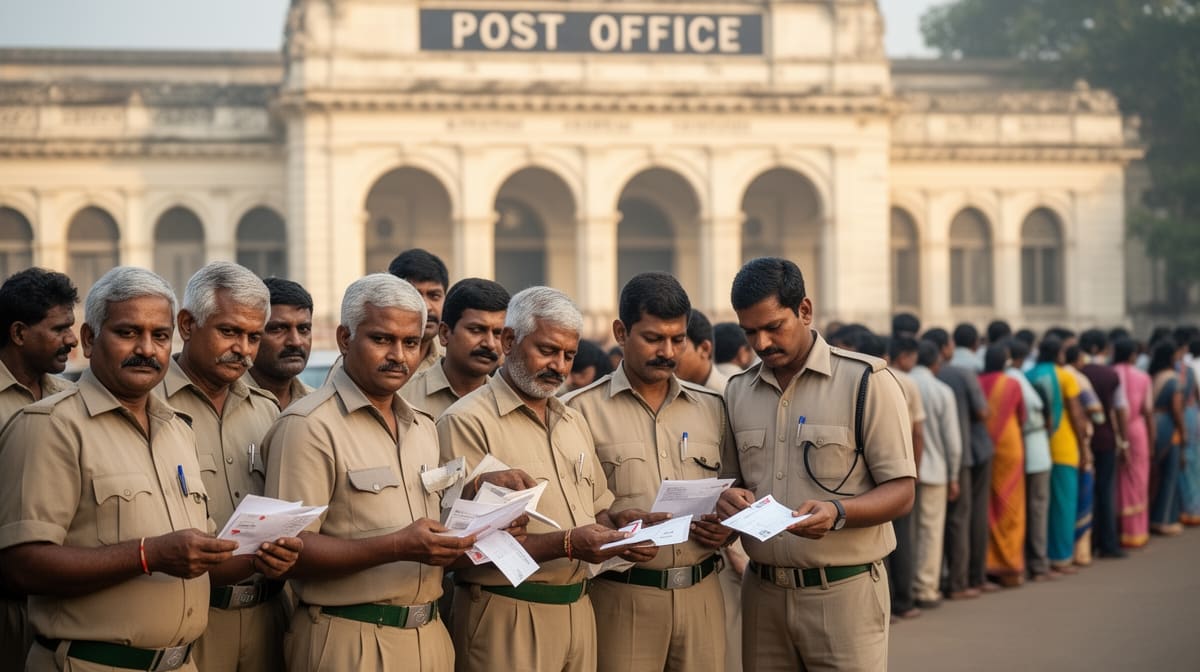
The petitioners, seven employees of the Sri Talupulamma Ammavari Temple in Tuni Mandal, East Godavari District, were engaged as Gurkhas, Gardeners, Attenders, Security Guards, and Electricians. Despite performing duties equivalent to regular posts, the respondents - the State of Andhra Pradesh, the Commissioner of Endowments, and the temple’s Executive Officer - denied them time scale benefits, which are standard pay scales granted to regular employees. The petitioners alleged that this denial was arbitrary, illegal, and violative of Articles 14, 19, and 21 of the Constitution of India.
Key Facts
- The petitioners were engaged in various capacities at the temple, performing duties akin to regular employees.
- They were denied time scale benefits, which include regular pay increments and monetary benefits.
- The petitioners filed a writ petition under Article 226 seeking a Writ of Mandamus to direct the respondents to extend time scale benefits.
- The temple is governed under the Endowments Department of the Andhra Pradesh government.
Procedural History
- Writ Petition No. 6294/2018 was filed on an unspecified date, challenging the denial of time scale benefits.
- 27.02.2018: The High Court passed an interim order in I.A. No. 1 of 2018, directing the 3rd respondent (temple) to examine whether the petitioners were performing regular duties and held requisite qualifications. If both conditions were met, the temple was to release the minimum time scale within four weeks, relying on the Supreme Court’s decision in State of Punjab v. Jagjit Singh (2017 (1) SCC 148).
- Post-Interim Order: The respondents complied with the interim order and released the time scale benefits to the petitioners. However, they subsequently reduced the minimum time scale and ordered recovery of excess payments already made.
- W.P. No. 38497/2018: Aggrieved by the reduction and recovery order, the petitioners filed another writ petition, which remains pending.
- 22.06.2026: The present writ petition (W.P. No. 6294/2018) was dismissed as infructuous.
Relief Sought
The petitioners sought:
- A Writ of Mandamus declaring the respondents’ action of denying time scale benefits as illegal, arbitrary, and violative of constitutional rights.
- Direction to the 3rd respondent to extend the minimum time scale to the petitioners in their respective posts.
- Grant of all consequential benefits, including monetary arrears.
- Interim relief under I.A. No. 1 of 2018 to extend the minimum time scale pending disposal of the writ petition.
The Legal Issue
The central question was whether the denial of time scale benefits to temple employees performing regular duties, despite holding requisite qualifications, violates the constitutional guarantees under Articles 14, 19, and 21 and the principle of equal pay for equal work as established by the Supreme Court.
Arguments Presented
For the Petitioners
- Relied on the Supreme Court’s decision in State of Punjab v. Jagjit Singh (2017 (1) SCC 148), which held that temporary or contractual employees performing the same duties as regular employees are entitled to equal pay and benefits.
- Argued that the denial of time scale benefits was arbitrary and discriminatory, violating Article 14 (equality before law) and Article 19 (right to practice any profession).
- Contended that the respondents’ action deprived the petitioners of their right to livelihood under Article 21.
- Highlighted that the respondents’ compliance with the interim order was partial and inadequate, as they later reduced the time scale and ordered recovery of excess payments.
For the Respondents
- The respondents’ counsel did not present substantive arguments in this judgment, as the matter was rendered infructuous post-compliance with the interim order.
- However, the subsequent reduction of time scale benefits and recovery order suggest an implicit contention that the petitioners were not entitled to the full benefits granted under the interim order.
The Court's Analysis
The Court did not engage in a detailed analysis of the merits, as the writ petition was dismissed as infructuous following compliance with the interim order. However, the judgment implicitly reaffirms the following legal principles:
-
Interim Relief as a Precedent: The Court’s interim order relied on State of Punjab v. Jagjit Singh, which established that contractual or temporary employees performing regular duties are entitled to the same pay and benefits as regular employees. This principle was applied to the petitioners’ case, directing the respondents to release the minimum time scale.
-
Constitutional Safeguards: The denial of time scale benefits to employees performing regular duties could amount to a violation of Articles 14, 19, and 21, as it would be arbitrary and unjust. The Court’s interim order acknowledged this, ensuring that the petitioners received their due benefits.
-
Judicial Economy: The Court dismissed the petition as infructuous once the respondents complied with the interim order, avoiding unnecessary adjudication. However, the subsequent reduction of benefits and recovery order indicate that the respondents may have acted in bad faith or misinterpreted the interim order, necessitating further litigation in W.P. No. 38497/2018.
"Pending further orders, in view of the decision of the Supreme Court of India in State of Punjab Vs. Jagjit Singh and others (2017 (1) SCC 148), the 3rd respondent shall examine whether the petitioners are performing the duties of the regular posts of Gurkha, Gardner, Attender, Security Guard, Electrician etc., in the 3rd respondent temple and whether they hold the requisite qualifications, and if both these conditions are fulfilled, within four (4) weeks, the 3rd respondent shall release the minimum timescale to the petitioners attached to their respective posts in the corresponding cadre in the 3rd respondent temple."
The Verdict
The Court dismissed Writ Petition No. 6294/2018 as infructuous, as the respondents had complied with the interim order dated 27.02.2018 by releasing the minimum time scale benefits to the petitioners. No costs were awarded. Consequently, all pending miscellaneous petitions were closed.
However, the judgment notes that the respondents reduced the time scale benefits and ordered recovery of excess payments, which is under challenge in W.P. No. 38497/2018. This suggests that the dispute regarding the quantum of benefits remains unresolved.
What This Means For Similar Cases
Equal Pay for Equal Work Is Non-Negotiable
- Contractual or temporary employees performing regular duties are entitled to the same pay scales and benefits as regular employees, as held in State of Punjab v. Jagjit Singh.
- Employers, including government departments, temples, and public institutions, cannot deny time scale benefits on the ground of contractual status if the employees perform regular duties and hold requisite qualifications.
- Practitioners should cite this judgment to argue for equal pay and benefits in cases involving contractual employees in temples, government departments, or other public institutions.
Interim Orders Carry Weight
- Courts may grant interim relief based on established precedents, even before a final adjudication on merits. Compliance with such orders does not preclude further litigation if the relief granted is partial or later reduced.
- Employees aggrieved by partial compliance or subsequent reduction of benefits can file fresh writ petitions to challenge such actions, as seen in W.P. No. 38497/2018.
Constitutional Rights Extend to Service Benefits
- Denial of time scale benefits or other service-related entitlements can be challenged as a violation of Articles 14, 19, and 21, particularly if the employees perform regular duties.
- Practitioners should frame arguments around arbitrariness, discrimination, and deprivation of livelihood to strengthen cases for service benefits.