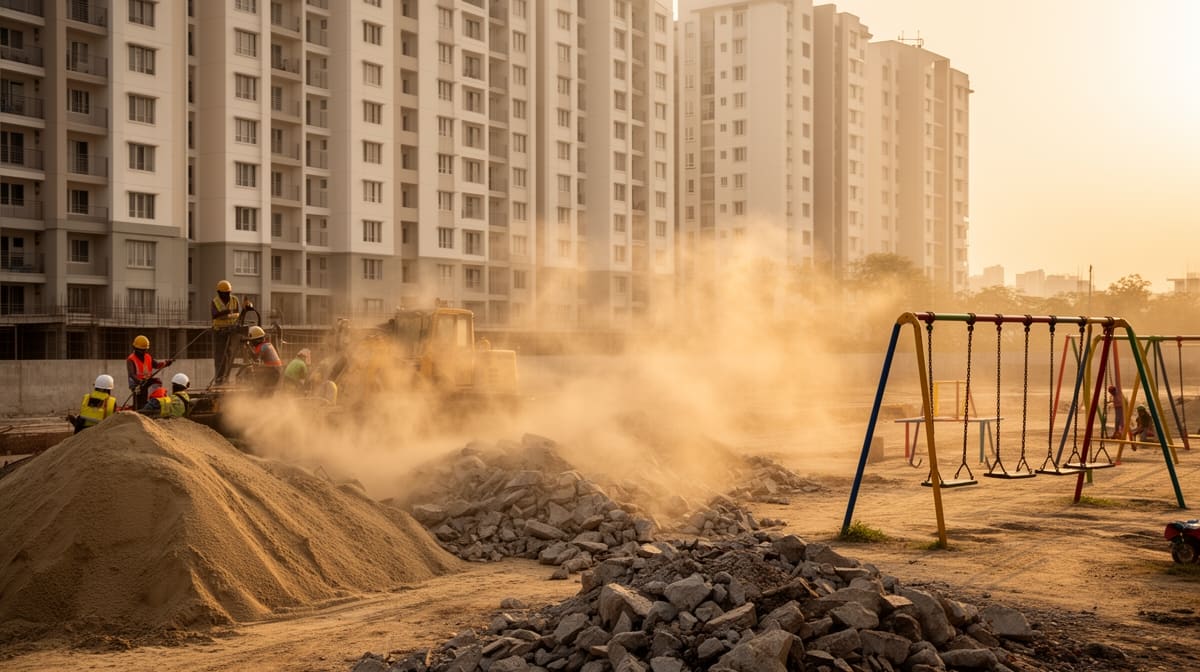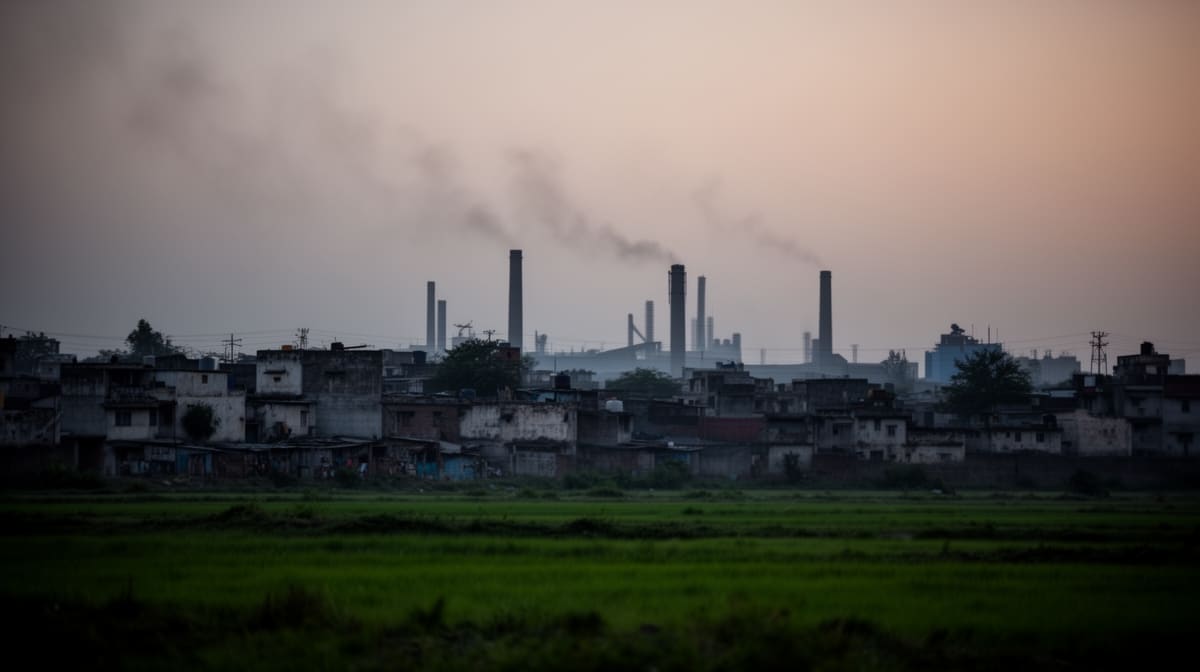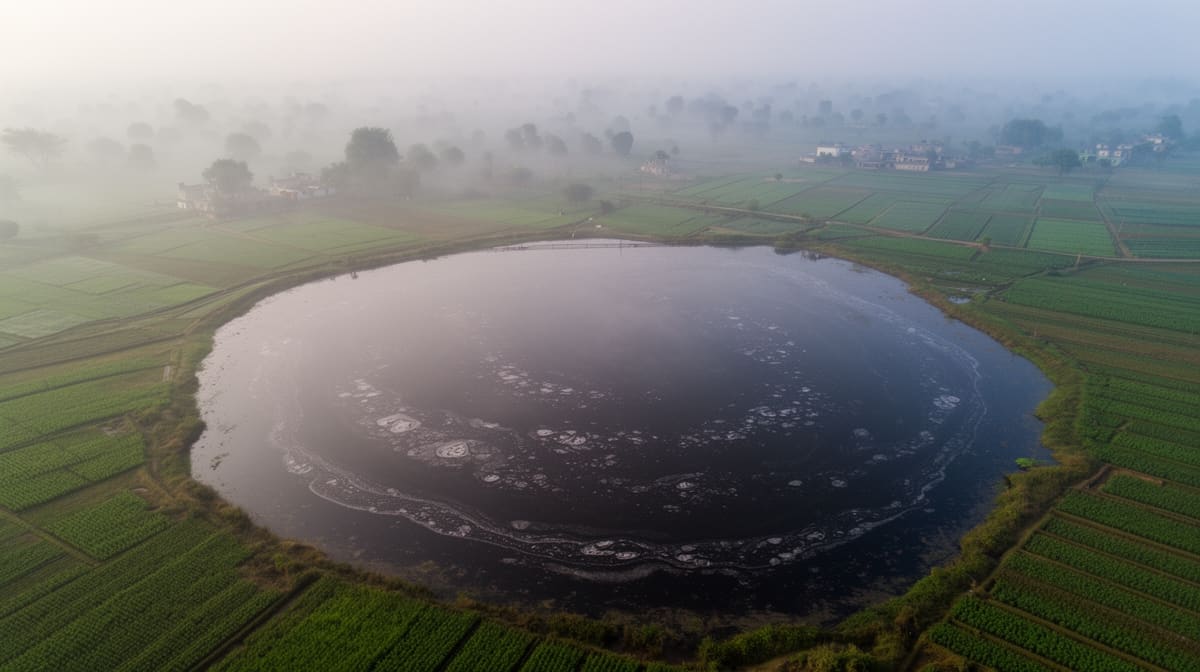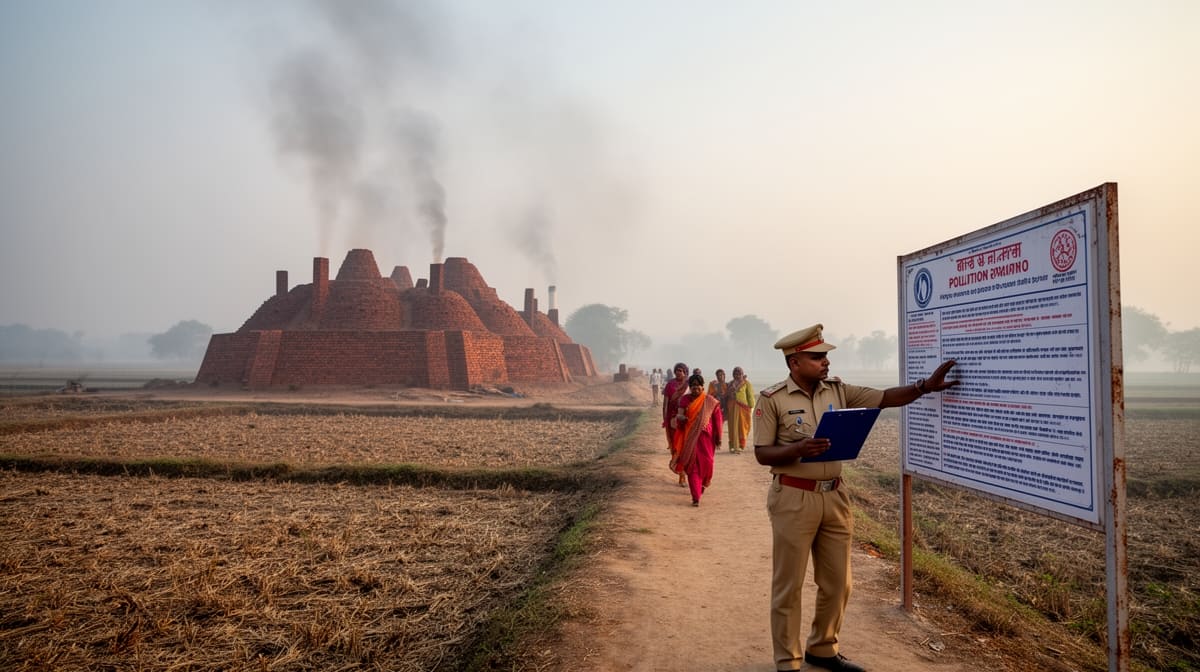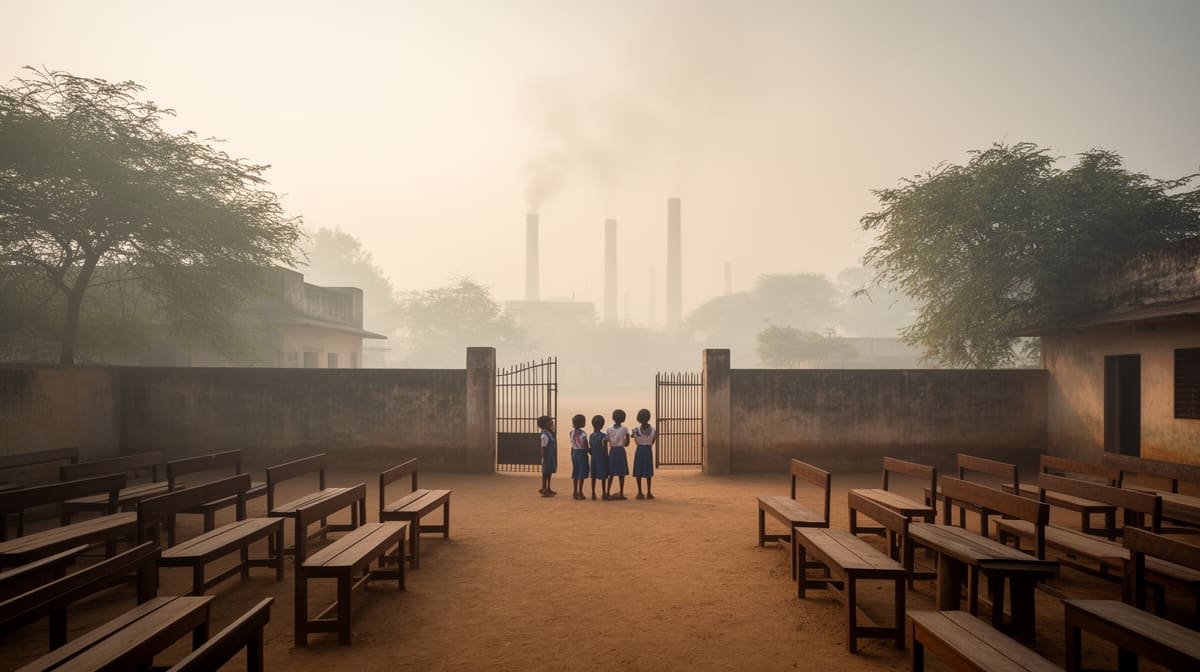
The National Green Tribunal has recognized that sustained air pollution causing mass school absenteeism constitutes a violation of environmental rights under the Air (Prevention and Control of Pollution) Act, 1981. This unprecedented recognition links public health, educational access, and environmental regulation as interdependent rights, setting a new precedent for environmental litigation in India.
Background & Facts
The Dispute
Residents of village Khara in Bikaner, Rajasthan, initiated a protest against severe air pollution emanating from the Khara RICO industrial area. They alleged that chronic exposure to toxic emissions had led to widespread respiratory illnesses among villagers, including children. In response to administrative inaction, the community organized a collective decision to withhold children from school as a form of non-violent civil resistance.
Procedural History
- The matter was brought to the National Green Tribunal through a suo moto letter petition filed by Mr. Ram Singh Khara, dated 12 December 2025.
- The petition was supported by newspaper clippings and video evidence documenting low school attendance and community statements.
- No prior formal complaint had been filed before the Rajasthan Pollution Control Board or district authorities despite repeated grievances.
Relief Sought
The petitioner sought immediate intervention by the National Green Tribunal to:
- Investigate the source and extent of air pollution
- Enforce compliance with the Air (Prevention and Control of Pollution) Act, 1981
- Ensure restoration of educational access for children
- Hold responsible authorities accountable for inaction
The Legal Issue
The central question was whether a community-led school boycott, triggered by air pollution and administrative inaction, constitutes a cognizable environmental violation under the Air (Prevention and Control of Pollution) Act, 1981, and whether the right to education can be invoked as an environmental right under the Tribunal’s jurisdiction.
Arguments Presented
For the Appellant/Petitioner
The petitioner argued that the deliberate withdrawal of children from school was not merely a social protest but a direct consequence of environmental degradation. The Tribunal was urged to treat this as an emergent public health crisis under Section 3 of the Air Act, which mandates prevention and control of air pollution. Reliance was placed on Subhash Kumar v. State of Bihar, which recognized the right to a healthy environment under Article 21.
For the Respondent/State
No formal reply was submitted prior to the hearing. However, the Tribunal noted that the respondents had not contested the factual assertions in the petition, nor had they demonstrated any prior remedial action despite repeated complaints from the community.
The Court's Analysis
The Tribunal rejected the notion that environmental violations must be confined to measurable emissions or industrial non-compliance. It held that the collective impact on human health and education constitutes a legitimate environmental harm under the Act’s purposive interpretation.
"The right to education cannot be severed from the right to a healthy environment. When pollution forces parents to keep children out of school to avoid respiratory harm, the State’s failure to act is not mere negligence - it is a breach of its statutory and constitutional obligations."
The Court emphasized that Section 19 of the Air Act empowers the Tribunal to entertain applications arising from environmental degradation, even if initiated through informal means. The Tribunal further noted that the absence of formal litigation by affected parties does not negate the existence of a violation, especially when the grievance is documented through credible media and community testimony.
The Tribunal also affirmed that educational disruption caused by environmental factors falls within its mandate under the National Green Tribunal Act, 2010, which includes the protection of public health and welfare as core objectives.
The Verdict
The National Green Tribunal upheld the petition’s validity and held that pollution-induced school absenteeism constitutes a violation of the Air (Prevention and Control of Pollution) Act, 1981. The Court directed the constitution of a joint inspection committee and mandated submission of a factual report within six weeks.
What This Means For Similar Cases
Environmental Harm Includes Educational Disruption
- Practitioners may now invoke right to education as a component of environmental harm in NGT proceedings
- School attendance data can serve as evidence of environmental degradation in pollution cases
- Administrative inaction leading to community-led educational boycotts may trigger mandatory intervention
Statutory Duty to Act on Informal Complaints
- The Tribunal treated a letter petition as sufficient to invoke suo moto jurisdiction
- Authorities cannot evade responsibility by claiming absence of formal complaints
- NGOs and community groups may now use media reports and attendance records to initiate environmental litigation
Joint Committees as Enforcement Tools
- NGT will increasingly rely on multi-agency inspection committees for fact-finding
- Practitioners must prepare for coordinated responses from Pollution Control Boards and district administrations
- Reports must be submitted in searchable PDF format - image-based files will be rejected