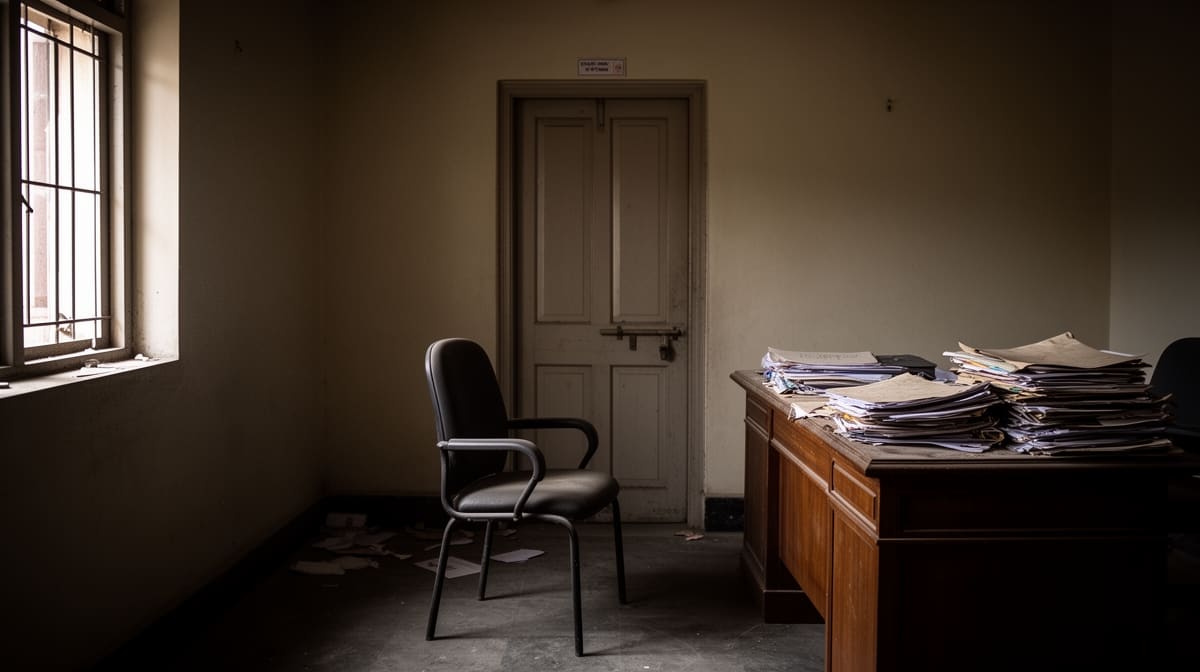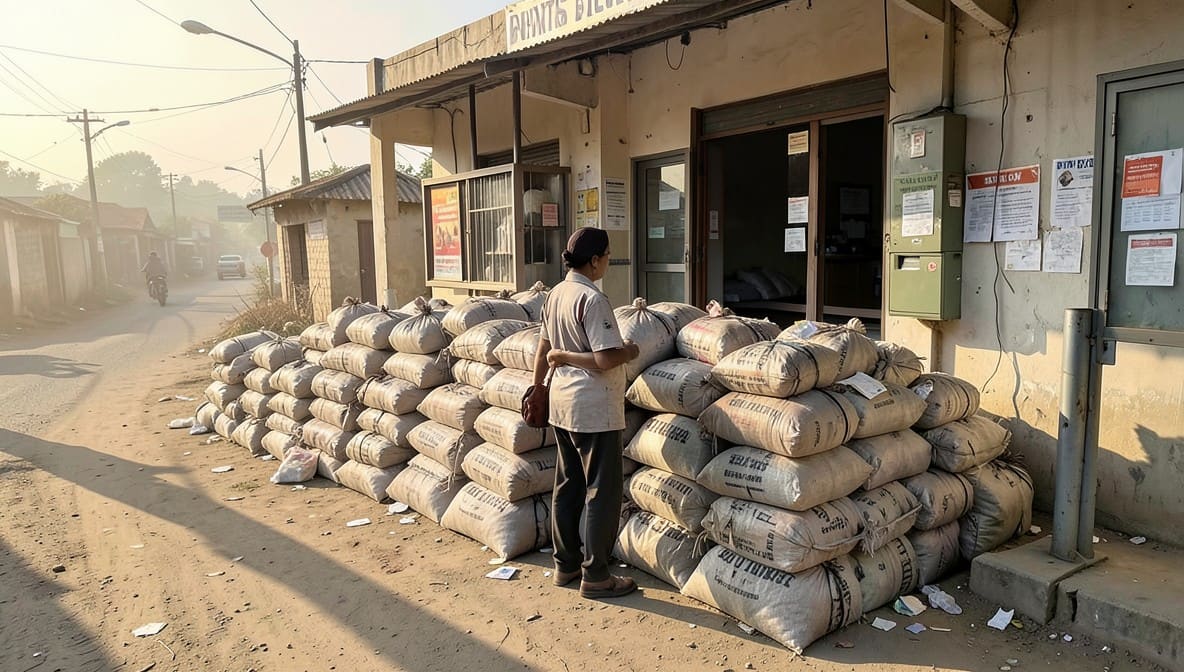
The Central Administrative Tribunal, Ahmedabad, has held that dismissal from service for negligence in postal delivery, amid documented staff shortages and unconsidered medical leave, constitutes a punishment so disproportionate as to shock the conscience, warranting remittal for reconsideration under the doctrine of proportionality.
Background & Facts
The Dispute
The applicant, Jitendra Bhai P. Fanasia, a Postman at Mota Varachha Sub Post Office, Surat, was subjected to disciplinary proceedings under Rule 14 of the CCS (CCA) Rules, 1965, following allegations of gross negligence in the non-delivery of postal articles and unauthorized absence. The disciplinary authority imposed the major penalty of dismissal from service, which was upheld by the Appellate and Revisional Authorities. The applicant challenged these orders before the Central Administrative Tribunal, seeking reinstatement with all consequential benefits.
Key Facts
- The applicant was appointed as a Postman on a contractual basis and later regularized, serving continuously from 2005 until his dismissal.
- From 2005 to 2010, he was the sole Postman responsible for delivering mail to 170 societies and 49 apartments in a rapidly developing area.
- Between 2008 and 2010, he submitted multiple representations (Annexes A/11 to A/14) requesting additional staff due to overwhelming workload, all of which were ignored.
- On 04.10.2010, a Panchnama was prepared by 19 persons alleging approximately 10,000 undelivered ordinary articles were found hidden in the post office premises.
- The applicant submitted a written statement on 26.10.2010 acknowledging carelessness but attributed the backlog to systemic understaffing.
- He applied for medical leave via SR-1 form dated 15.10.2010 for the period 05.10.2010 to 29.10.2010, which was received by the Sub Post Master on 18.10.2010.
- He submitted an unfit medical certificate dated 05.10.2010, which was not considered by the disciplinary authorities.
- The Inquiry Officer (IO) found Charge Nos. 1 and 3 proved, and Charge No. 2 partly proved.
- The IO admitted that independent witnesses (PW-4 to PW-23) did not personally count the undelivered articles but merely signed the Panchnama.
- The applicant requested 11 documents for his defence; only 3 were withheld (including the Personal Order Book of the SPM, which the SPM confirmed was not maintained).
- The charge memorandum was issued by the Assistant Superintendent of Posts (ASP), Surat (East), while the penalty of dismissal was imposed by the Senior Superintendent of Post Offices (SSP), Surat.
- The applicant had over 270 leave credits in his account at the time of absence.
Procedural History
- 19.11.2010: Charge Memorandum issued by ASP, Surat (East), under Rule 14 of CCS (CCA) Rules, 1965.
- 08.10.2011: Inquiry Officer submitted report finding Charges 1 and 3 proved, Charge 2 partly proved.
- 18.01.2012: Disciplinary Authority (SSP, Surat) imposed penalty of dismissal.
- 24.07.2012: Appellate Authority upheld dismissal.
- 17.09.2014: Revisional Authority (CPMG) dismissed revision petition.
- 22.04.2015: Copy of revision order received by applicant.
- 28.01.2015: CAT dismissed OA No. 23/2015 with direction to decide pending revision petition.
- 06.04.2015: Respondents communicated that revision petition had been decided on 17.09.2014.
- 05.04.2016: Present OA No. 420/2016 filed before CAT Ahmedabad.
- 29.04.2026: Judgment delivered by CAT Ahmedabad.
The Parties' Positions
For the Applicant
- Argued that the charge of non-delivery was primarily due to systemic understaffing, which the department ignored despite repeated requests.
- Contended that medical leave for 26 days was not misconduct and the medical certificate was disregarded.
- Asserted that the ASP, who conducted the preliminary inquiry, was not competent to issue the charge memo, and the SSP, who imposed dismissal, was not the appointing authority.
- Claimed violation of natural justice due to non-supply of key documents (Sl. Nos. 3, 6, 9, 10, 11).
- Relied on OA No. 282/2012 (Deepak B. Parmar), where CAT had reduced dismissal to a minor penalty for similar facts.
- Argued that the Panchnama was unreliable as witnesses did not count the articles.
For the Respondents
- Maintained that the disciplinary proceedings were conducted in accordance with Rule 14 of CCS (CCA) Rules, 1965.
- Asserted that the applicant admitted negligence in his written statements.
- Claimed that the ASP was competent under Rule 50 of the Postal Manual to issue the charge memo.
- Stated that the SSP, as per Schedule of Disciplinary Powers, was competent to impose dismissal.
- Argued that non-supply of documents did not vitiate proceedings as no prejudice was demonstrated.
- Contended that the penalty of dismissal was commensurate with the gravity of misconduct.
Relief Sought
The applicant sought:
- Quashing of the dismissal order dated 18.01.2012 and all subsequent orders.
- Reinstatement with full back wages, consequential benefits, and restoration of service.
The Legal Issue
The central questions were: (1) Whether the disciplinary proceedings were vitiated due to lack of competent authority or violation of natural justice; and (2) Whether the penalty of dismissal was grossly disproportionate to the proven misconduct, considering the applicant’s medical leave, unaddressed staff shortages, and long service record, thereby warranting interference under the doctrine of proportionality.
Arguments Presented
For the Appellant/Petitioner
The applicant’s counsel argued that the department’s failure to provide adequate staff despite repeated requests rendered the applicant a scapegoat for systemic failures. The medical leave of 26 days, supported by a certificate, could not be treated as misconduct, especially since the applicant had over 270 leave credits. The IO’s reliance on a Panchnama signed by witnesses who did not count the articles was unreliable. The non-supply of documents such as the SPM’s Personal Order Book and leave applications deprived the applicant of a fair defence. The applicant relied on OA No. 282/2012, where CAT had reduced dismissal to a lesser penalty for a Postman with similar circumstances. Counsel emphasized that the penalty of dismissal amounted to economic death and was disproportionate under Naresh Chandra Bhardwaj v. Bank of India.
For the Respondent/State
The respondents contended that the ASP was competent under Rule 50 of the Postal Manual to initiate proceedings, and the SSP was duly authorized to impose dismissal under CCS (CCA) Rules. The applicant had admitted negligence in writing, and the Panchnama was corroborated by his own statements. The non-supply of documents was not prejudicial as they were not material to the charges. The disciplinary authorities had applied their minds and followed due process. The penalty was justified given the scale of undelivered mail and the applicant’s failure to discharge core duties. The respondents distinguished OA No. 282/2012 on factual grounds and argued that judicial review could not substitute the disciplinary authority’s discretion.
The Court's Analysis
The Tribunal began by affirming the limited scope of judicial review in departmental proceedings, citing B.C. Chaturvedi v. Union of India, Union of India v. P. Gunasekaran, and Naresh Chandra Bhardwaj v. Bank of India. It held that courts and tribunals cannot reappreciate evidence or substitute their own view on guilt, but may interfere if the penalty shocks the conscience or if there is a violation of natural justice or perversity.
On the issue of competence, the Tribunal held that Rule 50 of the Postal Manual permits the officer conducting the preliminary inquiry to act as the Disciplinary Authority, provided no finding of guilt is expressed beforehand. The ASP had not made any such finding, and the SSP, as the competent authority under the CCS Rules, validly imposed dismissal. Thus, the proceedings were not vitiated on grounds of jurisdiction.
Regarding natural justice, the Tribunal applied the test of prejudice from T. Takano v. SEBI and State of U.P. v. Ramesh Chandra Mangalik. It found that while eight of eleven requested documents were supplied, the withheld documents were either non-existent (Personal Order Book) or not material to the charges. The applicant failed to demonstrate how non-supply of these documents prejudiced his defence, particularly since the charges were substantiated by physical recovery and his own admissions.
The Tribunal then turned to the core issue: proportionality. It noted that the applicant had served for over five years without prior misconduct, and the undelivered mail was not due to theft or corruption but to an overwhelming workload that the department had consistently ignored. The applicant’s 26-day absence was due to illness, supported by a medical certificate, and the law recognizes that employees may be absent due to sickness without prior sanction. The IO admitted that witnesses did not count the articles, and the Panchnama was not independently verified.
"In the present case, the applicant remained absent for only 26 days that too due to his sickness... neither the DA, AA or the RA has considered the undisputed fact that inspite of repeated requests made by the Postman... for providing additional staff... has not been given any weightage and the applicant has been held to be solely responsible for all lapses."
The Tribunal emphasized that the penalty of dismissal, which terminates a career and livelihood, was disproportionate to the nature of the proven misconduct. It drew a parallel with OA No. 282/2012, where a similar penalty was reduced despite a longer absence. The Tribunal concluded that the punishment shocked its conscience and that the department’s failure to address systemic issues rendered the applicant’s dismissal unjust.
The Verdict
The applicant succeeded in part. The Tribunal quashed the dismissal order dated 18.01.2012, the Appellate Authority’s order dated 24.07.2012, and the Revisional Authority’s order dated 17.09.2014. The matter was remitted to the competent Disciplinary Authority to reconsider the quantum of punishment within 60 days of receipt of a certified copy of this order. The Tribunal directed that the reconsideration be confined solely to the penalty, with due regard to the applicant’s medical leave, unaddressed staff shortages, and long service record. There shall be no order as to costs.
What This Means For Similar Cases
Medical Leave Cannot Be Equated With Misconduct
- Practitioners must argue that absence due to illness, even without prior sanction, is not misconduct if supported by medical evidence.
- Departmental authorities must consider medical certificates and leave credits before treating absence as unauthorized.
- The doctrine of proportionality requires that penalties be calibrated to the nature of the absence, not merely its duration.
Systemic Failures Must Be Acknowledged in Disciplinary Proceedings
- Where employees repeatedly raise concerns about understaffing or excessive workload, and the department ignores them, the employee cannot be held solely liable for resulting lapses.
- Disciplinary authorities must record reasons for rejecting such systemic arguments; failure to do so renders findings arbitrary.
- Evidence of prior representations should be treated as mitigating factors, not ignored.
Dismissal Is Not Automatic for Negligence
- Negligence in delivery, without mala fide or corruption, does not warrant dismissal if the employee has a clean record and the failure is systemic.
- Tribunals will intervene where the penalty shocks the conscience, especially when the employee has rendered long, unblemished service.
- The doctrine of proportionality is now firmly established as a ground for interference in service matters, even where guilt is established.