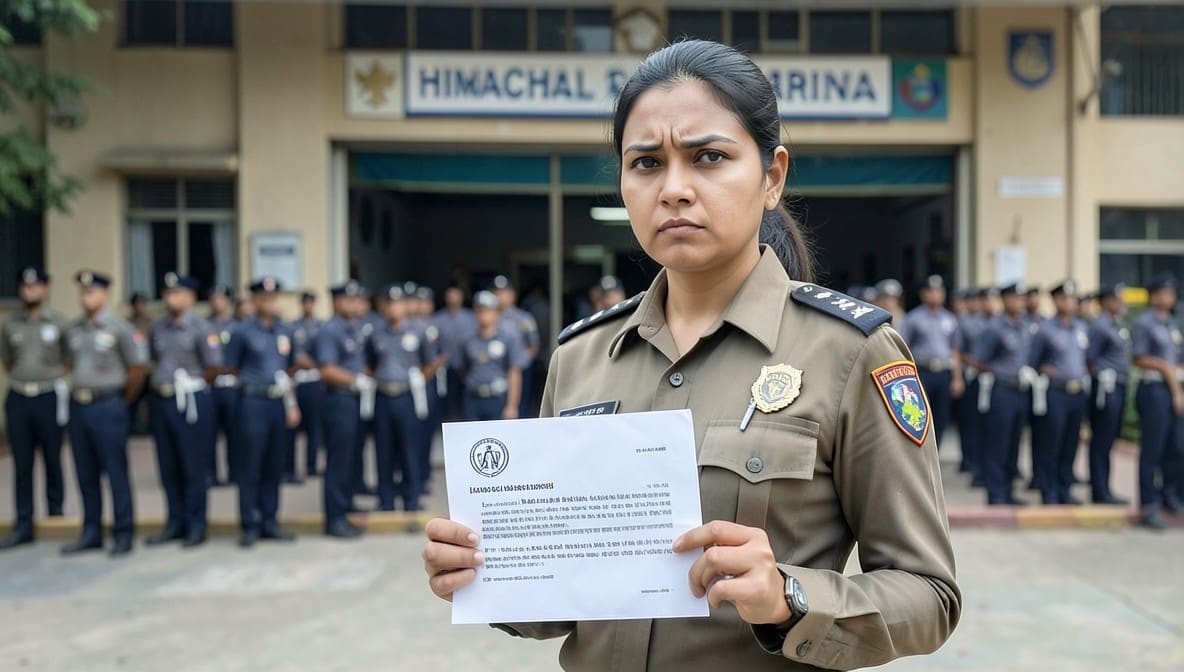
The Rajasthan High Court has clarified that in departmental proceedings against public servants, a finding of willful absence cannot be inferred indirectly - it must be expressly recorded by the disciplinary authority. In a significant ruling, the Court reduced the penalty of removal to compulsory retirement for a Railway Protection Force constable with 16 years of service, emphasizing proportionality and procedural fairness.
Background & Facts
The Dispute
The petitioner, Tina Negi, was a Female Constable in the Railway Protection Force (RPF), permanently confirmed on 28.07.2006. She was posted at Kota and was transferred on 27.11.2018 to Sawai Madhopur on grounds of administrative exigency. She was on privilege leave until 25.11.2018, availed on medical grounds without a sick certificate. On 26.11.2018, she traveled to Delhi for medical treatment, citing migraine and subsequent spondylosis due to an accidental fall. She did not obtain a sick certificate from the Railway Medical Officer at Kota or in Delhi.
Key Facts
- The petitioner was granted privilege leave until 25.11.2018 without a medical certificate.
- She traveled to Delhi on 26.11.2018, the day after her leave expired and one day before the transfer order was issued.
- She submitted a medical certificate from Virmani Hospital, New Delhi, dated 10.12.2018, diagnosing severe migraine and spondylosis.
- She later sought treatment in Mumbai for depression allegedly caused by stress and migraine.
- She did not produce travel documents for 26.11.2018.
- She filed a writ petition challenging the transfer order, which was later withdrawn.
- She did not submit a ‘Sick Memo’ from her controlling officer as required under Rule 538 of the Indian Railway Medical Manual.
- She failed to report to the Railway Medical Officer in Delhi or Kota despite being within jurisdiction.
- The disciplinary proceedings were initiated on three charges: disobedience of transfer order, unauthorized absence, and violation of medical leave procedure.
Procedural History
- 25.11.2018: Petitioner’s privilege leave expired without submission of sick certificate.
- 26.11.2018: Petitioner traveled to Delhi; transfer order issued next day.
- 10.12.2018: Petitioner submitted medical certificate from Virmani Hospital, New Delhi, seeking extension of leave.
- 12.12.2018: Petitioner’s mother submitted a letter supporting medical condition.
- 12.09.2019: Enquiry Officer issued ex parte report finding all three charges proved.
- 26.12.2019: Second Respondent, Senior Divisional Security Commissioner, imposed penalty of removal.
- 30.06.2020: Deputy Inspector General, RPF, Jabalpur, dismissed the appeal.
- 12.06.2020: Writ Petition No. 12444/2020 filed before Rajasthan High Court.
- 21.04.2026: Arguments concluded.
- 30.04.2026: Judgment pronounced.
The Parties' Positions
For the Petitioner: Argued that her absence was due to genuine medical conditions, not willful disobedience. Contended that the competent authority failed to follow Rule 538(4) by not referring her private medical certificate to a Railway Medical Officer for verification. Relied on Krishnakant B. Parmar, Shri Bhagwan Lal Arya, and Glaxo Laboratories to assert that unauthorized absence does not equate to willful absence without clear evidence.
For the Respondents: Contended that the petitioner was present at headquarters on 26.11.2018 and could have obtained a sick certificate from the Railway Medical Officer. Her travel to Delhi and Mumbai, coupled with the filing and subsequent withdrawal of a writ petition against the transfer, indicated mala fide intent. Cited State of U.P. v. Ashok Kumar Singh and Union of India v. Managobinda Samantaray to argue that discipline in a paramilitary force demands strict compliance, and the penalty of removal was proportionate.
Relief Sought
The petitioner sought quashing of the removal order dated 26.12.2019 and the appellate order dated 30.06.2020, and requested reinstatement with full back wages and benefits. Alternatively, she sought reduction of the penalty to compulsory retirement.
The Legal Issue
The central question was whether unauthorized absence due to alleged medical grounds, without compliance with Rule 538 of the Indian Railway Medical Manual, constitutes willful disobedience warranting removal from service, and whether the penalty of removal is proportionate for a constable with 16 years of service where no explicit finding of willfulness was recorded.
Arguments Presented
For the Petitioner
The petitioner’s counsel argued that the absence was not willful but stemmed from genuine medical distress. He emphasized that Rule 538(4) mandates that when a private medical certificate is submitted, the authority must refer it to a Railway Medical Officer for verification before rejection. This procedure was not followed. He cited A.L. Kalra and Inspector Prem Chand to assert that absence due to illness, even if procedurally flawed, cannot be equated with mala fide conduct unless willfulness is established. He further contended that the petitioner’s 16-year service record, absence of prior misconduct, and the lack of a specific finding on willfulness rendered removal manifestly disproportionate.
For the Respondent
The respondents’ counsel argued that the petitioner was within jurisdiction of the Railway Medical Officer at Kota on 26.11.2018 and deliberately avoided obtaining a sick certificate. Her travel to Delhi and Mumbai, coupled with the filing of a writ petition against the transfer, indicated an attempt to evade duty. The submission of a private medical certificate without a ‘Sick Memo’ from the controlling officer violated Rule 538(6), which is mandatory for RPF personnel. The respondents relied on Union of India v. Gulam Moho. Bhat and The State of Bihar v. Phulpari Kumari to argue that in disciplined forces, non-compliance with medical leave procedures, especially when linked to avoidance of transfer, amounts to grave misconduct justifying removal.
The Court's Analysis
The Court acknowledged the limited scope of judicial review in departmental proceedings, noting that interference is warranted only if findings are perverse, based on irrelevant evidence, or if procedure is violated. It examined the three charges in detail.
Regarding Charges 1 and 2 - disobedience of transfer and unauthorized absence - the Court found that while the petitioner’s conduct was unauthorized, the Enquiry Officer and Disciplinary Authority failed to record a specific finding of willfulness. The Court observed: > "There is no clear finding recorded with regard to willful absence. Although there is evidence on record, no such finding has been rendered either by the Enquiry Officer or by the Disciplinary Authority."
The Court noted the petitioner’s ability to travel to Delhi and Mumbai, her failure to produce travel documents, and the timing of her writ petition - all suggesting strategic avoidance. Yet, it held that without an explicit finding of willfulness, the charges could not sustain the penalty of removal.
On Charge 3 - violation of medical leave procedure - the Court held that Rule 538(4) was not complied with. The petitioner was within the jurisdiction of the Railway Medical Officer at Kota on 26.11.2018 and could have obtained a certificate there. Even in Delhi, no evidence was presented that no Railway Medical Officer was available. The failure to obtain a ‘Sick Memo’ from the controlling officer, as mandated under Rule 538(6) for RPF personnel, was a serious procedural lapse.
The Court concluded: > "The conduct of the petitioner, when examined in light of the evidence on record, prima facie indicates willful conduct. However, there is no clear finding by the Enquiry Officer or the Disciplinary Authority that the absence was willful so as to constitute disobedience amounting to grave misconduct."
While the Court found the charges substantiated, it held that removal was shockingly disproportionate for an employee with 16 years of unblemished service. It invoked the doctrine of proportionality and the principle that punishment must fit the crime, especially where the disciplinary authority has not made a clear finding on intent.
The Verdict
The writ petition was partly allowed. The penalty of removal was modified to compulsory retirement. The date of removal (26.12.2019) shall be treated as the date of compulsory retirement. All retirement benefits, including pension, gratuity, and other dues, shall be extended to the petitioner as if she had retired on that date. The findings on all three charges were upheld. No costs were awarded. The Court declined to remand the matter to avoid further delay, treating it as a rarest of rare case justifying direct modification of punishment.
What This Means For Similar Cases
Willful Absence Must Be Explicitly Found
- Practitioners must ensure that disciplinary authorities explicitly record findings of willfulness in cases involving unauthorized absence; mere non-compliance or delay does not equate to mala fide intent.
- Absence due to medical grounds, even if procedurally defective, cannot be treated as misconduct without a clear finding of willfulness under Arnesh Kumar v. State of Bihar principles.
Medical Leave Compliance Is Non-Negotiable in RPF
- For RPF personnel, Rule 538(6) mandates a ‘Sick Memo’ from the controlling officer before any medical leave is sanctioned. Failure to comply invalidates the leave claim regardless of private medical certificates.
- Authorities cannot reject private medical certificates without referring them to a Railway Medical Officer for verification, as required under Rule 538(4).
Proportionality Overrides Rigidity in Long-Serving Employees
- In cases involving employees with 10+ years of service and no prior misconduct, removal may be deemed disproportionate even if charges are proved.
- Courts may directly reduce punishment to compulsory retirement to avoid prolonged litigation, provided the misconduct is serious but not criminal or corrupt.
- This judgment sets a precedent for judicial intervention in disciplinary matters where procedural lapses in finding willfulness combine with long service to justify mitigation.