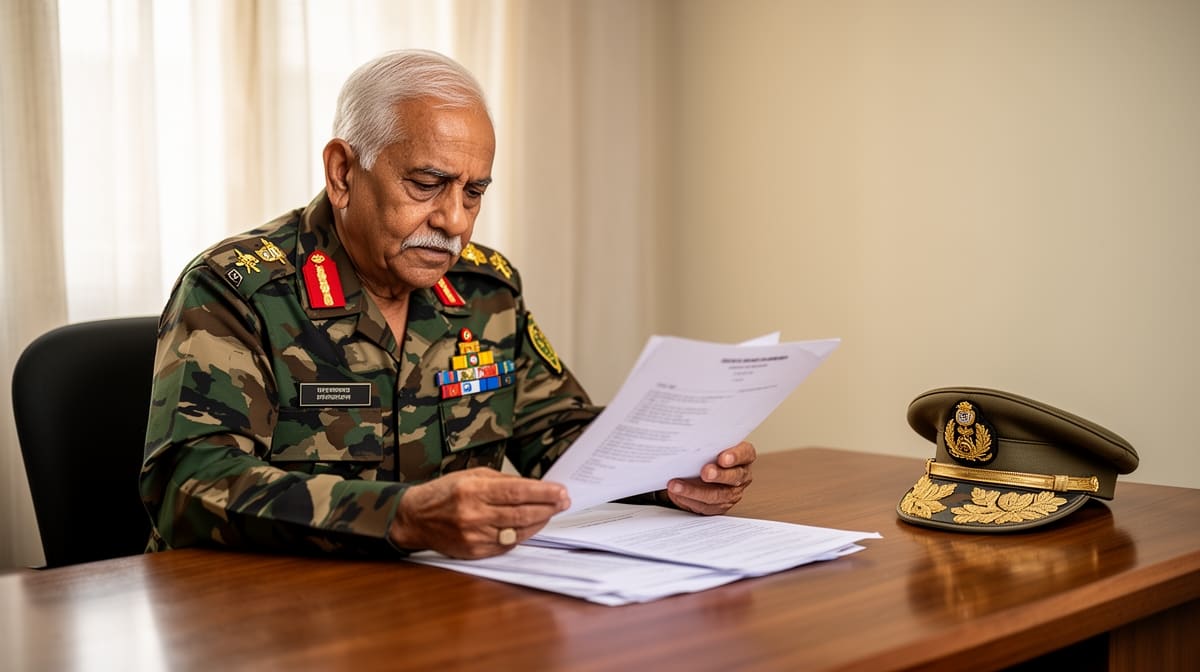
The High Court of Madhya Pradesh has set aside the denial of disability pension to a Border Security Force constable diagnosed with schizophrenia, holding that the Medical Board must establish pre-recruitment illness with cogent documentary evidence. The Court directed reconsideration of the petitioner's claim within six months and granted arrears from the date of boarding out.
Background & Facts
The Genesis
The petitioner, Hariom Lodhi, was appointed as a Constable in the Border Security Force (BSF) in 2011 after being declared medically fit at the time of recruitment. He rendered more than five years of service before being examined by a Medical Board, which diagnosed him with schizophrenia and categorized him as "S5H1A1P1E1". Consequently, he was declared medically unfit for further service and boarded out with effect from 15.01.2018.
Key Facts
- The petitioner was recruited in 2011 after a thorough medical examination and found fit for service.
- He served for over five years before being medically boarded out on 15.01.2018 due to schizophrenia.
- The Medical Board categorized his disability as "S5H1A1P1E1", indicating permanent incapacitation.
- The petitioner's claim for disability pension was rejected by order dated 13.01.2018 (Annexure P/1) on the ground that the disability was not attributable to service.
- The appellate authority affirmed the rejection vide order dated 03.10.2018 (Annexure P/2), which was a non-speaking and unreasoned order.
- The petitioner relied on Sant Kumar v. Union of India (W.P. No. 507 of 2003), where a similarly situated employee suffering from schizophrenia was granted disability pension.
Procedural History
- 2011: Petitioner appointed as Constable in BSF after medical fitness clearance.
- 15.01.2018: Petitioner boarded out from service due to schizophrenia.
- 13.01.2018: Order rejecting disability pension issued (Annexure P/1).
- 03.10.2018: Appellate authority affirms rejection (Annexure P/2).
- 2019: Present writ petition filed before the High Court of Madhya Pradesh at Gwalior.
- 23.07.2026: Judgment delivered allowing the writ petition.
The Parties' Positions
- Petitioner's Case: The petitioner contended that his schizophrenia developed during service due to strenuous conditions and was attributable to Government service. He relied on Sant Kumar v. Union of India for parity.
- Respondent's Case: The Union of India argued that the petitioner was mentally ill prior to recruitment and had rightly been medically boarded out. It contended that the petitioner had not completed ten years of qualifying service for pension.
Relief Sought
The petitioner sought:
- Quashing of the orders dated 13.01.2018 and 03.10.2018.
- Direction to grant disability pension from the date of boarding out (15.01.2018) with arrears and interest @ 9% p.a.
- Compliance within the time specified by the Court.
The Legal Issue
The central question was whether the denial of disability pension to the petitioner, who was medically boarded out due to schizophrenia, was legally sustainable when the Medical Board failed to produce cogent documentary evidence establishing pre-recruitment illness.
Arguments Presented
For the Petitioner
The petitioner argued that:
- He was medically fit at the time of recruitment in 2011 and developed schizophrenia during service due to strenuous conditions.
- The Medical Board's finding that he was suffering from schizophrenia prior to recruitment was unsupported by any scientific test or documentary evidence.
- The decision in Sant Kumar v. Union of India (W.P. No. 507 of 2003) was directly applicable, as both cases involved employees diagnosed with schizophrenia after recruitment.
- The respondents failed to discharge their burden of proving pre-recruitment illness.
For the Respondent
The Union of India contended that:
- The petitioner was mentally ill prior to his appointment and had rightly been medically boarded out.
- The Medical Board is an expert body, and its recommendation was sufficient to deny disability pension.
- The petitioner had not completed ten years of qualifying service, which was a prerequisite for pension under the rules.
The Court's Analysis
The Court examined the provisions of Rule 42 of the Central Reserve Police Force Rules, 1955, which makes the Central Civil Services (Pension) Rules, 1972 applicable to CRPF personnel. The Court noted that the respondents had not produced any documentary evidence to establish that the petitioner was suffering from schizophrenia prior to his recruitment.
The Court relied on the decision in Sant Kumar v. Union of India (W.P. No. 507 of 2003), affirmed in Writ Appeal No. 159 of 2011, where a similarly situated employee suffering from schizophrenia was granted disability pension. The Court observed:
"It is a fit case in which the petitioner should have been granted disability pension as he was medically boarded out on account of mental illness i.e. schizophrenia. The stand of the respondents that the petitioner has approached this Court at the belated stage will also not absolve the respondents from making payment of pensionary dues to the petitioner."
The Court held that the respondents could not turn down the petitioner's claim on the ground that he was suffering from schizophrenia prior to recruitment, as no documentary proof had been filed to establish this contention. The Court emphasized that the burden was on the respondents to prove pre-recruitment illness with cogent evidence.
The Court also noted that the petitioner was entitled to notional fixation of pension from the date of his entitlement and arrears of pension from the date of boarding out.
The Verdict
The High Court allowed the writ petition. The Court set aside the orders dated 13.01.2018 and 03.10.2018 and directed the respondents to:
- Reconsider the petitioner's case for grant of disability pension within six months from the date of receipt of a certified copy of the order.
- Pass a fresh reasoned order in accordance with law.
- Grant notional fixation of pension from the date of entitlement.
- Grant arrears of disability pension with effect from 15.01.2018, the date on which the petitioner was boarded out from service.
The Court also directed that the petitioner shall not be denied disability pension on the ground of pre-recruitment illness unless the respondents produce cogent documentary evidence to establish the same.
What This Means For Similar Cases
Medical Boards Must Establish Pre-Recruitment Illness with Evidence
- The burden of proving pre-recruitment illness lies on the respondents (employer).
- Medical Boards cannot rely on unsupported assertions; cogent documentary evidence is required to deny disability pension.
- Employees medically boarded out due to disabilities developed during service are entitled to disability pension unless pre-existing illness is proven.
Non-Speaking Orders Are Legally Unsustainable
- Orders rejecting claims for disability pension must be reasoned and speaking.
- Non-speaking orders violate the principles of natural justice and are liable to be set aside.
- Appellate authorities must record reasons for affirming or reversing lower orders.
Parity in Disability Pension Claims
- Courts will grant parity in disability pension claims where employees suffer from similar disabilities and are similarly situated.
- Precedents like Sant Kumar v. Union of India serve as binding authorities for employees claiming disability pension.
- Employers cannot deny disability pension solely on the ground of pre-existing illness without evidence.
Notional Fixation and Arrears
- Employees medically boarded out are entitled to notional fixation of pension from the date of entitlement.
- Arrears of disability pension are payable from the date of boarding out, not from the date of filing the petition.
- Interest on arrears may be granted as per statutory provisions or judicial precedents.
Compliance Timelines Are Mandatory
- Courts impose strict timelines for compliance (e.g., six months for reconsideration of claims).
- Non-compliance with such timelines may result in contempt proceedings or further judicial intervention.
- Employers must adhere to judicial directions to avoid adverse consequences.