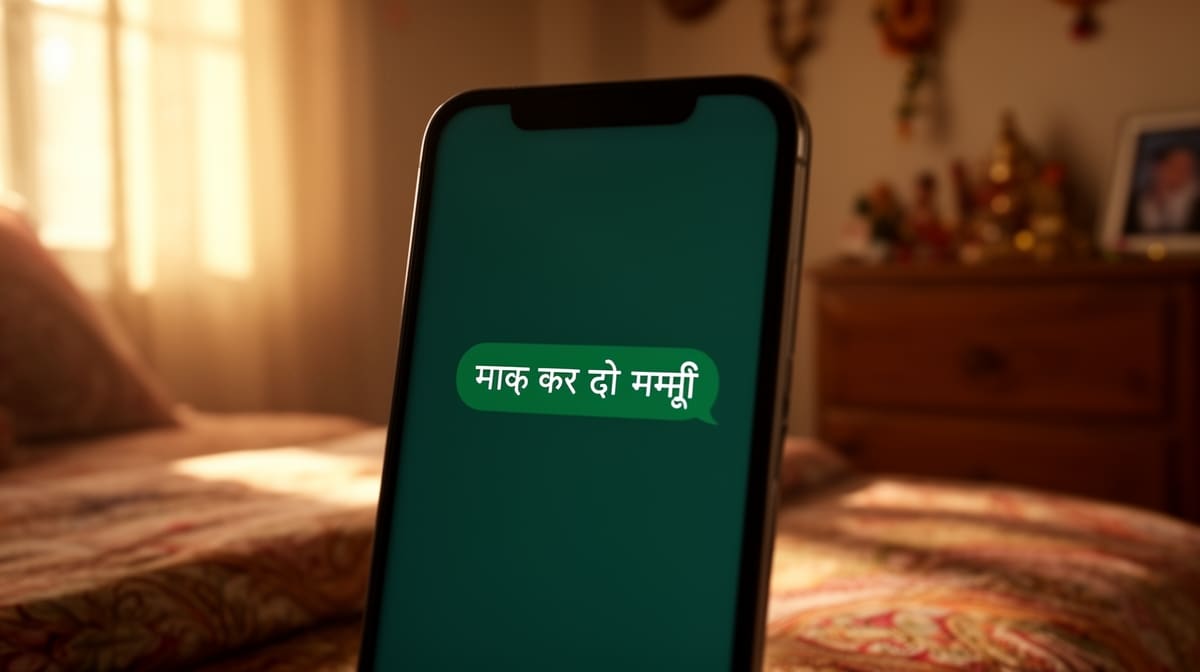
The Kerala High Court has affirmed that authorities cannot close investigations into suicide cases merely because a final report has been filed, when credible allegations of cyberbullying emerge post-factum. This ruling imposes a positive duty on law enforcement to revisit complaints that may reveal previously overlooked causal factors in suicides, reinforcing the state’s obligation under Article 21 to protect life with due diligence.
Background & Facts
The Dispute
The petitioner, the father-in-law of Saranya, a young woman who died by suicide in August 2023, alleged that her death was directly caused by sustained cyberbullying. He submitted that the initial police investigation, which culminated in a final report dropping charges, failed to examine digital evidence or interview online harassers despite clear indications in the deceased’s communications.
Procedural History
- 11 August 2023: FIR No. 1157/2023 registered at Chadayamangalam Police Station under Section 306 IPC (abetment of suicide)
- 16 August 2023: Inquest report filed, concluding suicide without probing digital harassment
- 10 December 2023: Petitioner filed Ext.P3 representation urging reinvestigation, citing WhatsApp messages, social media posts, and screenshots as evidence of cyberbullying
- January 2024: Police submitted final report before Sub-Divisional Magistrate, Punalur, closing the case
- February 2023: Writ petition filed under Article 226 seeking direction to reconsider Ext.P3
Relief Sought
The petitioner sought a direction to the Superintendent of Police (Rural), Kottarakkara, to treat Ext.P3 as a fresh complaint, reopen the investigation, and specifically examine digital evidence of cyberbullying as a potential cause of suicide.
The Legal Issue
The central question was whether the police can conclusively close a suicide investigation by filing a final report without examining credible allegations of cyberbullying, even when such allegations are raised in a subsequent representation.
Arguments Presented
For the Petitioner
The petitioner relied on State of Haryana v. Bhajan Lal and Arnesh Kumar v. State of Bihar to argue that a final report is not a final determination of guilt or innocence, but merely a procedural step. He contended that Article 21 imposes a duty on the state to investigate all plausible causes of suicide, including psychological trauma from online harassment. Ext.P3 contained specific digital evidence that was never analyzed, rendering the original investigation incomplete and violative of natural justice.
For the Respondent
The State contended that the investigation was thorough, the inquest report was duly filed, and the final report was based on evidence collected. They argued that reopening the case on the basis of a representation filed four months later would set a precedent for endless re-investigations and undermine the finality of police reports. They cited State of U.P. v. Krishna Kumar to assert that courts should not interfere unless there is clear mala fide or procedural illegality.
The Court's Analysis
The Court rejected the notion that a final report extinguishes the duty to investigate new evidence. It emphasized that suicide investigations must be holistic, particularly when mental health and digital abuse are implicated. The Court observed that cyberbullying is not a peripheral issue but a recognized social pathology with documented links to suicidal ideation, as affirmed by the National Crime Records Bureau and WHO guidelines.
"The police cannot adopt a myopic approach to suicide cases by ignoring the evolving nature of harassment, especially in the digital age. A representation containing specific digital evidence cannot be dismissed merely because a final report has been filed."
The Court distinguished State of U.P. v. Krishna Kumar by noting that case involved lack of prima facie evidence, whereas here, Ext.P3 contained concrete, verifiable material. The Court held that the filing of a final report does not bar reconsideration upon receipt of new, credible information. The state’s obligation under Article 21 is not discharged by mechanical closure of cases; it requires proactive, empathetic, and technologically informed inquiry.
The Verdict
The petitioner succeeded. The Court held that the police must reconsider Ext.P3 representation and reopen the investigation into cyberbullying as a possible cause of suicide. The Superintendent of Police (Rural), Kottarakkara, was directed to treat the representation as a fresh complaint and take appropriate action within four weeks.
What This Means For Similar Cases
Cyberbullying Must Be Investigated as a Causal Factor
- Practitioners must now insist on forensic analysis of digital devices and social media accounts in all suicide cases involving minors or young adults
- Failure to examine digital evidence may render investigations legally deficient under Article 21
- Police must document why digital evidence was not pursued, or risk judicial intervention
Final Reports Are Not Final
- A final report under Section 173 CrPC is not a conclusive determination of the case’s merits
- New representations with credible evidence must be treated as fresh complaints, not as mere appeals
- Courts will intervene if police show indifference to emerging forms of psychological harm
Duty to Act on Representations Is Non-Discretionary
- Representations under Section 154 CrPC or as public interest communications trigger mandatory scrutiny
- Delay in acting on such representations may constitute violation of Article 21
- Petitioners may now file writs under Article 226 to compel action where police inaction is evident