The Rajasthan High Court has reaffirmed that a convicted person’s statutory right to have their appeal heard on merits cannot be extinguished solely due to non-compliance with a time-bound deposit condition, especially when the delay is explained by bona fide hardship. This ruling reinforces procedural fairness in criminal appellate proceedings.
Background & Facts
The Dispute
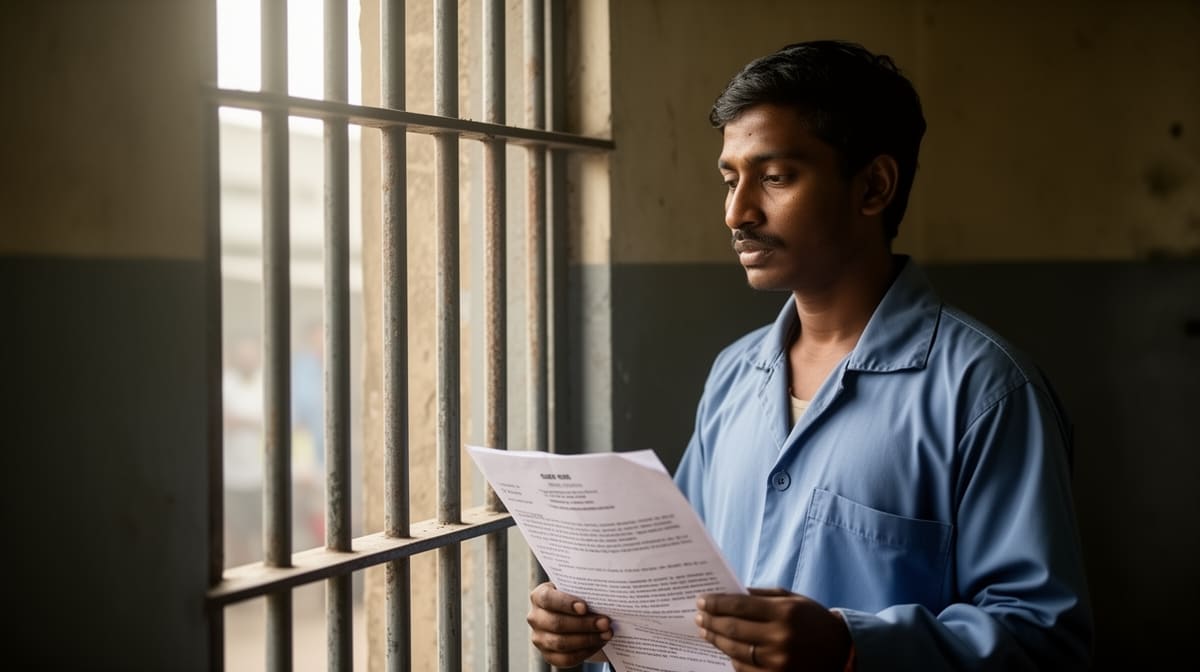
The petitioner, Ishwarlal S/o Shri Goutamlal, was convicted in a criminal case and sentenced by the trial court. As a condition for suspending the sentence pending appeal, the trial court ordered him to deposit 20% of the compensation amount awarded against him, vide order dated 04.02.2025.
Key Facts
- The petitioner was convicted and sentenced by the trial court prior to 04.02.2025
- On 04.02.2025, the trial court suspended the sentence subject to deposit of 20% of the compensation amount
- The petitioner, citing poor financial condition and deteriorating health, failed to deposit the amount within the stipulated time
- On 09.04.2026, the appellate court dismissed his application seeking extension of time for deposit
- The appellate court is now proceeding to dismiss the appeal on the ground of non-compliance with the deposit condition
- The petitioner has consistently expressed willingness to deposit the amount if granted additional time
Procedural History
- 04.02.2025: Trial Court suspended sentence subject to deposit of 20% compensation amount
- Between 04.02.2025 and 09.04.2026: Petitioner sought extension due to financial and medical hardship
- 09.04.2026: Appellate Court dismissed application for extension of time
- 19.06.2026: Criminal Writ Petition No. 1994/2026 filed before the High Court of Rajasthan, Jodhpur
- 24.06.2026: Hearing before Vacation Judge, Justice Baljinder Singh Sandhu
Relief Sought
The petitioner sought quashing of the appellate court’s order dated 09.04.2026 dismissing his extension application, and a direction to allow him to deposit the 20% compensation amount within a reasonable extended period, so that his appeal may be heard on merits.
The Legal Issue
The central question was whether the statutory right to appeal under the Code of Criminal Procedure can be forfeited merely because the appellant failed to deposit a conditionally mandated amount within the original time frame, when the delay is explained by genuine hardship and the appellant remains willing to comply.
Arguments Presented
For the Petitioner
Learned counsel, Mr. Firoz Khan, submitted that the petitioner’s right to appeal is a statutory right under Section 374 CrPC, which cannot be abridged by procedural technicalities. He emphasized that the petitioner has never disputed liability or refused to pay; he merely sought additional time due to documented financial distress and medical conditions. Reliance was placed on the principle that appellate rights are substantive and must be protected unless there is mala fide or deliberate delay.
For the Respondent
Mr. Vikram Rajpurohit, Additional Advocate General, argued that the appellate court’s order was in accordance with the trial court’s directive and that compliance with court orders is mandatory. He contended that granting extension would set a precedent undermining judicial discipline and encourage dilatory tactics.
The Court's Analysis
The Court examined the nature of the deposit condition imposed by the trial court. It observed that such conditions are typically imposed to prevent abuse of the appellate process and ensure that the appellant does not evade financial liability. However, the Court emphasized that such conditions are procedural safeguards, not substantive bars to the exercise of statutory rights.
"The petitioner has expressed his readiness and willingness to deposit the requisite 20% amount. Having been convicted, he possesses a statutory right to have his appeal adjudicated on merits, which cannot be defeated solely on account of non-deposit of the amount within the prescribed time."
The Court noted that the reasons advanced by the petitioner - poor financial condition and medical issues - are neither frivolous nor fabricated. The absence of any allegation of mala fide or deliberate non-compliance weighed heavily in the petitioner’s favor. The Court distinguished between procedural non-compliance due to hardship and intentional defiance, holding that the former does not justify denial of a fundamental right.
The Court further held that the appellate court’s decision to dismiss the appeal on this ground alone was legally unsustainable. The purpose of the deposit condition is not punitive but protective; it is fulfilled upon actual deposit, regardless of timing, if the delay is excusable.
The Verdict
The petitioner succeeded. The Court allowed the writ petition and directed the petitioner to deposit the requisite 20% compensation amount on or before 29.06.2026. In the event of compliance by this date, the deposit shall be deemed sufficient fulfillment of the order dated 04.02.2025, and the appellate court shall proceed to hear the appeal on its merits. The Court explicitly preserved the petitioner’s right to a full adjudication of his appeal.
What This Means For Similar Cases
Statutory Appeal Rights Are Not Conditional on Timely Compliance Alone
- Practitioners must argue that Section 374 CrPC guarantees the right to appeal, and conditions attached to suspension of sentence are ancillary, not jurisdictional
- Courts cannot treat non-compliance with deposit conditions as automatic grounds for dismissal of appeals
- A petitioner’s willingness to pay, coupled with credible reasons for delay, must be considered before denying access to appellate forums
Courts Must Distinguish Between Dilatory Conduct and Genuine Hardship
-
The burden is on the state to prove mala fide or deliberate non-compliance
-
Medical and financial hardship, if documented, constitute valid grounds for extension
-
Appellate courts must record reasons for rejecting extension applications, not merely cite non-compliance
-
Always file a formal application for extension with supporting affidavits (medical reports, income proof)
-
Cite this judgment when opposing dismissal of appeals on technical grounds
-
Advocate for proportionality: the penalty for delay must not extinguish the right to appeal