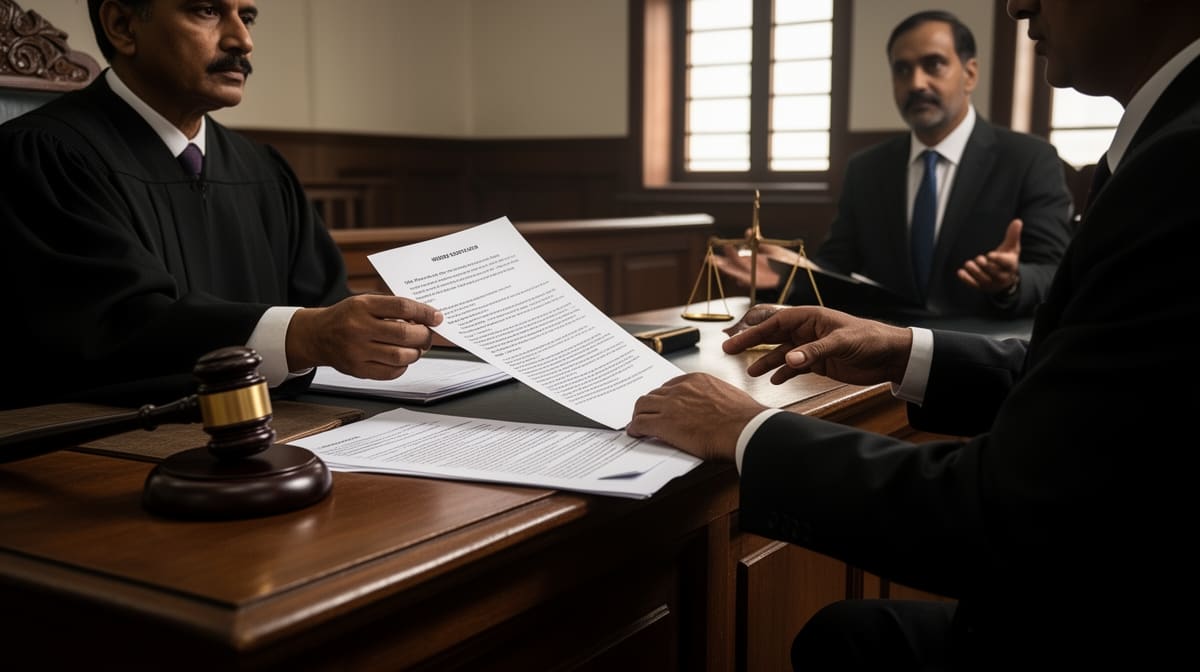
The Allahabad High Court's judgment in Puneet v. State of U.P. establishes a critical precedent on the evidentiary value of witness statements that materially deviate from their earlier recorded versions. The Court held that improvements in witness testimony during trial, when contradicting their statements under Section 161 CrPC, render the prosecution case unreliable, particularly in serious offences like murder.
Background & Facts
The Dispute
The case arose from the murder of Mohit Bhati on 27.11.2018 near Village Vasantpur, Gautam Buddha Nagar. The informant, Mahesh Bhati (PW-1), initially lodged an FIR against unknown persons, alleging his son was shot while returning from Greater Noida Development Authority. The deceased's car (UP16 BE-7011) was found parked at the scene, and he was declared dead at Naveen Hospital.
Procedural History
The case progressed through multiple stages:
- 27.11.2018: FIR registered under Section 302 IPC (Case Crime No. 1025/2018)
- 31.03.2019: Accused-appellant Puneet arrested; country-made pistol and cartridges recovered
- 2019: Separate case registered under Sections 25/27 Arms Act (Case Crime No. 374/2019)
- 30.09.2021: Charges framed under Section 302/34 IPC and Sections 25/27 Arms Act
- 29.08.2022: Trial Court convicted the appellant to life imprisonment and 3 years RI
- 26.02.2026: High Court allowed the appeal and acquitted the appellant
The Parties' Positions
The appellant contended that:
- The prosecution failed to prove its case beyond reasonable doubt
- Witnesses materially improved their statements during trial
- The alleged recovery of the murder weapon was planted and suspicious
- The Section 313 CrPC statement was recorded improperly
The State argued that:
- Direct evidence from eyewitnesses (PW-2) established the appellant's guilt
- Forensic evidence linked the recovered pistol to the crime
- Previous enmity provided motive for the murder
The Legal Issue
The central questions before the Court were:
- Whether material improvements in witness statements during trial, when contradicting their Section 161 CrPC statements, render the prosecution case unreliable?
- What is the evidentiary value of recovery of weapons when the arrest and recovery are not supported by independent witnesses?
- Whether the improper recording of Section 313 CrPC statement vitiates the trial?
Arguments Presented
For the Appellant
The defence relied on the following contentions:
- Witness Improvements: Prosecution witnesses (PW-1, PW-2, PW-3, PW-4, PW-5) drastically changed their statements during trial, contradicting their earlier Section 161 CrPC statements. This was fatal to the prosecution case, as held in Dhanna v. State of M.P. and Munesh v. State of U.P.
- Recovery of Weapon: The country-made pistol and cartridges were recovered four months after the incident, without any independent witness. The Forensic Science Laboratory report further discredited the prosecution's claim, as the recovered pistol could not fire the bullet recovered from the deceased.
- Section 313 CrPC: The trial court failed to record the appellant's answers under Section 313 CrPC, rendering the statement blank and vitiating the trial.
- Motive: The prosecution's attempt to establish motive through previous enmity was uncorroborated and unreliable.
For the Respondent
The State contended that:
- Eyewitness Testimony: Chandrahas (PW-2) was an eyewitness to the incident and consistently identified the appellant as the shooter.
- Forensic Evidence: The FSL report confirmed the presence of gunshot residue on the recovered pistol, linking it to the crime.
- Recovery: The recovery of the pistol and cartridges from the appellant's possession was sufficient to establish guilt under Section 27 of the Evidence Act.
- Motive: The previous enmity between the parties provided a clear motive for the murder.
The Court's Analysis
The High Court conducted a meticulous examination of the prosecution evidence and identified critical flaws that rendered the conviction unsustainable.
Witness Improvements and Reliability
The Court observed that the prosecution witnesses materially improved their statements during trial, contradicting their earlier Section 161 CrPC statements. This was particularly evident in the testimonies of:
-
Mahesh Bhati (PW-1): Initially lodged the FIR against unknown persons but later claimed his brother, Umesh, had witnessed the appellant shooting the deceased. The Court noted that PW-1 deliberately changed his statement to implicate the appellant.
-
Chandrahas (PW-2): Claimed to be an eyewitness but contradicted his own statements during cross-examination. The Court found that PW-2's testimony was false, fabricated, and unreliable, as it differed from his Section 161 CrPC statement.
The Court relied on the principles laid down in Dhanna v. State of M.P. and Munesh v. State of U.P., holding that improvements in witness statements during trial, when contradicting their earlier recorded versions, render the evidence unreliable and unworthy of credit.
"The trial court which relied on the evidence of Nanuram (PW-6) pointed out that the witness did not refer to any role played by Dhanna when he gave statement to the police during investigation and hence a conviction for the offence of murder cannot be passed against Dhanna on the strength of improvement made at the trial."
Recovery of Weapon
The Court scrutinized the recovery of the country-made pistol and cartridges from the appellant's possession. The following factors cast doubt on the prosecution's case:
-
Delay in Recovery: The appellant was arrested four months after the incident, and the recovery was made without any independent witness.
-
Forensic Evidence: The FSL report confirmed that the recovered pistol could not fire the bullet recovered from the deceased's body. The Court held that the recovery was suspicious and unreliable.
-
Absence of Public Witnesses: The investigating officer (PW-11) admitted that no public witness was present during the arrest or recovery, despite the place being near an inhabited area.
The Court concluded that the recovery was planted to falsely implicate the appellant.
Section 313 CrPC Statement
The Court noted a glaring procedural lapse in the recording of the appellant's statement under Section 313 CrPC. The trial court prepared questions in advance but failed to record the appellant's answers, leaving the columns blank. The Court held that this vitiated the trial, as the appellant was denied an opportunity to explain the incriminating evidence.
Motive
The prosecution attempted to establish motive through previous enmity between the parties. However, the Court found that:
-
The witnesses (PW-4 and PW-5) contradicted each other and failed to provide corroborative evidence.
-
No written complaint was lodged regarding the alleged threats, and the witnesses admitted that the police did not record their statements accurately.
The Court held that the prosecution failed to establish motive beyond reasonable doubt.
The Verdict
The High Court allowed the appeal and set aside the conviction and sentence imposed by the trial court. The Court held that:
-
The prosecution failed to prove its case beyond reasonable doubt.
-
The material improvements in witness statements rendered the evidence unreliable.
-
The recovery of the weapon was suspicious and not supported by independent witnesses.
-
The improper recording of Section 313 CrPC statement vitiated the trial.
The appellant was acquitted of all charges and directed to be released forthwith.
What This Means For Similar Cases
Improvements in Witness Statements Are Fatal
Practitioners must scrutinize witness testimonies for material improvements during trial. The Court emphasized that:
- Section 161 CrPC statements are critical for assessing the reliability of witnesses.
- Contradictions between Section 161 CrPC statements and trial testimony render the evidence unreliable.
- Courts are likely to reject testimonies where witnesses drastically change their statements without plausible explanation.
Recovery of Weapons Must Be Corroborated
The judgment underscores the importance of independent corroboration in cases relying on recovery of weapons:
- Delay in recovery raises suspicion and weakens the prosecution case.
- Absence of public witnesses during recovery is fatal, especially in inhabited areas.
- Forensic evidence must corroborate the prosecution's claims; discrepancies can lead to acquittal.
Procedural Compliance Is Non-Negotiable
The Court's observations on the improper recording of Section 313 CrPC statement highlight the importance of procedural compliance:
- Section 313 CrPC must be recorded meticulously, with the accused's answers properly documented.
- Blank or incomplete statements vitiate the trial and can lead to acquittal.
- Trial courts must strictly adhere to procedural requirements to ensure fair trials.
Motive Must Be Established Beyond Doubt
The judgment clarifies that motive alone cannot establish guilt in criminal cases:
- Corroborative evidence is essential to establish motive.
- Contradictory or uncorroborated testimonies on motive weaken the prosecution case.
- Courts will reject motive-based arguments if they are not supported by reliable evidence.