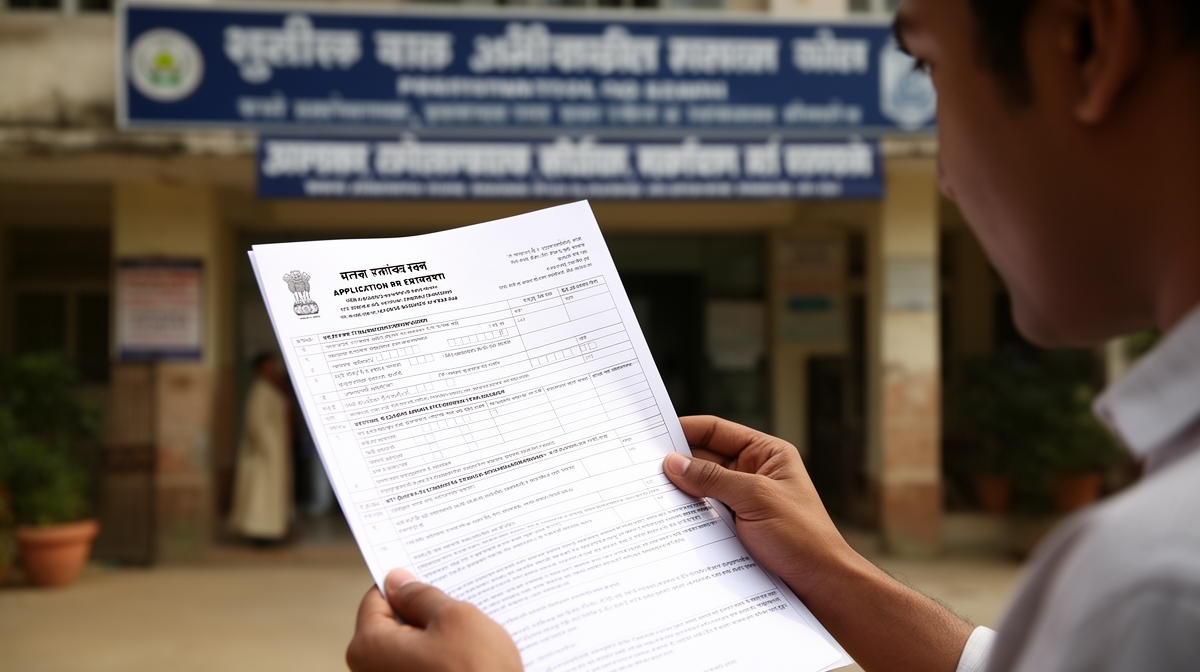

The Bombay High Court has quashed criminal proceedings under Sections 294, 323, and 506 of the Indian Penal Code, holding that the prosecution failed to establish essential ingredients of the alleged offences. The Court emphasized that mere allegations without corroborative evidence of annoyance, intent to cause hurt, or criminal intimidation cannot sustain a charge-sheet. The judgment reinforces the principle that Section 482 CrPC powers must be exercised to prevent abuse of process when charges are legally unsustainable.
The Verdict
The applicant, an advocate, won the application to quash the FIR and charge-sheet filed under Sections 294, 323, and 506 of the Indian Penal Code. The Bombay High Court held that the prosecution failed to establish the essential ingredients of any of the three offences. The Court found no evidence of public annoyance from obscene words, no intention to cause hurt, and no criminal intimidation. The proceedings were quashed as an abuse of process under Section 482 of the Criminal Procedure Code.
Background & Facts
The dispute arose after the applicant, a practicing advocate, allegedly engaged in a verbal altercation with the complainant, Sachin Gupta, at the residence of a mutual acquaintance, Chetan Kadu. The complainant alleged that the applicant abused him in filthy language, assaulted him, threw his motorcycle key, and caused the loss of a gold locket. The complainant filed an FIR on 12 August 2018, leading to the registration of Crime No.172/2018. A charge-sheet was filed on 29 October 2018, charging the applicant under Sections 294, 323, and 506 of the Indian Penal Code.
The applicant contended that the incident occurred in a private residence and was promptly resolved by bystanders. He asserted that the complaint was motivated by personal vendetta, stemming from his vigorous cross-examination of the complainant in a pending Section 138 NI Act case. The applicant highlighted that the complainant had previously filed a similar complaint against him before a Judicial Magistrate, which was not prosecuted on merits. The applicant further pointed out that the complainant’s own witnesses, Chetan Kadu and Mahendra Mukadam, confirmed only a verbal quarrel occurred, with no physical assault.
The prosecution relied on a medical report noting nail scratches on the complainant’s neck as evidence of hurt. However, the report was primarily prepared for complaints of pain in the elbow and back, with no medical opinion linking the scratches to intentional harm. The applicant argued that the entire case was built on inconsistent statements and lacked credible evidence.
The Legal Issue
The central legal questions were: whether the alleged use of obscene language in a private residence caused public annoyance as required under Section 294 IPC; whether the applicant had the requisite intention or knowledge to cause hurt under Section 321 IPC; and whether the conduct amounted to criminal intimidation under Section 503 IPC, thereby attracting Section 506 IPC.
Arguments Presented
For the Petitioner
The applicant argued that Section 294 IPC requires proof of annoyance to persons in the vicinity, which was absent since the incident occurred in a private home and was immediately resolved by bystanders. He cited Dnyanoba v. State of Maharashtra and Narendra H. Khurana v. Commissioner to establish that obscene utterances without proven annoyance do not attract the offence. Regarding Section 323 IPC, he contended that there was no evidence of intent to cause hurt, as he had merely gone to purchase a water can and the altercation was spontaneous. He challenged the medical report as inconclusive and not indicative of intentional harm. For Section 506 IPC, he argued that no threat was made with the intent to compel the complainant to act or refrain from acting, and the alleged conduct was reactive, not coercive.
For the Respondent
The State and the complainant argued that the medical evidence of nail scratches on the neck established physical hurt, satisfying Section 323 IPC. They relied on the complainant’s statement and prior complaints against the applicant to suggest a pattern of threatening behavior. The State contended that the charge-sheet was based on collected incriminating material and that quashing at this stage would undermine the investigation. They asserted that the location of the incident was not decisive, as Section 294 IPC could apply even if the act occurred near a public place.
The Court's Analysis
The Court undertook a rigorous analysis of each statutory provision, emphasizing the necessity of proving each ingredient beyond mere allegation. On Section 294 IPC, the Court held that the offence requires not only obscene acts but also that such acts cause annoyance to others in the vicinity. The Court noted that the incident occurred inside a private residence, and the only witnesses present were friends of the complainant who intervened to resolve the dispute. There was no evidence that any member of the public was present or annoyed. The Court relied on its own precedent in Dnyanoba and the Division Bench ruling in Narendra H. Khurana, which held that even inherently indecent acts do not attract Section 294 without proof of annoyance. The Court observed:
"In Narendra H. Khurana v. Commissioner (2004 CrLJ 3393 [Bom]), the Division Bench of this Court examined the question, 'Whether the nude cabaret dances which are per se indecent and obscene, held in a restaurant on purchase of tickets would warrant prosecution under Section 294 of the Indian Penal Code in the absence of express evidence of annoyance by any of the persons who attend such shows?' It was held that, cabaret dances where indecent and obscene act per se is involved, would not attract the provision of Section 294 of the Indian Penal Code without fulfillment of its essential ingredients namely evidence pertaining to 'annoyance to others'."
Regarding Section 323 IPC, the Court found no evidence of intention or knowledge to cause hurt. The applicant’s presence at the location was incidental, and the altercation was spontaneous. The medical report, while noting nail scratches, did not establish how they were caused, nor did it link them to the applicant’s conduct. The Court noted that the complainant’s chief complaint during medical examination was pain in the elbow and back, not the neck, rendering the scratches irrelevant to the charge.
On Section 506 IPC, the Court examined Section 503 IPC, which defines criminal intimidation. The Court held that for criminal intimidation to be established, there must be a threat made with the intent to cause alarm or to compel the victim to do or omit an act. The Court found no such threat in the record. The applicant’s alleged remarks were reactive to the complainant’s prior legal actions, not coercive in nature. The Court concluded that the conduct, even if unprofessional, did not meet the threshold of criminal intimidation.
The Court further observed that while the charges were unsustainable, advocates must uphold professional ethics and avoid confrontational conduct in public spaces, as such behavior erodes public trust in the legal profession.
What This Means For Similar Cases
This judgment provides critical guidance for practitioners seeking to quash baseless criminal proceedings under Sections 294, 323, and 506 IPC. It clarifies that Section 294 IPC cannot be invoked merely because offensive language was used; there must be concrete evidence of annoyance to persons in the vicinity. This is particularly relevant in cases involving private premises or disputes among acquaintances.
For Section 323 IPC, the judgment reinforces that medical evidence alone is insufficient to establish voluntary hurt without proof of intent or knowledge. Prosecutors must now demonstrate a direct link between the accused’s act and the resulting injury, with clear evidence of mens rea.
Regarding Section 506 IPC, the ruling underscores that reactive or emotional outbursts, even if aggressive, do not constitute criminal intimidation unless there is a clear threat designed to compel or alarm. This will limit the misuse of Section 506 in personal disputes.
The decision also affirms the High Court’s duty under Section 482 CrPC to prevent abuse of process. Practitioners may now more confidently seek quashing where charges are legally unsustainable on the face of the record, especially when the prosecution relies on inconsistent statements and inconclusive evidence.
The judgment does not condone unprofessional conduct by advocates but draws a clear line between ethical violations and criminal liability. It serves as a reminder that criminal law must not be weaponized in civil or professional disputes without meeting statutory thresholds.