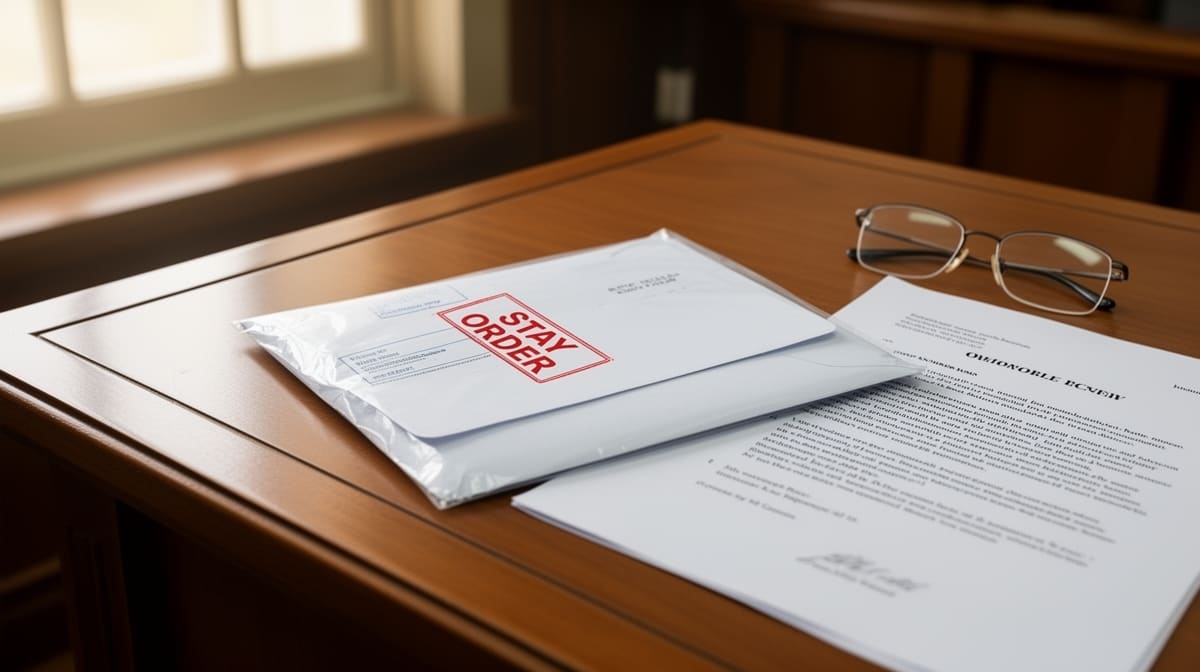
The Bombay High Court has reaffirmed that compliance with interim orders is not optional but a constitutional imperative. In a decisive ruling, the Court condemned the deliberate withdrawal of a bail deposit during an active stay, setting a clear precedent on the consequences of flouting judicial directives.
Background & Facts
The Dispute
The petitioners, Varinder Singh Bharara and another, were granted anticipatory bail by the Sessions Judge on 16th November 2016, subject to depositing Rs.42,00,000. This deposit was intended as a condition to ensure compliance with bail terms and to deter flight risk. After deposit, Respondent No.1, the complainant in the underlying criminal case, applied for withdrawal of the amount. The Metropolitan Magistrate allowed this withdrawal on 11th December 2020. The Sessions Court later modified this order on 11th March 2021, permitting withdrawal but requiring Respondent No.1 to furnish a bank guarantee of Rs.8,00,000.
Procedural History
The petitioners challenged these orders before the Bombay High Court:
- 19th April 2021: High Court stayed the orders of the Metropolitan Magistrate and Sessions Court, effectively freezing all actions regarding the deposit.
- 21st June 2021: Respondent No.1 appeared via video conferencing and submitted documents, including a reply to the petition.
- 25th February 2022: Despite the stay order, Respondent No.1 filed an application before the Metropolitan Magistrate and withdrew the entire Rs.42,00,000, suppressing the existence of the stay order.
Relief Sought
The petitioners sought restoration of the deposit amount and initiation of contempt proceedings against Respondent No.1 for willful disobedience of the Court’s stay order.
The Legal Issue
The central question was whether a party may lawfully withdraw funds deposited as a condition of anticipatory bail while a stay order issued by a higher court remains in force, and whether such conduct constitutes contempt of court.
Arguments Presented
For the Petitioner
The petitioners argued that Respondent No.1’s withdrawal of the deposit was a deliberate act of defiance against the High Court’s stay order dated 19th April 2021. They relied on Arnesh Kumar v. State of Bihar to emphasize that bail conditions are judicial orders, not mere suggestions, and that non-compliance undermines the authority of the judiciary. They further cited K. Veeraswami v. Union of India to underscore that judicial orders must be respected even by aggrieved parties.
For the Respondent
Respondent No.1, appearing in person, did not contest the fact of the stay order but claimed ignorance of its legal effect. He argued that the withdrawal was made in good faith, based on the lower courts’ prior orders, and that no malice was intended. He did not cite any legal precedent to justify his actions.
The Court's Analysis
The Court examined the nature of interim orders under Section 482 of the CrPC and the inherent powers of the High Court to safeguard the integrity of its proceedings. It held that a stay order is not a procedural formality but a binding directive that suspends all operative effects of the impugned orders. The Court emphasized that the doctrine of res judicata applies to interim orders in criminal proceedings when they are expressly stayed.
"The Respondent’s conduct, in withdrawing the amount despite the explicit stay order, is not merely a technical lapse - it is a calculated act of defiance that strikes at the very foundation of judicial authority."
The Court rejected the claim of ignorance, noting that Respondent No.1 had actively participated in proceedings, filed written replies, and appeared before the Court via video conferencing. His awareness of the litigation’s status was evident. The Court further held that allowing such conduct would set a dangerous precedent, encouraging litigants to circumvent higher court orders by exploiting procedural delays.
The Verdict
The petitioners succeeded. The Court held that withdrawal of a bail deposit during an active stay order is unlawful and constitutes contempt of court. Respondent No.1 was directed to redeposit Rs.42,00,000 within six weeks, with contempt proceedings to follow if compliance is not met.
What This Means For Similar Cases
Compliance With Stay Orders Is Non-Negotiable
- Practitioners must advise clients that any action contrary to a stay order - even if supported by a lower court - is void ab initio.
- Applications for withdrawal of bail deposits must be accompanied by proof that no stay is in force.
- Failure to verify the status of interim orders before acting may expose clients to contempt liability.
Contempt Is Not a Last Resort but a First Response
- Courts will now treat willful non-compliance with stay orders as a threshold issue, not a secondary concern.
- The Bombay High Court’s directive to redeposit funds and threaten contempt signals a shift toward immediate enforcement.
- Lawyers must now routinely check for pending stays before advising on financial dispositions tied to bail conditions.
Judicial Orders Bind All Parties, Regardless of Status
- Even complainants or aggrieved parties cannot bypass higher court orders by claiming innocence or lack of legal knowledge.
- The Court’s rejection of the "good faith" defense reinforces that knowledge of the order, not intent, triggers liability.
- This principle applies equally to civil, criminal, and quasi-judicial proceedings where interim relief is granted.