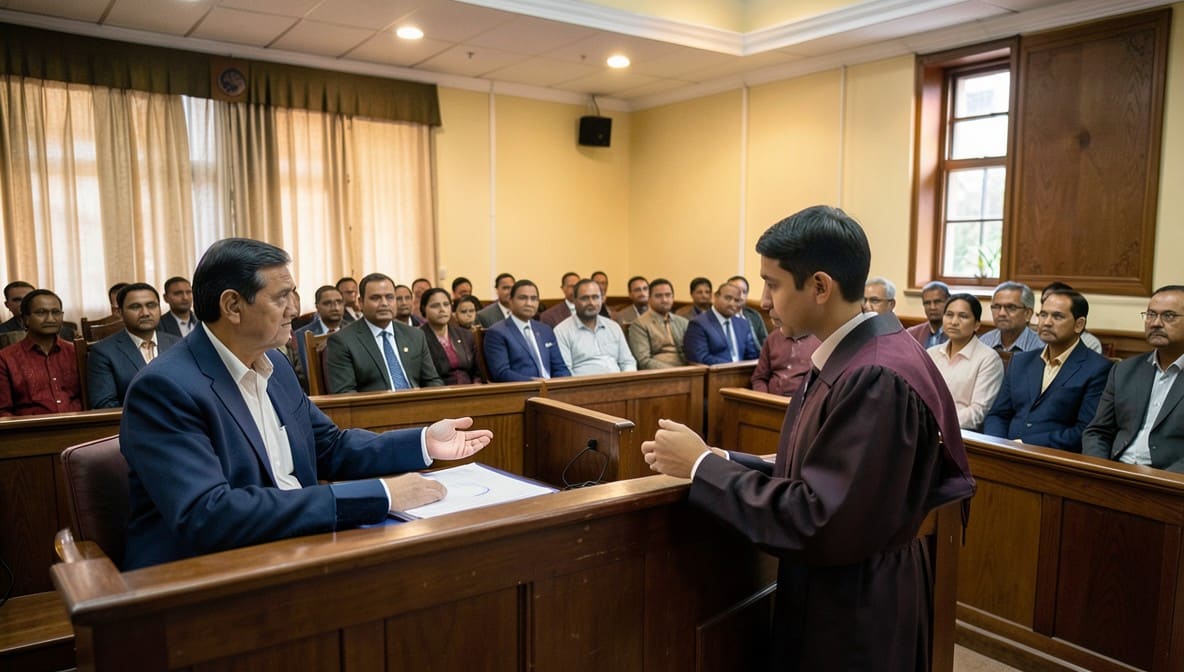
The High Court of Rajasthan has initiated coercive contempt proceedings against senior officials of the Social Welfare Department for wilful disobedience of a regularization order passed in a service matter. The Court directed the respondents to appear in person to show cause why they should not be punished with imprisonment and why their salaries should not be attached until compliance with the earlier order. The contempt petition arose from non-compliance of a judgment allowing regularization with consequential benefits within three months.
Background & Facts
The Genesis
The petitioner, Amra, filed S.B. Civil Writ Petition No.4916/2021 before the High Court of Rajasthan seeking regularization of his service. The petitioner was engaged on contractual basis and sought inclusion of his contractual service for regularization under the Rajasthan Service Rules.
Key Facts
- The petitioner was engaged on contractual basis in the Social Welfare Department, Rajasthan.
- The petitioner filed Writ Petition No.4916/2021 for regularization of his service.
- The High Court allowed the writ petition on 18.01.2023, directing regularization of the petitioner with effect from the date of commencement of his service.
- The Court relied on the judgment of the Hon'ble Supreme Court in State of Rajasthan v. Mod Singh (SLP(C) No.21173/1994, decided on 29.03.1996) and directed compliance within three months from the date of receipt of the judgment.
- The Court also directed payment of all consequential benefits to the petitioner together with interest at 6% per annum.
Procedural History
- 18.01.2023: High Court allowed S.B. Civil Writ Petition No.4916/2021, directing regularization and payment of consequential benefits with 6% interest within three months.
- 06.12.2023: Contempt petition filed by the petitioner for non-compliance of the order dated 18.01.2023.
- 08.01.2024: Respondents filed an order stating that the petitioner is not entitled to regularization and his case has been disposed of.
- 24.07.2026: Present contempt petition considered by the Court.
The Parties' Positions
The petitioner contended that the respondents had not complied with the order dated 18.01.2023 despite the passage of more than three months. The respondents, through their counsel, did not dispute the non-compliance but argued that the petitioner lacked essential qualifications for regularization.
Relief Sought
The petitioner sought initiation of contempt proceedings against the respondents for wilful disobedience of the order dated 18.01.2023 and prayed for coercive measures including imprisonment and attachment of salaries until compliance.
The Legal Issue
The central question was whether the respondents' failure to comply with the order dated 18.01.2023 amounted to contempt of court, warranting coercive measures including personal appearance and attachment of salaries.
Arguments Presented
For the Petitioner
The petitioner argued that the respondents had wilfully disobeyed the order dated 18.01.2023 by not regularizing his service and not paying consequential benefits within the stipulated period. The petitioner relied on the judgment in Mohan Lal v. State (S.B. Writ Petition No.3386/2003, decided on 22.12.2006) to contend that the respondents were bound to comply with the order.
For the Respondent
The respondents, through the learned Additional Advocate General, did not dispute the non-compliance but contended that the petitioner lacked essential qualifications for regularization. The respondents filed an order dated 08.01.2024 stating that the petitioner's case had been disposed of.
The Court's Analysis
The Court observed that the order dated 18.01.2023 had attained finality as no appeal was filed by the respondents. The Court noted that the respondents had not complied with the order despite being aware of its terms, as the judgment was passed in their presence. The Court held that the respondents had over-reached the Court by attempting to re-examine the petitioner's entitlement instead of complying with the order.
The Court emphasized that wilful disobedience of a court order cannot be countenanced and directed the respondents to appear in person to show cause why they should not be punished with imprisonment and why their salaries should not be attached until compliance. The Court listed the matter for further hearing on 28.07.2026 at 02:00 P.M.
"The respondents have not filed any appeal before the Division Bench hence, the order has attained finality. The respondents have not even bothered to file a recall application after examination of case of petitioner as mentioned by them in their order dated 08.01.2024."
The Verdict
The Court initiated contempt proceedings against the Secretary, Social Welfare Department, Rajasthan, Jaipur, Director, Social Welfare Department, Jaipur, and Assistant Director, Social Welfare Department, Banswara. The respondents were directed to appear in person on 28.07.2026 at 02:00 P.M. to show cause why they should not be punished with imprisonment and why their salaries should not be attached until compliance with the order dated 18.01.2023.
What This Means For Similar Cases
Contempt Jurisdiction Is Not Theoretical
Practitioners must recognize that contempt jurisdiction is a coercive tool to ensure compliance with court orders. Courts will not hesitate to impose personal and financial consequences for wilful disobedience.
Compliance Deadlines Are Non-Negotiable
- Courts expect strict adherence to compliance timelines set in orders.
- Failure to comply within the stipulated period may lead to contempt proceedings.
- Respondents cannot reopen the merits of the case to evade compliance.
Personal Appearance Is a Coercive Measure
- Personal appearance of officials is a coercive measure to ensure accountability.
- Salary attachment is a punitive measure to compel compliance.
- Courts will not tolerate attempts to circumvent orders through administrative devices.