The National Green Tribunal has delivered a significant ruling affirming that environmental violations involving tree felling trigger mandatory compensatory afforestation, even when the underlying project serves a public utility. The Tribunal clarified that a scientifically designed waste processing facility does not constitute an illegal landfill, provided it adheres to prescribed norms.
Background & Facts
The Dispute
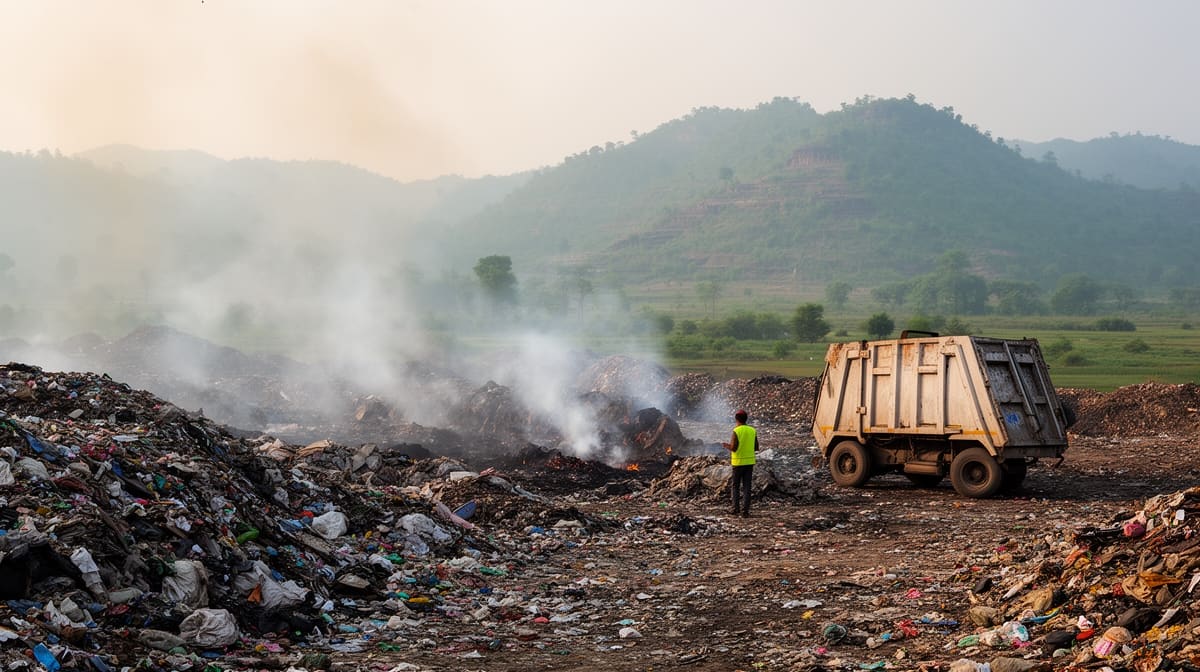
The National Green Tribunal was seized of two original applications - OA No. 123/2024 filed by Sudesh Kumar and OA No. 238/2025 filed by Narender Pandey - both alleging environmental violations by the Municipal Corporation Faridabad (MCF) and Daksha Construction at a site in Village Pratapgarh, Faridabad, Haryana. The applicants contended that the site, purportedly a solid waste management facility, was being developed illegally on forest land, involved unauthorized felling of protected trees, lacked environmental clearances, and posed a threat to groundwater and public health.
Key Facts
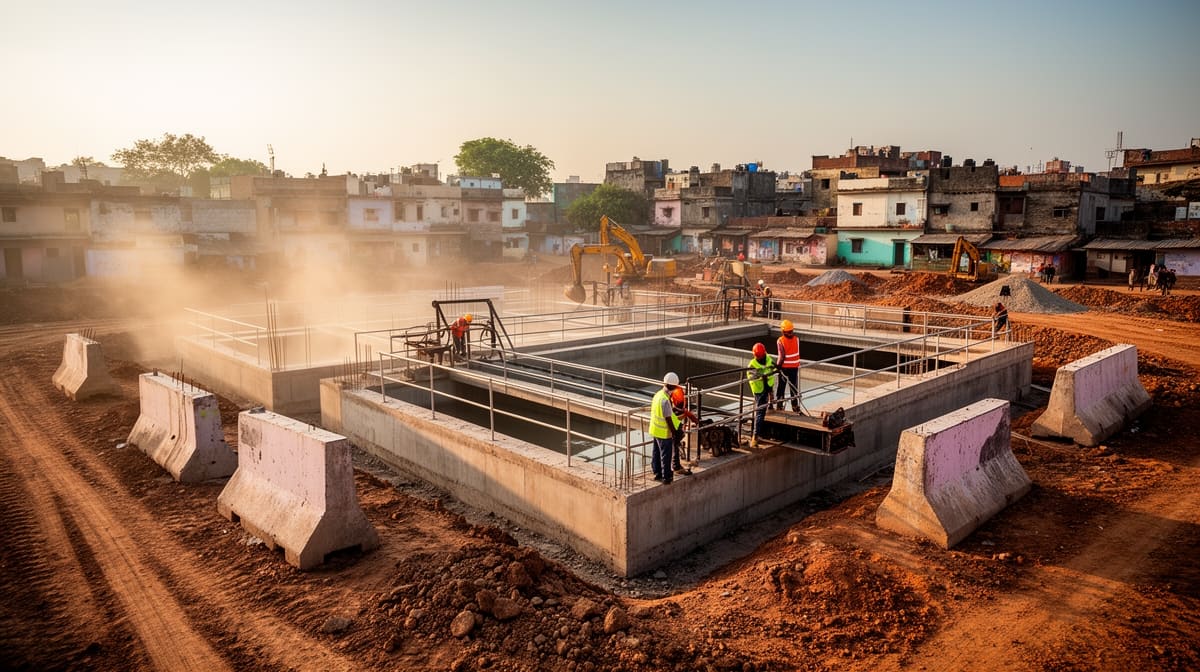
- The land in question, bearing Khewat No. 2214, Khatauni No. 3425 and Khewat No. 2215/1964, Khatauni No. 3425, spans 50 acres and was originally used for a 50 MLD Sewage Treatment Plant (STP) constructed by the Public Health Engineering Department (PHED).
- The land and STP were transferred to MCF on 30.01.2018.
- MCF upgraded the STP to 100 MLD using SBR technology, occupying less than 15 acres, leaving approximately 35 acres vacant.
- MCF proposed a 300 MT/day solid waste processing facility on the vacant land, comprising composting and RDF units, without a landfill component.
- On 27.03.2024, the Joint Committee inspected the site and confirmed:
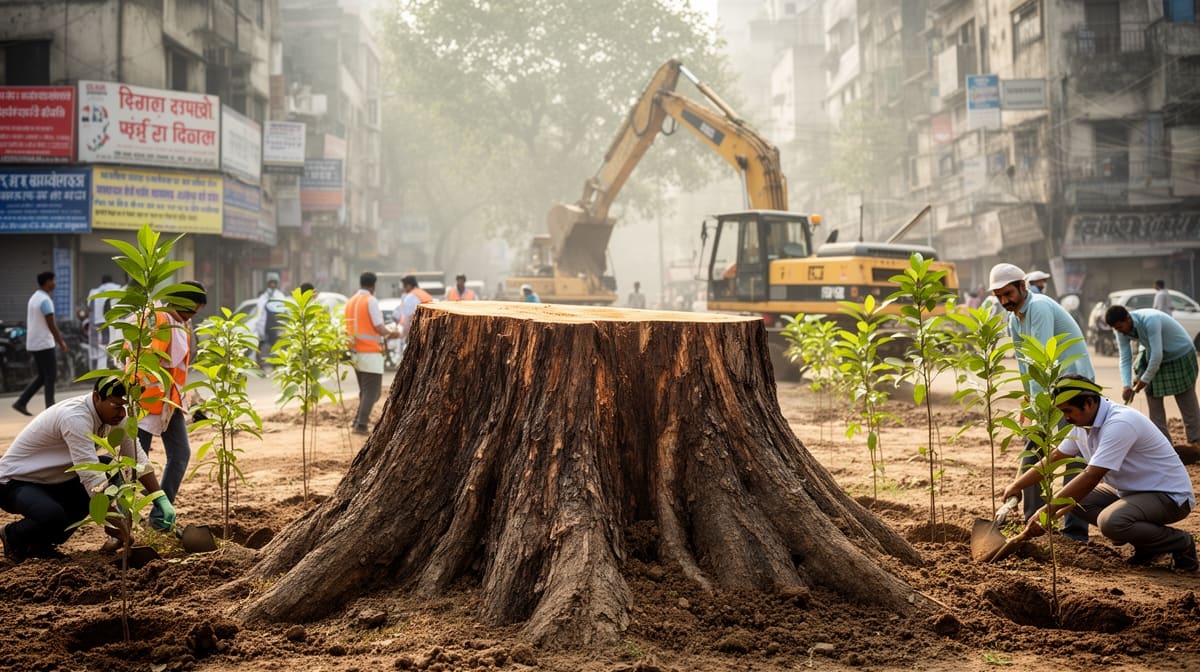
- 180 trees were illegally felled on a 3.03-acre parcel classified as forest land under Forest Department records.
- No landfill operations were underway; the site was being prepared for scientific waste processing with HDPE liners, compost pits, and leachate collection tanks.
- The MCF had not obtained authorization from the Haryana State Pollution Control Board (HSPCB).
- A fine of Rs. 46,640/- was imposed by the Forest Department for the tree felling.
- MCF submitted that the HSPCB portal lacked an option to apply for NOC for processing-cum-segregation facilities, only allowing landfill applications.
- On 14.05.2025, MCF submitted an offline application for HSPCB consent under Form-I of the Solid Waste Management Rules, 2016.
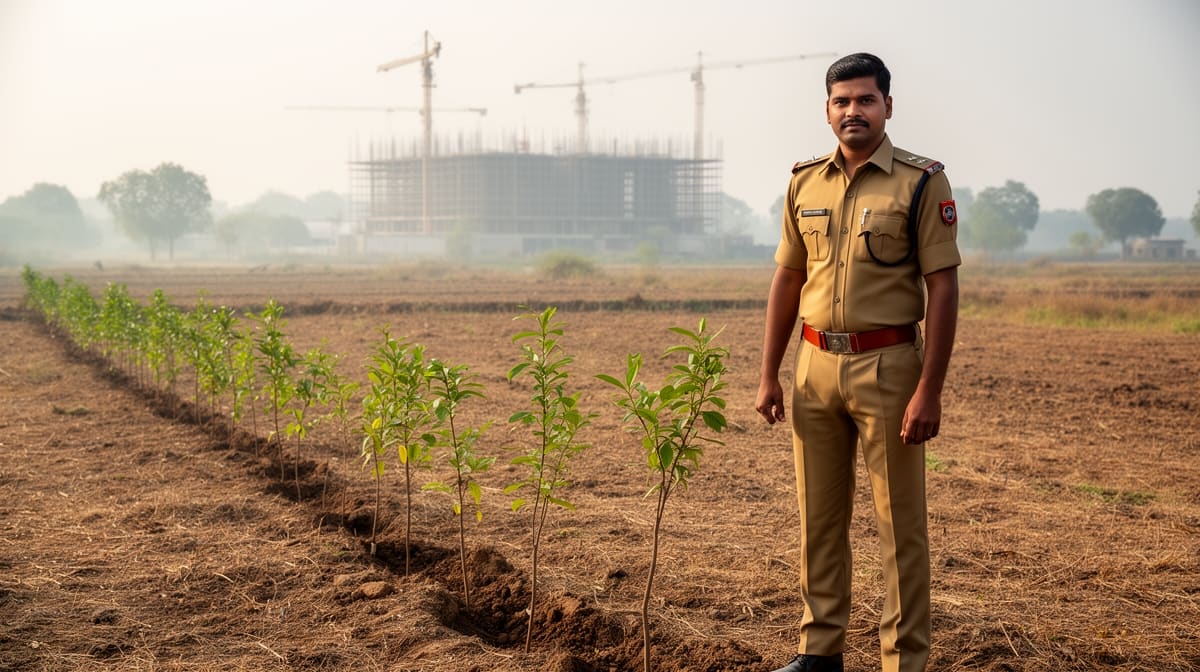
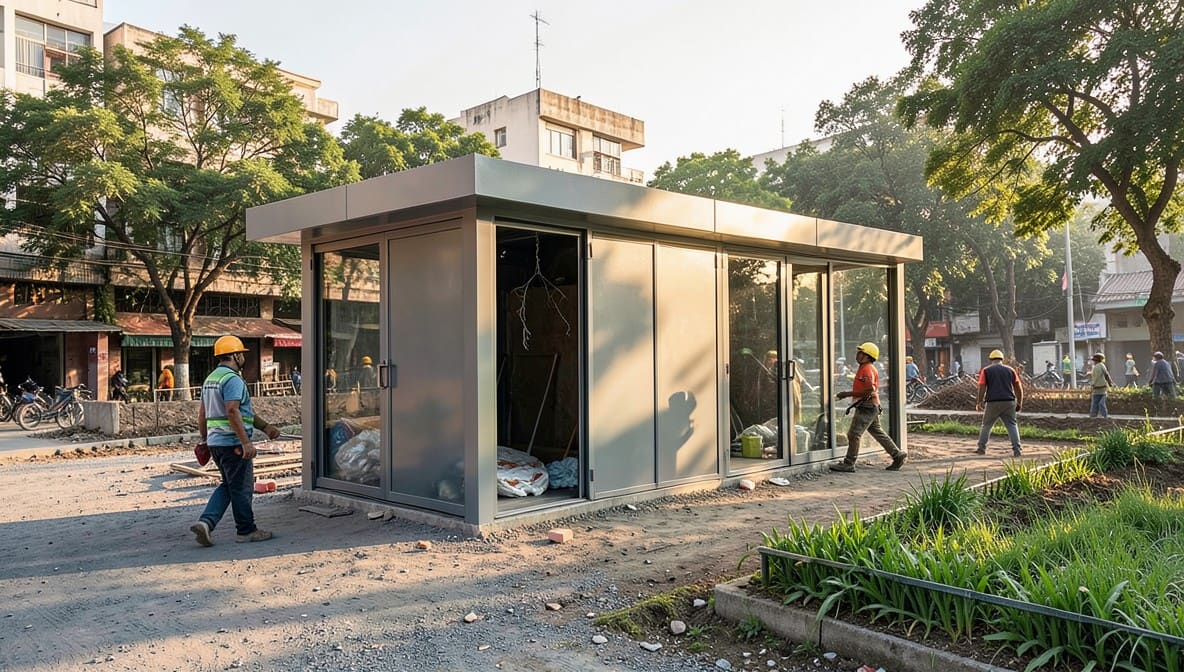
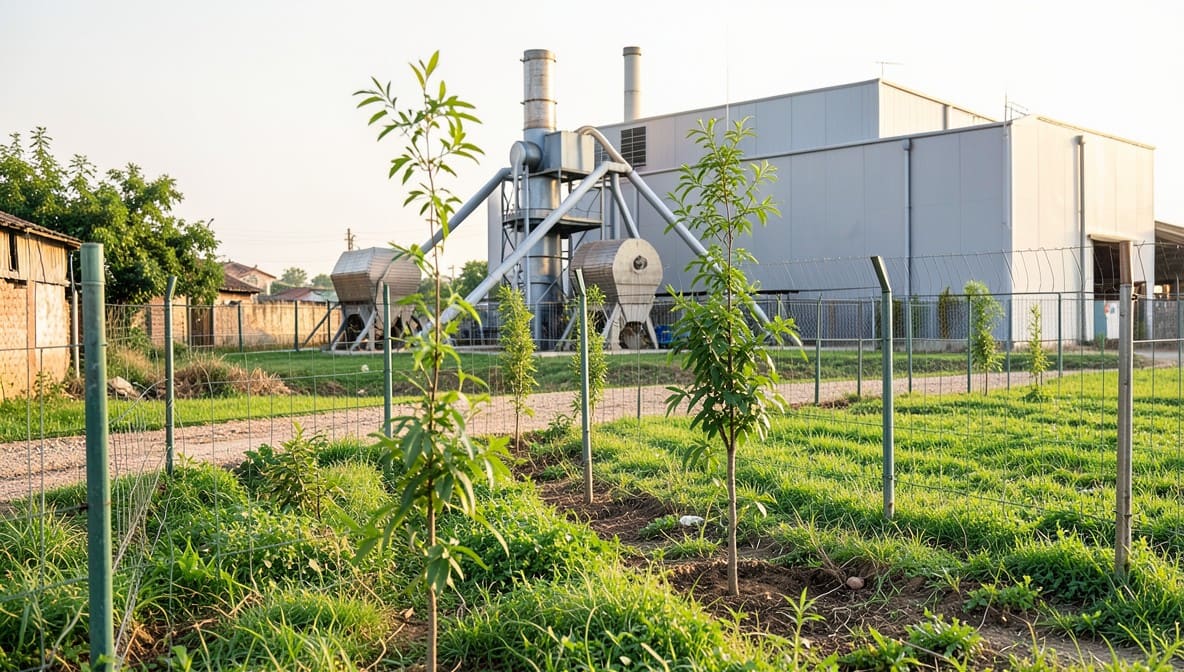
- MCF constructed an 8-foot RCC wall and 8-foot GI view cutter (total 16 feet height) as a buffer, demarcated forest land with GI sheets, and initiated plantation drives.
- The site was operational as of 03.05.2025, with trommels installed and electricity connected.
Procedural History
- 05.02.2024: NGT issued notice and constituted a Joint Committee comprising representatives of CPCB, SPCB, MoEF&CC, and the District Magistrate, Faridabad.
- 27.03.2024: Joint Committee conducted site inspection and submitted report.
- 08.07.2024: MCF filed initial reply detailing compliance efforts.
- 03.05.2025: MCF filed additional reply confirming operational status and clarifying facility as processing, not dumping.
- 22.09.2025: MCF filed further reply detailing demarcation of forest land, plantation efforts, and repeated attempts to obtain HSPCB consent.
- 02.02.2026: Final hearing concluded.
- 24.03.2026: Order pronounced.
The Parties' Positions
Applicants: Alleged illegal tree felling, unauthorized use of forest land, lack of HSPCB consent, violation of SWM Rules 2016, and risk of leachate contamination. Argued that the site was a disguised landfill.
Respondents (MCF): Denied landfill allegations; asserted facility was a scientific processing unit compliant with NGT and Supreme Court directives. Cited technical limitations in HSPCB portal and submitted offline applications. Confirmed compensatory measures and buffer zones.
Relief Sought
Applicants sought: (1) immediate closure of the facility; (2) restoration of forest land; (3) cancellation of unauthorized construction; (4) imposition of penalties; (5) direction to obtain all environmental clearances.
The Legal Issue
The central question was whether the establishment of a solid waste processing facility on land previously used for a sewage treatment plant, with no landfill component, constitutes a violation of the Solid Waste Management Rules, 2016, and whether the illegal felling of 180 trees mandates compensatory afforestation under environmental jurisprudence.
Arguments Presented
For the Petitioner
The applicants relied on Rule 11(f) of the Solid Waste Management Rules, 2016, which requires allocation of suitable land by the District Magistrate for waste facilities. They argued that the land was owned by the Forest and Health Departments, and MCF had no legal right to use it. They cited Rule 15(h) to argue that even if processing was intended, the absence of HSPCB consent rendered the activity illegal. They emphasized the proximity to residential areas and the risk of leachate contamination.
For the Respondent
MCF contended that the land was lawfully transferred on 30.01.2018 and that the facility was a processing unit, not a landfill, in compliance with NGT Order dated 30.01.2023 and Supreme Court directions in W.P.(C) No. 13029/1985. It argued that the HSPCB portal had no provision for processing-cum-segregation facilities, making online application impossible. MCF submitted offline applications on 14.05.2025 and 02.09.2025, and had implemented buffer zones, demarcation, and plantation. It emphasized the public necessity of waste processing amid overload at Bandhwari landfill.
The Court's Analysis
The Tribunal examined the nature of the facility, the status of the land, and the compliance efforts made by MCF. It distinguished between a landfill and a processing facility, noting that the site had no waste stacking, used HDPE liners, compost pits, and trommels - all consistent with scientific waste management under Rule 15(h) of the SWM Rules, 2016.
"The site under question is not operational yet... only 0.370 acres of land is prepared for keeping garbage before it is sent for processing."
The Tribunal accepted MCF’s explanation regarding the HSPCB portal’s technical limitation, noting that offline applications had been submitted and that the facility fell under the Blue Category as per CPCB’s categorization policy. The Tribunal held that the absence of a formal NOC could not be treated as a willful violation given the documented efforts.
However, the Tribunal found the felling of 180 trees to be a clear violation of the Forest (Conservation) Act, 1980, and the principle of compensatory afforestation. It rejected MCF’s argument that the Forest Department had already imposed a fine, noting that monetary penalty does not absolve the obligation to restore ecological balance.
"It is clear in this case that illegal felling of 180 trees has been done by the Respondents No. 7 and 8, therefore, they are required to do compensatory plantation of at least 10 trees as against each illegal felling of tree."
The Tribunal emphasized that environmental harm cannot be remedied solely by fines; ecological restoration is mandatory. It also dismissed allegations of proximity to residential areas and the airport as unsubstantiated and raised for the first time at hearing.
The Verdict
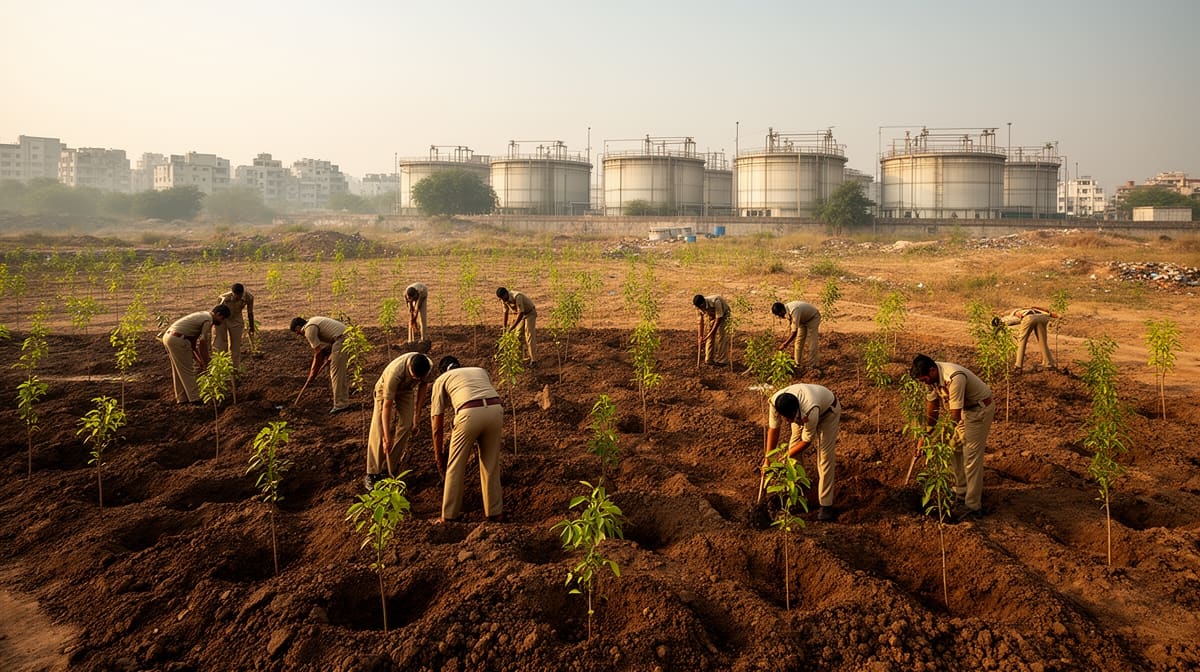
The applicants’ petition was partially allowed. The Tribunal directed MCF to carry out compensatory plantation of 1,800 trees (10 trees for each of the 180 illegally felled) and ensure their survival for five years, under the monitoring of the Deputy Conservator of Forests, Faridabad. The Tribunal held that the facility was a processing unit, not a landfill, and dismissed allegations of illegal siting. It directed the Haryana State Pollution Control Board to inspect the site and assess compliance with the SWM Rules, 2016, within three months. All pending interim applications were disposed of.
What This Means For Similar Cases
Compensatory Afforestation Is Non-Negotiable
- Practitioners must now treat any unauthorized tree felling - regardless of project purpose - as triggering an automatic obligation for compensatory planting.
- Monetary penalties imposed by forest departments do not discharge the duty to restore ecological balance.
- Courts will enforce a minimum of 10:1 replacement ratio unless a higher standard is mandated by state policy.
Process vs. Dump: Clarifying the Legal Boundary
- Facilities using HDPE liners, composting, trommels, and leachate recirculation are legally distinct from landfills under SWM Rules, 2016.
- The absence of waste stacking and the presence of scientific processing mechanisms are decisive factors.
- Municipal bodies can rely on existing land (e.g., transferred STP sites) for waste processing without needing new allocation, provided they comply with Rule 15(h).
Administrative Gaps in Online Portals Do Not Excuse Non-Compliance
- While technical limitations in government portals may explain delays, applicants must still submit formal offline applications and document all attempts.
- Courts will consider documented efforts (e.g., memo submissions, follow-up letters) as evidence of good faith.
- Public utility projects cannot be stalled indefinitely due to bureaucratic inefficiencies, but proactive compliance is mandatory.