The Punjab and Haryana High Court has significantly reinforced the principles governing compensation in motor accident claims by affirming that notional income for homemakers and damage to essential assistive devices must be recognized as valid heads of compensation. This judgment provides critical doctrinal clarity for practitioners handling personal injury claims under the Motor Vehicles Act.
Background & Facts
The Dispute
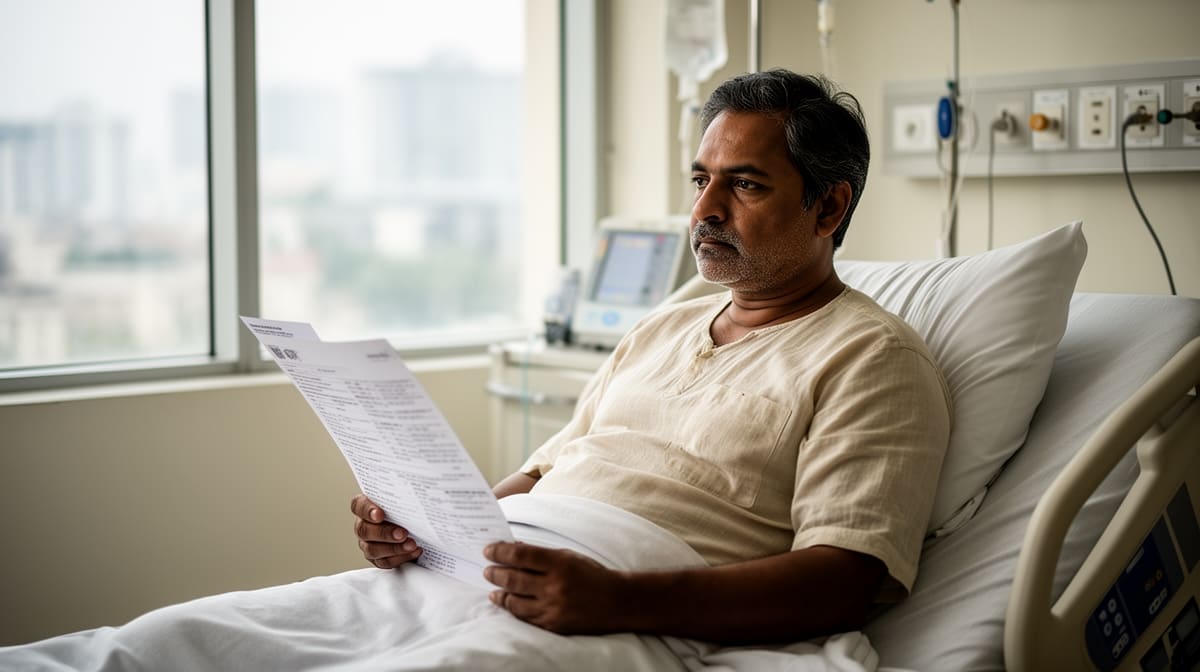
The appellant, Aaradhna, was injured in a motor vehicle accident on 5 February 2009 when the vehicle driven by respondent No. 1 collided with her. She sustained a fracture of the hip joint, required hospitalization for five days, and was rendered incapable of performing her domestic and income-generating activities for several months. She filed a claim petition seeking Rs. 3,00,000 in compensation.
Procedural History
- 2009: Motor Accident Claims Tribunal, Panchkula, awarded Rs. 1,17,368 as compensation
- 2012: Appellant filed appeal before the High Court, but it was delayed by 718 days
- 2026: High Court condoned the delay and heard the appeal on merits
Relief Sought
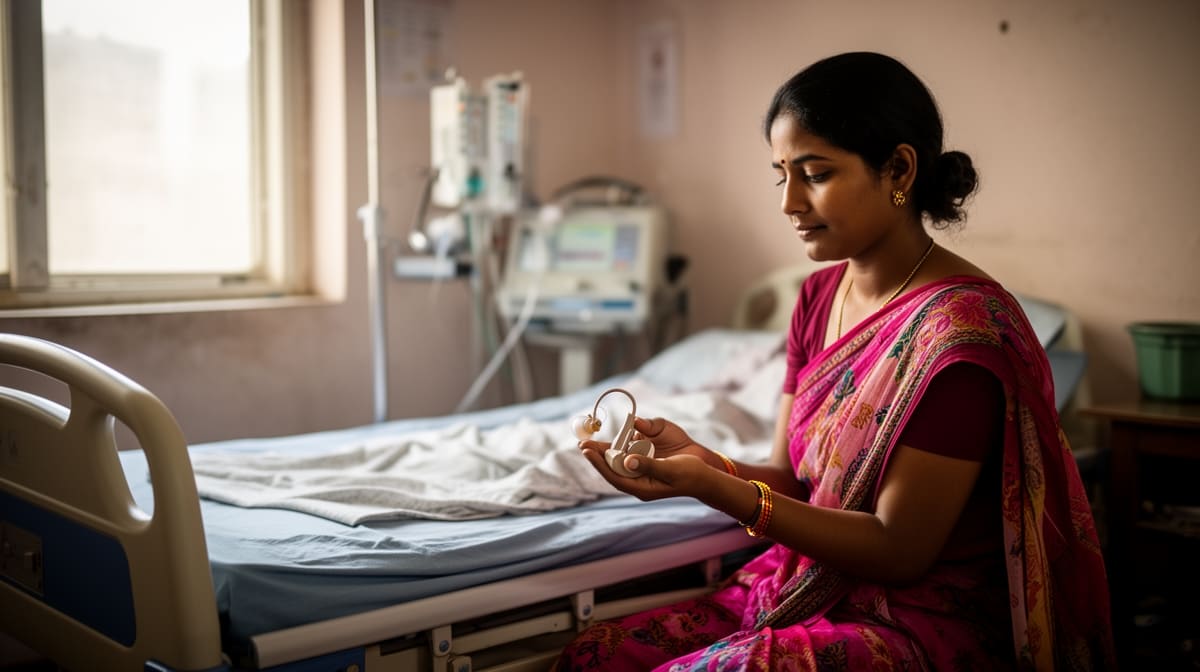
The appellant sought enhancement of compensation on multiple grounds: inadequate award for loss of income, insufficient medical expenses, absence of damages for pain and suffering, and failure to compensate for the loss of her minor son’s hearing aid valued at ₹98,000.
The Legal Issue
The central question was whether notional income can be awarded to a homemaker who lacks formal employment records, and whether damage to a medical assistive device like a hearing aid constitutes a compensable loss under Section 166 of the Motor Vehicles Act.
Arguments Presented
For the Appellant
Learned counsel argued that the Tribunal erred in failing to apply settled principles from Raj Kumar v. Ajay Kumar and Mohni Devi Thakur v. Manjit Singh. The appellant, though not formally employed, rendered indispensable domestic services meriting notional income at Rs. 4,500/month. The Tribunal also ignored unrebutted documentary evidence (Ex.P6) proving the loss of her son’s hearing aid, a direct consequence of the accident.
For the Respondent
No appearance was made by the respondents, and no counter-arguments were presented before the Court.
The Court's Analysis
The Court undertook a structured analysis of each head of compensation, grounding its reasoning in Supreme Court precedents and statutory interpretation.
Under the head of loss of income, the Court acknowledged the absence of formal income proof but emphasized that the economic contribution of a homemaker cannot be ignored. It relied on Mohni Devi Thakur and National Insurance Co. Ltd. v. Dhan Singh to affirm that notional income must be assessed based on the multifarious services rendered - housekeeping, childcare, emotional support - and the cost of replacing those services. The Court conservatively fixed it at Rs. 4,500/month, awarding Rs. 14,250 for five days of hospitalization and three months of reduced capacity.
Regarding medical expenses, the Court noted that claimants under shock cannot be expected to preserve every receipt. It held that the Tribunal’s reliance on only Rs. 3,168 in bills was unreasonable and enhanced the award to Rs. 50,000 to reflect actual rehabilitation needs.
On pain and suffering, the Court cited K. Murlidhar v. R. Subbulakshmi to stress that compensation must be commensurate with the gravity of injury. Given the hip fracture and prolonged recovery, it awarded Rs. 1,00,000 under this head.
Crucially, the Court addressed the loss of the hearing aid. It held that the damage to a medical device essential for a child’s development is a direct, foreseeable consequence of the accident. The unrebutted bill (Ex.P6) established the value of ₹98,000, and the Tribunal’s failure to award it was a clear error. The Court declared: "The loss of a hearing aid is not a mere property damage - it is a deprivation of a child’s right to communication and development, directly traceable to the negligence of the driver."
"The damage to the said device is shown to be a direct and natural consequence of the accident caused by the rash and negligent driving of respondent No.1."
The Court also upheld the 12% interest rate, citing Savita Sharma v. Union of India, and directed 15% interest if payment is delayed beyond three months.
The Verdict
The appellant succeeded. The High Court held that notional income for homemakers must be awarded based on the economic value of domestic services, and damage to essential medical assistive devices constitutes a compensable loss under the Motor Vehicles Act. Compensation was enhanced from Rs. 1,17,368 to Rs. 2,64,250, plus Rs. 98,000 for the hearing aid.
What This Means For Similar Cases
Notional Income Cannot Be Ignored Due to Lack of Formal Records
- Practitioners must now argue for notional income even when the claimant is a homemaker with no salary slips or bank statements
- Courts must assess value based on replacement cost of domestic services, not just formal employment
- Reference to Mohni Devi Thakur and National Insurance Co. Ltd. is now mandatory in such claims
Assistive Medical Devices Are Compensable as Direct Consequences
- Loss or damage to hearing aids, wheelchairs, prosthetics, or spectacles must be pleaded and proved with bills
- Such losses are not "incidental" but integral to the victim’s and family’s well-being
- Tribunals must treat these as distinct heads of compensation, not subsumed under general damages
Documentary Evidence of Medical Costs Must Be Interpreted Liberally
- Courts must account for trauma-induced failure to preserve receipts
- Reasonable estimates based on prevailing medical costs are permissible when bills are incomplete
- The burden shifts to the insurer or respondent to disprove the necessity of claimed expenses