The Kerala High Court’s dismissal of the revision petition clarifies a critical procedural ambiguity in prosecutions under the Negotiable Instruments Act, affirming that a company’s board resolution alone can validate representation in a Section 138 complaint, even in the absence of a produced Power of Attorney. This ruling reinforces doctrinal consistency with Supreme Court precedents and curbs unnecessary technical challenges to otherwise valid prosecutions.
Background & Facts
The Dispute
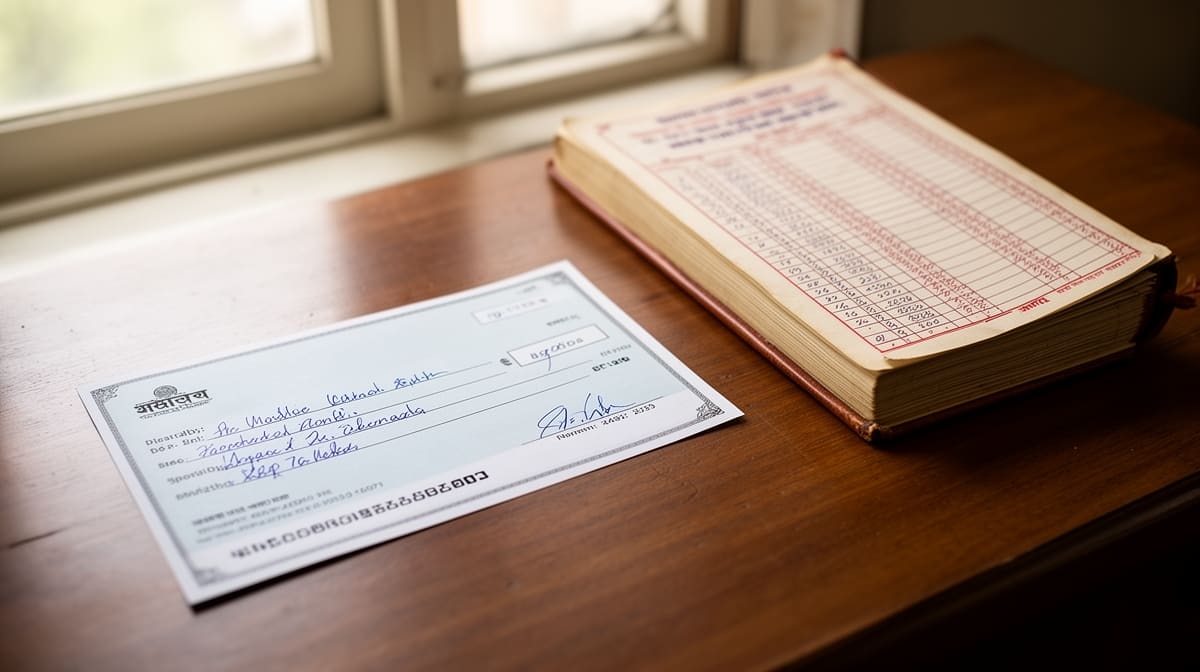
The accused, Hameed.K, was prosecuted under Section 138 of the Negotiable Instruments Act for issuing a cheque that was dishonoured. The complainant, Sree Gokulam Chits Finance Company Pvt. Ltd., filed the complaint through its Power of Attorney holder, C.V. Sivadasan. The Trial Court convicted the accused, imposing imprisonment till the rising of the court and a fine of Rs. 2,59,900. The Appellate Court upheld the conviction but reduced the default sentence for non-payment of fine from six months to three months.
Procedural History
The case progressed through the following stages:
- 2014: First Information under Section 138 NI Act filed as ST No. 1736/2014
- 2016: Trial Court convicted the accused based on oral testimony and documentary evidence
- 2016: Additional District Court confirmed conviction but reduced sentence
- 2018: Revision petition filed before Kerala High Court challenging procedural validity
- 2026: Hearing concluded; Amicus Curiae appointed due to accused’s non-appearance
Relief Sought
The revision petitioner sought quashing of the conviction on grounds that the complainant’s representative lacked proper authority due to non-production of the Power of Attorney. Alternatively, he sought remission of sentence on procedural irregularities.
The Legal Issue
The central question was whether Section 142 of the Negotiable Instruments Act requires the production of a Power of Attorney to establish the legal standing of a company’s representative in a criminal complaint, or whether a duly recorded board resolution suffices.
Arguments Presented
For the Appellant/Petitioner
The learned Amicus Curiae contended that the complaint was not maintainable because the Power of Attorney authorising C.V. Sivadasan to represent the company was not produced before the Trial Court. Reliance was placed on procedural rigour under Section 200 of the CrPC, arguing that failure to produce the document rendered the representative incompetent, thereby vitiating the entire prosecution.
For the Respondent/State
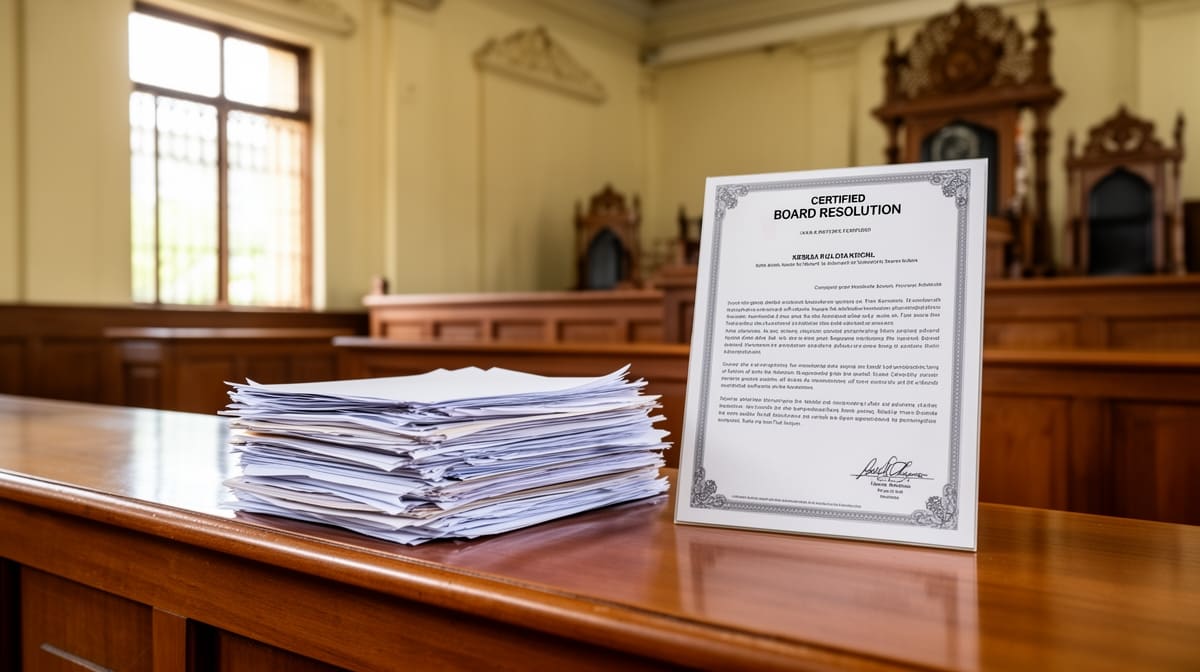
The learned counsel for the second respondent argued that the extract of the Board of Directors’ resolution (Ext. P7) clearly authorised Sivadasan to institute the complaint. Citing National Small Industries Corporation Ltd. v. State (NCT of Delhi) and Naresh Potteries (M/s) v. M/s Aarti Industries, they asserted that neither a Power of Attorney nor formal appointment is mandatory if the company’s authorisation is otherwise established through a resolution.
The Court's Analysis
The Court undertook a doctrinal review of Supreme Court precedents on corporate representation in NI Act cases. It held that Section 142 permits a company to be represented by an employee or non-employee authorised either by resolution or Power of Attorney. The Court emphasized that the de jure complainant is the company, while the de facto complainant is the authorised representative, regardless of the instrument of authorisation.
"While this Court was primarily concerned with the issue relating to the exemption available against examining a public servant in view of Section 200(a) of the CrPC, this Court nevertheless clarified that the requirement of Section 142 of the NI Act that the payee should be the complainant would be met if the complaint is in the name of the payee. Where the payee is a company, this Court observed that the complaint should necessarily be filed in the name of the company... a company can be represented by an employee or even a non-employee authorised and empowered to represent the company either by a resolution or by a power of attorney."
The Court further noted that Ext. P7, the board resolution, was duly exhibited and admitted as evidence. The non-production of the Power of Attorney was not fatal, as the resolution fulfilled the statutory requirement of authorisation. The Court declined to interfere with the concurrent findings of the Trial and Appellate Courts on the execution of the cheque, citing the settled principle that revisional jurisdiction under Section 397 CrPC cannot be invoked to re-appreciate evidence absent perversity.
"It is well settled that in exercise of revisional jurisdiction, the High Court does not, in the absence of perversity, upset concurrent factual findings."
The Court concluded that the conviction was based on credible evidence and lawful representation, and no jurisdictional error or perversity warranted interference.
The Verdict
The revision petition was dismissed. The Court held that a board resolution authorising a representative suffices under Section 142 of the NI Act even without production of a Power of Attorney, and that concurrent factual findings on cheque issuance cannot be disturbed in revision absent perversity.
What This Means For Similar Cases
Authorisation by Resolution Is Sufficient
- Practitioners need not insist on production of Power of Attorney to challenge maintainability of a Section 138 complaint
- A certified extract of a board resolution, if duly exhibited and admitted, establishes legal standing of the complainant’s representative
- Defence counsel must now focus on substantive elements of the offence rather than technical defects in representation
Revisional Jurisdiction Is Narrowly Constrained
- High Courts must refrain from re-evaluating evidence or credibility of witnesses in revision petitions
- Only jurisdictional errors or perversity in findings justify interference
- Accused parties cannot use revision as a second appeal to reargue factual disputes
Procedural Compliance Must Be Contextual
- The absence of a Power of Attorney does not automatically invalidate a prosecution if alternative authorisation is documented
- Courts will examine the substance of authorisation, not merely its form
- Prosecutors should ensure resolutions are properly recorded, certified, and exhibited to avoid future challenges