The Kerala High Court has affirmed that a power of attorney holder with direct personal knowledge of the underlying transaction can validly testify in a prosecution under Section 138 of the Negotiable Instruments Act, and that a mere endorsement on a cheque does not constitute a transfer that disentitles the original payee from initiating criminal proceedings.
Background & Facts
The Dispute
The petitioner, P.C. Ashokan, issued a cheque dated 09.07.2001 for Rs. 2,00,000/- to the first respondent, K. Ratheesh, in discharge of a personal debt. The cheque was presented for payment but was dishonoured due to insufficient funds and a stop payment instruction issued by the petitioner. A statutory notice under Section 138 of the NI Act was sent to the petitioner on 15.08.2001, which went unheeded. The complainant, K. Ratheesh, filed a criminal complaint on 12.10.2002, which was taken cognizance of by the Judicial Magistrate of First Class-II, Kannur, as CC No. 212/2003.
Key Facts
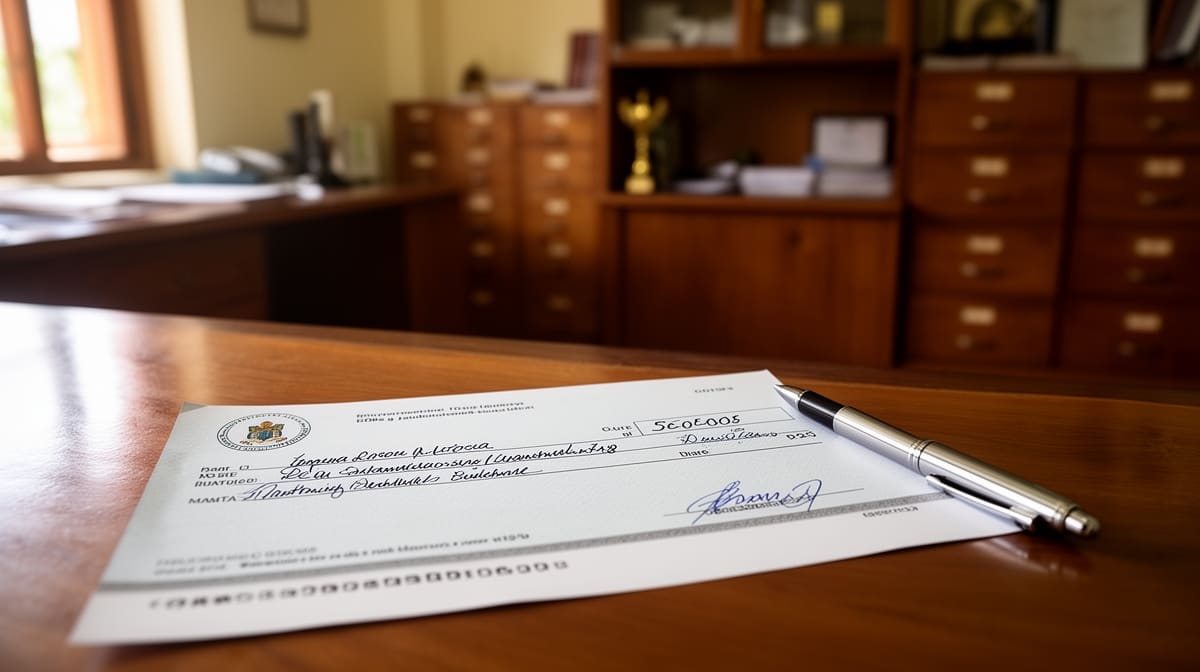
- The cheque (Ext. P1) was drawn on the petitioner’s account with a nationalised bank, dated 09.07.2001, for Rs. 2,00,000/-, payable to K. Ratheesh
- The cheque was endorsed on the reverse side in favour of one Chandrabhanu, authorising him to collect the amount on behalf of the payee
- The complainant’s wife, acting as power of attorney holder, appeared as PW1 and testified to the following:
- She was present when the petitioner visited their residence on 07.07.2001 and borrowed Rs. 2,00,000/-
- She witnessed the petitioner personally filling out and signing the cheque in her presence
- The petitioner assured her that the cheque would be honoured on presentation
- She received the dishonour memo from the bank on 11.07.2001
- She issued the statutory notice on 15.08.2001 and received no response
- The Senior Manager of the drawee bank, PW2, confirmed the dishonour due to insufficient funds and stop payment instruction
- Six documents were marked as Exhibits P1 to P6, including the dishonour memo, notice, and proof of service
Procedural History
- 12.10.2002: Criminal complaint filed before Judicial Magistrate of First Class-II, Kannur
- 26.08.2004: Trial Court convicted the petitioner under Section 138 NI Act, sentenced to six months simple imprisonment and ordered compensation of Rs. 2,00,000/- under Section 357(3) CrPC
- 18.09.2010: Additional Sessions Court, Thalassery, dismissed the appeal (Crl. A. No. 515/2004), upholding conviction and sentence
- 31.03.2026: Final hearing before Kerala High Court on Criminal Revision Petition No. 3154/2010
- 06.04.2026: Judgment delivered by Justice G. Girish
Relief Sought
The petitioner sought quashing of the conviction on two grounds: (1) incompetence of PW1 as power of attorney holder lacking direct knowledge, and (2) the endorsement to Chandrabhanu rendering the prosecution maintainable only by him. The petitioner also sought reduction of sentence.
The Legal Issue
The central question was whether a power of attorney holder can testify in a Section 138 NI Act prosecution if she has direct personal knowledge of the transaction, and whether an endorsement on the reverse of a cheque to a third party extinguishes the original payee’s right to initiate criminal proceedings.
Arguments Presented
For the Petitioner
The petitioner’s counsel contended that PW1, though acting as power of attorney holder, had not established direct personal knowledge of the loan transaction, rendering her testimony inadmissible. Further, the endorsement of the cheque to Chandrabhanu, it was argued, amounted to a transfer of the instrument, making the complainant a stranger to the transaction and thus lacking locus standi to file the complaint.
For the Respondent/State
The complainant’s counsel and the Public Prosecutor argued that PW1 was present during the entire transaction, witnessed the execution of the cheque, and was directly involved in the subsequent communication regarding dishonour and notice. They submitted that endorsement for collection purposes is a routine banking practice and does not alter the ownership or the right to prosecute under Section 138.
The Court's Analysis
The Court examined the evidence of PW1 with meticulous scrutiny. It noted that she did not merely act as a proxy but provided detailed, consistent testimony regarding the petitioner’s visit to the residence, the borrowing of funds, the physical execution of the cheque, and the assurance of payment. Her testimony was corroborated by the bank official and documentary evidence.
"The evidence adduced by PW1 would convincingly bring out her direct personal knowledge about the transactions between the petitioner and the complainant which resulted in the institution of the complaint."
The Court rejected the argument that a power of attorney holder must have been a party to the original debt. It held that personal knowledge of the transaction, not formal party status, is the threshold for admissibility of testimony under Section 138.
Regarding the endorsement, the Court clarified that an endorsement for collection is not a transfer of title. It observed that such endorsements are standard in banking practice to facilitate collection by a nominee or agent. The Court cited established banking norms and precedent to hold that the original payee retains the right to prosecute for dishonour.
"The endorsement on the reverse side of Ext P1 cheque, authorising the person by name Chandrabhanu to receive the money for and on behalf of the complainant, cannot be taken as the transfer of the cheque to another person."
The Court affirmed the conviction, finding no error in the appreciation of evidence by the courts below. However, it found the six-month imprisonment disproportionate to the nature of the offence, which involved a commercial debt without evidence of fraudulent intent. The Court exercised its revisional jurisdiction to reduce the sentence while preserving the compensation order.
The Verdict
The revision petition was allowed in part. The conviction under Section 138 of the Negotiable Instruments Act was confirmed. The sentence of six months simple imprisonment was set aside and replaced with imprisonment till the rising of the Court. The direction to pay compensation of Rs. 2,00,000/- to the complainant under Section 357(3) of the CrPC was retained, along with the default clause of three months’ simple imprisonment for non-payment. The petitioner was directed to surrender before the Trial Court within 30 days to undergo the revised sentence and make payment of compensation.
What This Means For Similar Cases
Power of Attorney Holders Can Be Credible Witnesses
- Practitioners may now rely on testimony from power of attorney holders in Section 138 cases if they can establish direct, personal knowledge of the underlying transaction
- No formal requirement exists for the witness to be the original creditor; presence at execution and awareness of terms suffice
- Cross-examination should focus on the witness’s firsthand observations, not their legal authority
Endorsement for Collection Does Not Affect Prosecution Rights
- A cheque endorsed to a third party for collection does not transfer ownership or extinguish the payee’s right to prosecute
- Banks routinely accept such endorsements; courts will not treat them as assignments or transfers
- Defence arguments based on third-party endorsement must now be supported by evidence of actual assignment of rights, not mere banking notation
Sentencing in Section 138 Cases Must Be Proportionate
- Courts must distinguish between commercial defaults and fraudulent intent
- Imprisonment should be reserved for cases involving malice or repeated defaults
- Compensation under Section 357(3) CrPC remains the primary remedy, with imprisonment as a last resort