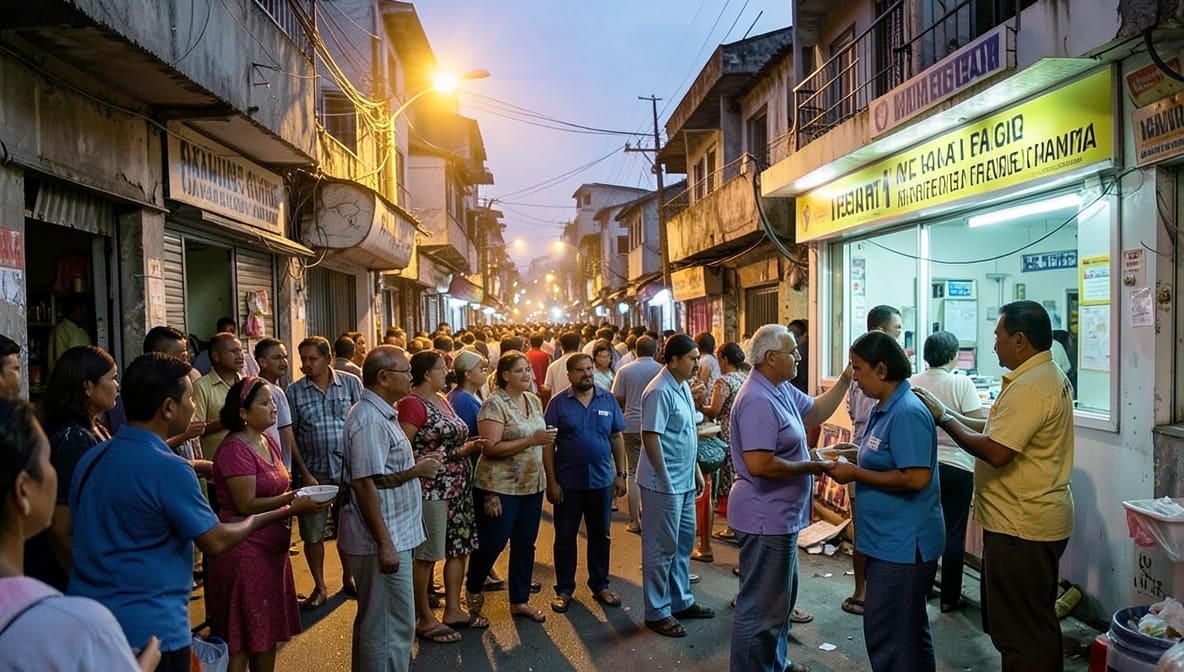
The Bombay High Court has clarified that women Community Health Volunteers (CHVs) engaged by the Municipal Corporation of Greater Mumbai are employees for the purposes of the Minimum Wages Act, 1948 and are therefore entitled to statutory minimum wages despite being labelled as volunteers and paid an honorarium.
Background & Facts
The Dispute
The Municipal Corporation of Greater Mumbai (MCGM), through the Municipal Commissioner, filed a writ petition (WP No.1156 of 2021) challenging a common order dated 7 September 2020 issued by the Authority under the Minimum Wages Act. The order allowed twelve applications filed in 2016 by CHVs and their union, directing MCGM to pay the difference between the minimum wages fixed by the Government Notification of 24 February 2015 and the honorarium already paid to the CHVs.
Key Facts
- 1988: MCGM launched “India Population Project V” with World Bank assistance, establishing 176 health posts across Mumbai.
- 31 March 1996: World Bank assistance discontinued, but MCGM continued funding the health posts.
- 2 March 2002: Industrial Tribunal awarded Part-I Award, declaring CHVs as “workmen” under Section 2(s) of the Industrial Disputes Act.
- 13 January 2004: Final Award rejected several absorption demands but increased the CHVs’ honorarium by Rs.150 per month, fixing it at Rs.900 per month w.e.f. that date.
- 24 February 2015: Government Notification fixing minimum wage rates applicable to the CHVs’ scheduled employment.
- 7 September 2020: Authority under the Minimum Wages Act allowed the CHVs’ applications for payment of the wage difference.
- 4 January 2017: Bombay HC dismissed earlier writ petitions and upheld the Industrial Tribunal’s award.
- 13 April 2017: Supreme Court stayed the operation of the 4 January 2017 judgment.
- 28 August 2018: Supreme Court granted leave to the Special Leave Petition (C) No. 9660 of 2017 filed by MCGM.
- 6 August 2026: Judgment reserved.
- 13 August 2026: Judgment pronounced.
Procedural History
- 2 March 2002: Industrial Tribunal Part-I Award - CHVs held to be “workmen”.
- 13 January 2004: Final Award - rejected absorption demands, increased honorarium.
- 4 January 2017: Bombay HC dismissed earlier writ petitions (including WP No.7958 of 2005) and upheld the Tribunal’s award.
- 13 April 2017: Supreme Court stayed the 4 January 2017 judgment.
- 28 August 2018: Supreme Court allowed SLP (C) No. 9660 of 2017.
- 7 September 2020: Authority under the Minimum Wages Act allowed CHVs’ applications for wage difference.
- 13 August 2026: Present writ petition (WP No.1156 of 2021) decided.
Parties' Positions
- Petitioner (MCGM): Argues that CHVs are volunteers, not employees; there is no employer-employee relationship; the status of CHVs as “workmen” is sub-judice before the Supreme Court; the honorarium is not “wages”.
- Respondents (CHVs and their union): Contend that they are paid remuneration for hire or reward; the term “employee” under Section 2(i) of the Minimum Wages Act is broad and includes part-time workers; honorarium is “wages” within the meaning of Section 2(h); rely on precedents such as Jagjit Singh v. State of Punjab, Putti Lal v. State of U.P., and Daily Rated Casual Labour v. Union of India.
Relief Sought
The Municipal Corporation seeks a declaration that the Authority’s order dated 7 September 2020 is ultra vires, and that it be set aside. It also seeks a direction that the corporation not be compelled to pay the wage difference to the CHVs.
The Legal Issue
Whether women Community Health Volunteers (CHVs) engaged on a part-time basis by the Municipal Corporation of Greater Mumbai, and paid a fixed honorarium, fall within the definition of “employee” under Section 2(i) of the Minimum Wages Act, 1948 and are therefore entitled to the minimum wages fixed by the Government Notification of 24 February 2015.
Arguments Presented
For the Petitioner
- The CHVs are engaged on a voluntary basis, without a formal appointment process; therefore no employer-employee relationship exists.
- The term “employee” should be read narrowly, limited to regular, permanent staff; the honorarium is a token of appreciation, not wages.
- The status of CHVs as “workmen” under the Industrial Disputes Act is pending before the Supreme Court; until that issue is resolved, the Authority could not adjudicate the wage claim.
- The petition relies on State of Gujarat v. Adarsh Gujarat Anganwadi Union and other decisions that distinguish volunteers from employees.
For the Respondent
- The statutory phrase “for hire or reward” in Section 2(i) captures any remuneration expressed in money, including honorarium.
- The definition of “wages” in Section 2(h) expressly includes all monetary remuneration, irrespective of nomenclature.
- Precedent (Jagjit Singh v. State of Punjab, Putti Lal v. State of U.P., Daily Rated Casual Labour v. Union of India) holds that part-time or temporary workers performing the same duties as regular employees are entitled to minimum wages.
- The long-standing engagement of CHVs (over 38 years) and the supervision, duty-hours, and performance of duties akin to regular staff demonstrate an employment relationship.
The Court's Analysis
The Court began by examining the textual definitions in the Minimum Wages Act. It noted that Section 2(i) defines “employee” as “any person employed for hire or reward to do any work… in a scheduled employment… and includes an out-worker…”. The Court emphasized that the phrase “for hire or reward” is the operative limb, not the label given to the remuneration.
"The term ‘employed’ appearing under Section 2(i) of the Minimum Wages Act is not to be confused with the concept of ‘appointment’."
The Court then turned to Section 2(h), which defines “wages” as “all remuneration, capable of being expressed in terms of money…”. It held that the honorarium of Rs.14,000 per month, although termed an “honorarium”, satisfies this definition because it is a fixed monetary sum paid for services rendered.
Relying on Jagjit Singh v. State of Punjab (2017) the Court reiterated that “equal pay for equal work” is a constitutional principle that obliges the employer to pay the minimum of the regular pay-scale to any worker performing the same duties, irrespective of the contractual nomenclature. The Court distinguished the Avtar Singh line of cases that attempted to create artificial classifications based on length of service, holding that such classifications violate Articles 14 and 16 of the Constitution.
The Court further observed that the pending Supreme Court proceedings on the “workman” status do not affect the separate question of whether the CHVs are “employees” under the Minimum Wages Act. The two statutes serve different regulatory regimes; the former deals with industrial disputes, the latter with wage fixation for scheduled employment.
Having examined the factual matrix - CHVs work five hours a day, are supervised by health-post doctors and nurses, receive a monthly remuneration, maintain attendance registers, and have been engaged continuously for decades - the Court concluded that the relationship satisfies the “hire or reward” test. Consequently, the CHVs are “employees” for the limited purpose of wage entitlement.
The Court therefore set aside the petitioner's claim and upheld the Authority’s order dated 7 September 2020, directing the Municipal Corporation to pay the difference between the statutory minimum wages (as per the 24 February 2015 notification) and the honorarium already paid.
The Verdict
The Bombay High Court held that the Community Health Volunteers are employees under Section 2(i) of the Minimum Wages Act, 1948. The petition filed by the Municipal Corporation of Greater Mumbai is dismissed. The Court directs MCGM to pay each CHV the difference between the minimum wage rates fixed by the Government Notification of 24 February 2015 and the honorarium of Rs.14,000 per month already paid, with interest from the date of the Authority’s order (7 September 2020). No costs were awarded.
What This Means For Similar Cases
Employee Definition Extends to Part-time Volunteers
- Any person receiving regular monetary remuneration for services rendered, even if labelled “honorarium”, falls within the ambit of “employee” under Section 2(i).
- Lawyers must examine the substance of the remuneration rather than the terminology used in contracts.
Honorarium Does Not Shield Employers from Minimum Wages Liability
- Courts will treat honoraria as “wages” under Section 2(h) when they are payable for hire or reward.
- Employers cannot avoid the Minimum Wages Act by merely re-branding wages.
Pending Status Determinations Do Not Stay Wage Claims
- The existence of a parallel dispute under the Industrial Disputes Act does not stay the application of the Minimum Wages Act.
- Practitioners should pursue wage claims independently of pending absorption or work-man status matters.
Practical Takeaways
- Verify that all part-time or temporary staff are paid at least the statutory minimum wage for the hours worked.
- Draft employment terms to reflect “employment for hire or reward” language to avoid disputes.
- When challenged, be prepared to cite Jagjit Singh v. State of Punjab and the constitutional principle of “equal pay for equal work”.