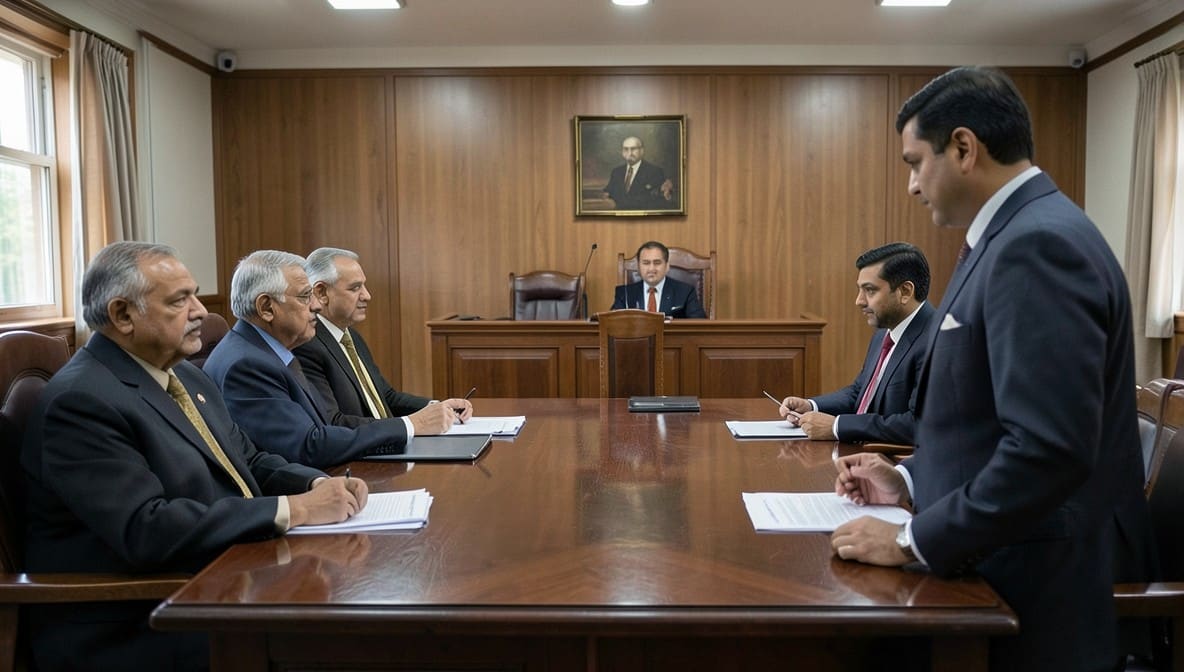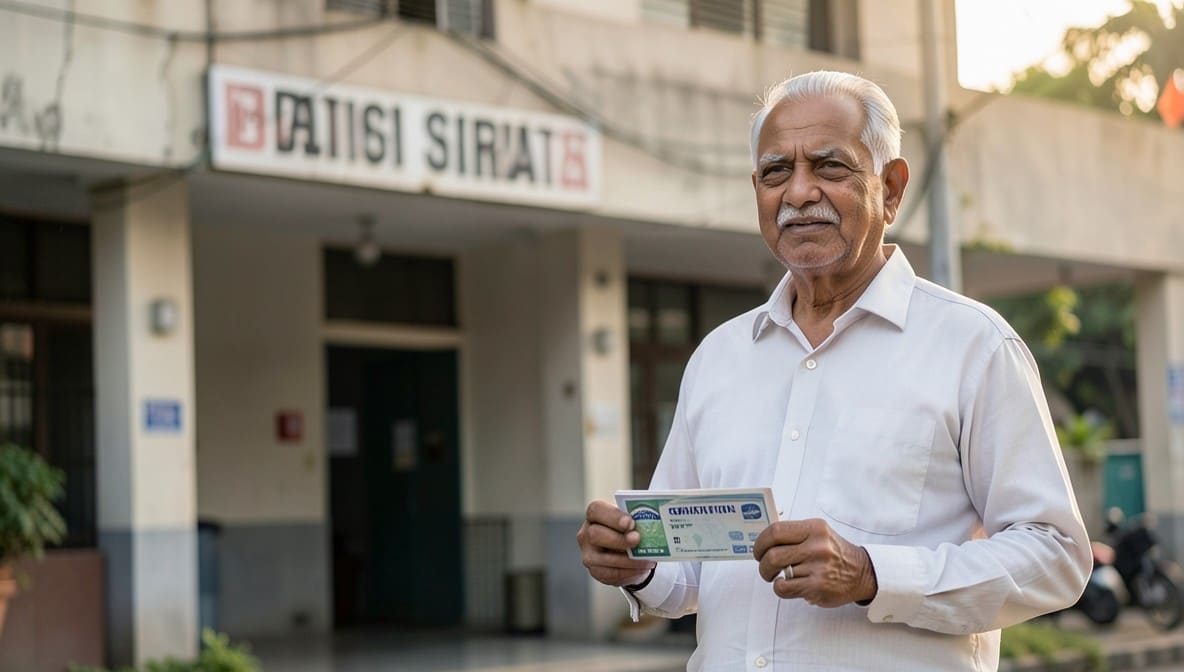
The Allahabad High Court has reaffirmed a critical protection for retired government employees: once retired, individuals in Class III or Class IV service cannot be subjected to recovery of excess salary payments made due to erroneous pay fixation during service. This judgment provides definitive clarity on the limits of administrative recovery powers and reinforces the principle that equity must prevail over technical recovery claims against vulnerable retirees.
Background & Facts
The Dispute
The petitioner, Triloki Nath Pandey, served as a Tube Well Operator in the Tube Well Division of the Minor Irrigation Department, Government of Uttar Pradesh, from 01.04.1972 until his superannuation on 31.03.2013. Upon retirement, the authorities identified a discrepancy in his pay scale fixation during service and concluded that he had received excess emoluments. Consequently, on 27.12.2013, the competent authority ordered the recovery of Rs. 1,46,307/- from his terminal dues, including gratuity and encashment of leave.
Key Facts
- The petitioner was employed in a Group C (Class III) position throughout his service
- His service tenure spanned 41 years, from 01.04.1972 to 31.03.2013
- The excess payment arose due to incorrect fixation of pay scale during his service period
- The recovery order was passed on 27.12.2013, after his retirement
- The amount recovered was Rs. 1,46,307/-, deducted from gratuity and leave encashment
- No departmental proceedings were initiated to determine fault or negligence
- The petitioner had no opportunity to contest the recovery before it was effected
Procedural History
- 01.04.1972: Petitioner joined service as Tube Well Operator
- 31.03.2013: Petitioner superannuated after 41 years of service
- 27.12.2013: Order passed by Respondent No. 2 directing recovery of Rs. 1,46,307/- from terminal dues
- 15.07.2015: Writ Petition (No. 51633 of 2015) filed before the Allahabad High Court
- 15.05.2026: Hearing conducted; petitioner not represented; State appeared through Standing Counsel
Relief Sought
The petitioner sought:
- Quashing of the recovery order dated 27.12.2013
- Restoration of the deducted amount of Rs. 1,46,307/-
- Revision of pay scale to grant IInd ACP
- Revision of pension calculation to include full service tenure
- Payment of arrears and interest
The Parties' Positions
The petitioner contended that the recovery was illegal, arbitrary, and violative of the principles laid down by the Supreme Court in State of Punjab v. Rafiq Masih. The State did not contest the legal position but defended the recovery as a correction of an administrative error.
The Legal Issue
The central question was whether the recovery of excess salary payments from a retired Class III or Class IV government employee, made due to erroneous pay fixation during service, is legally permissible under established judicial precedents.
Arguments Presented
For the Petitioner
The petitioner relied on the binding precedent of State of Punjab v. Rafiq Masih (2015) 4 SCC 334, which categorically prohibits recovery of excess payments from employees in Class III and Class IV service after retirement. It was argued that the recovery order was issued more than a year after retirement and pertained to payments made over a period exceeding five years, thus falling squarely within the prohibited categories enumerated in the judgment. The petitioner emphasized that no fraud, collusion, or deliberate misrepresentation was alleged, and the error was purely administrative.
For the Respondent
The State did not advance any substantive legal counter-argument. The Standing Counsel acknowledged the presence of the petitioner’s claim but offered no justification for the recovery beyond the assertion that it was a correction of an accounting error. No evidence was presented to show that the petitioner had acted dishonestly or that the error was attributable to his conduct.
The Court's Analysis
The Court undertook a detailed review of the Supreme Court’s judgment in State of Punjab v. Rafiq Masih, which laid down five clear categories of cases where recovery of excess payments is impermissible. The Court noted that the first category explicitly bars recovery from employees belonging to Class III and Class IV service. The petitioner, as a Tube Well Operator, was indisputably a member of this category.
"Recovery from the employees belonging to Class III and Class IV service (or Group C and Group D service) is impermissible in law."
The Court further observed that the recovery order was passed after the petitioner’s retirement, which triggers the second prohibition under the judgment: recovery from retired employees or those due to retire within one year. The excess payments had been made over a period exceeding five years, invoking the third prohibition. The Court held that the cumulative effect of these factors rendered the recovery order legally unsustainable.
The Court rejected the notion that administrative convenience or correction of accounting errors justifies recovery from low-ranking, retired employees who have no means to contest or repay such deductions. It emphasized that the Supreme Court’s guidelines were not mere policy suggestions but binding legal principles designed to protect vulnerable service class employees from arbitrary financial hardship.
The Verdict
The petitioner succeeded. The Court quashed the recovery order dated 27.12.2013 and directed the respondents to pay the deducted amount of Rs. 1,46,307/- to the petitioner with interest at the rate of 6% per annum, within eight weeks from the date of production of the certified copy of this order. The Court declined to entertain the prayer for revision of pay scale or pension calculation, noting that such claims were beyond the scope of the writ petition and required separate adjudication.
What This Means For Similar Cases
Recovery Is Barred Post-Retirement for Group C/D Employees
- Practitioners representing retired government employees in Class III/IV service must immediately invoke State of Punjab v. Rafiq Masih when facing post-retirement recovery demands
- Any recovery order issued after retirement, regardless of the duration of the overpayment, is void if the employee belongs to Group C or D
- Administrative departments cannot rely on "error correction" as a justification for recovery from this category
Five-Year Rule Applies Even Without Fault
- Even if the excess payment occurred more than five years before the recovery order, it is still impermissible
- The five-year limit is not a limitation period for initiating recovery but a substantive bar to recovery itself
- No need to prove negligence or intent on the part of the employee - the bar is automatic
Gratuity and Leave Encashment Are Protected Terminal Benefits
- Terminal dues such as gratuity and leave encashment cannot be used as instruments for recovery of past salary overpayments
- These are statutory entitlements and must be paid in full to retired employees
- Recovery from such funds constitutes a violation of the Supreme Court’s protective framework
No Need for Departmental Proceedings
- Recovery cannot be justified even if the employee was not subjected to departmental proceedings
- The absence of a finding of misconduct or fraud does not make recovery lawful - it is barred outright
- The judgment shifts the burden entirely to the employer to ensure correct pay fixation during service