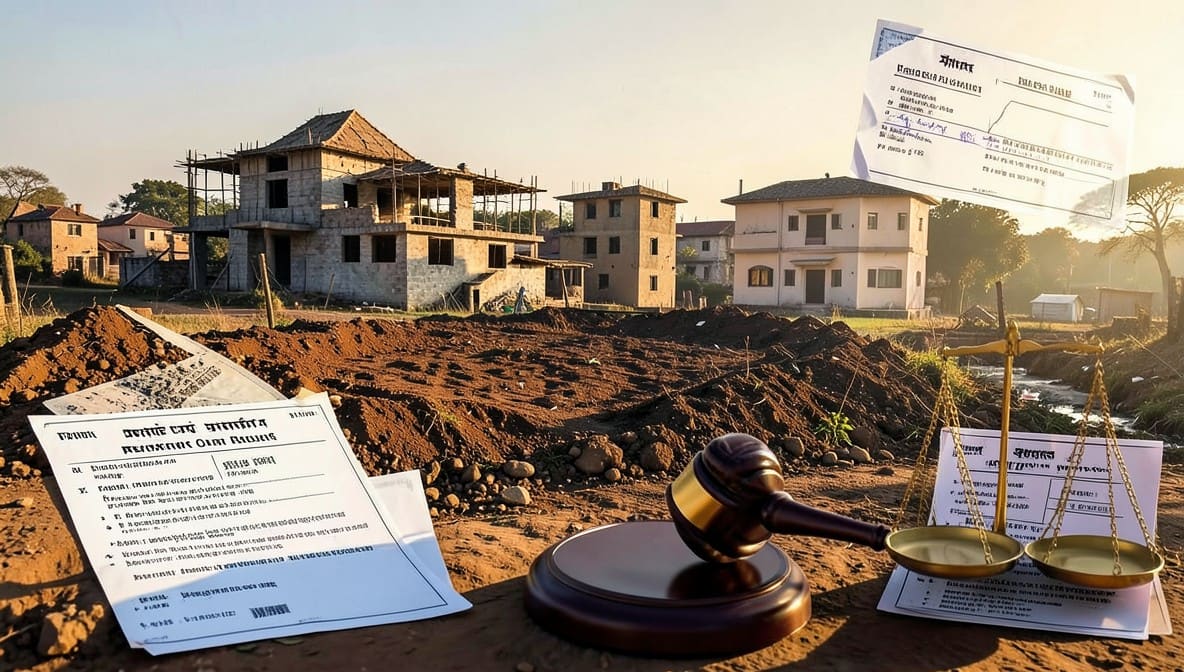
A landmark ruling by the Calcutta High Court has affirmed that a final civil court decree declaring title and possession remains binding on all parties, irrespective of whether it has been executed under the Code of Civil Procedure. The Court struck down a Land Reforms Tribunal’s order directing eviction on the ground that the civil decree was unexecuted, reasserting the supremacy of judicial determinations over administrative forums in matters of proprietary rights.
Background & Facts
The Dispute
The dispute arose over ownership and possession of agricultural land in West Bengal, where the private respondents claimed possession under a patta granted by the Revenue Department. The petitioners, members of the Basak family, had previously filed a civil suit (Title Suit No. 177 of 2012) seeking declaration of title, confirmation of possession, and a declaration that the private respondents’ patta was void. The suit was contested initially but later went ex parte as the defendants - including the State and private respondents - failed to appear or contest the proceedings. A decree was passed in favour of the petitioners in WPLRT 5 of 2026, declaring their title and possession.
Procedural History
- 2012: Civil suit filed by petitioners in WPLRT 5 of 2026 for declaration of title and possession.
- 2015: Ex parte decree passed by civil court in favour of petitioners; no appeal or challenge filed by any defendant.
- 2023: Private respondents filed an application before the West Bengal Land Reforms and Tenancy Tribunal seeking eviction of petitioners and restoration of possession.
- December 2025: Tribunal ordered eviction, holding that the civil decree was unexecuted and therefore non-binding.
- 2026: Writ petitions filed in Calcutta High Court challenging the Tribunal’s order.
The Parties' Positions
- Petitioners (WPLRT 3 & 5 of 2026): Argued that the civil decree was final and binding; Tribunal had no jurisdiction to override it.
- Private Respondents: Contended that the civil suit was barred under Section 61 of the West Bengal Land Reforms Act, 1955, rendering the decree a nullity.
- State: Supported private respondents, asserting that the Tribunal had statutory power under Section 49 to restore possession.
Relief Sought
The petitioners sought quashing of the Tribunal’s eviction order, restoration of their possession, and a declaration that the civil decree could not be disregarded by an administrative tribunal.
The Legal Issue
The central question was whether a final civil court decree declaring title and possession, though unexecuted, can be ignored by a Land Reforms Tribunal on the ground that it lacks execution under Order XXI of the Code of Civil Procedure, and whether the Tribunal has statutory authority to order eviction in cases of subsequent dispossession.
Arguments Presented
For the Petitioner
The petitioners relied on Khitish Chandra Kamila v. State of West Bengal and Sudharani Maity v. State of West Bengal to argue that a civil court decree is conclusive between parties and cannot be nullified by an administrative tribunal. They emphasized that non-execution does not invalidate a decree’s binding effect under Section 2(2) of the Code of Civil Procedure. They further contended that the Tribunal’s jurisdiction under Section 49 of the 1955 Act is limited to initial possession after annulment of a patta, not subsequent dispossession.
For the Respondent
The State and private respondents argued that Section 61 of the West Bengal Land Reforms Act, 1955 bars civil courts from adjudicating matters involving patta grants, rendering the civil decree a nullity ab initio. They relied on State of West Bengal v. Hari Mohan Dana to assert that civil suits challenging patta grants are non-maintainable. They further claimed that Section 49(3) and Rule 20A of the 1965 Rules empowered the Tribunal to restore possession after unlawful dispossession.
The Court's Analysis
The Court conducted a rigorous analysis of statutory provisions, precedent, and the nature of civil decrees. It held that a decree under Section 2(2) of the Code of Civil Procedure is a conclusive determination of rights between parties, and its binding force is not contingent upon execution.
"The civil court’s decree inherently has a finality, which shines in its own light, with or without any execution taking place in terms thereof."
The Court distinguished Hari Mohan Dana on factual grounds: in that case, the civil decree was directly challenged and set aside on jurisdictional grounds. Here, no such challenge was filed, and the decree attained finality. The Tribunal, therefore, had no authority to declare it a nullity.
The Court further examined Section 49 of the 1955 Act and found that its provisions for enforcement of possession apply only when a patta is annulled at the first instance. Where possession is lost after lawful grant, the remedy lies in a civil suit under Section 6 of the Specific Relief Act, 1963, not administrative eviction.
The Court also rejected the Tribunal’s reliance on Rule 20A, noting it is merely an ancillary provision to Section 49(3) and cannot operate independently. Crucially, the Tribunal itself has no statutory power to order eviction - it is not a Revenue Officer and cannot usurp that function.
The Court emphasized that the primary relief in the civil suit was declaration of title, not cancellation of patta. Since the Tribunal cannot determine title, the civil court’s jurisdiction was not barred under Section 61.
The Verdict
The petitioners won. The Calcutta High Court held that a final civil court decree declaring title and possession is binding and cannot be ignored by a Land Reforms Tribunal merely because it is unexecuted. The Tribunal lacked statutory authority to order eviction in cases of subsequent dispossession. The impugned order was set aside, and possession was ordered restored to the petitioners within 90 days.
What This Means For Similar Cases
Civil Decrees Are Binding Without Execution
- Practitioners must argue that non-execution does not invalidate a decree’s res judicata effect under Section 2(2) CPC.
- Administrative tribunals cannot declare civil decrees null and void; only appellate courts can set them aside.
- In land disputes, a final civil decree operates as a conclusive bar to any contrary administrative order.
Tribunal’s Power Is Limited to Initial Possession
- Section 49(3) applies only when a patta is annulled at the time of grant, not after subsequent dispossession.
- Any subsequent eviction must be sought through civil proceedings under Section 6 of the Specific Relief Act.
- Tribunals cannot act as civil courts; they cannot adjudicate title or possession claims.
Jurisdictional Bar Under Section 61 Is Not Automatic
- If the primary relief in a civil suit is declaration of title, and patta cancellation is ancillary, Section 61 does not bar jurisdiction.
- Courts must examine the nature of the primary relief, not the incidental challenge to revenue records.
- Practitioners should frame suits to prioritize title declaration to preserve civil court jurisdiction.