In a significant judgment, the Gauhati High Court has underscored the stringent standards required for convicting individuals based on child witness testimony, particularly in cases involving capital punishment. The Court acquitted two accused in a double murder case, highlighting the prosecution's failure to establish a reliable ocular account, safe recovery evidence, and trustworthy extra-judicial confessions. This ruling reinforces the principle that moral suspicion cannot replace legal proof, especially in grave offences.
Background & Facts
The Dispute
The case arises from a brutal double murder of Santosh Proja and his wife Lilawati Proja on the night of 05.04.2015 in Demow, Sivasagar district, Assam. The prosecution alleged that the accused, Mangal Proja and Pagha Proja, assaulted the deceased with a ‘Dao’ (a sharp weapon) following a dispute over cattle tethering. The FIR was lodged by PW1, Tikmai Proja, the mother of the deceased, on 06.04.2015.
Key Facts
- Incident Date: Night of 05.04.2015
- FIR Lodged: 06.04.2015 by PW1, Tikmai Proja
- Victims: Santosh Proja and Lilawati Proja
- Accused: Mangal Proja and Pagha Proja
- Alleged Weapon: ‘Dao’ (sharp cutting weapon)
- Motive: Dispute over cattle tethering
- Witnesses: PW2 (Karam Proja, son of the deceased), PW3 (Jonmoni Proja, daughter of the deceased), and PW4 (Ram Proja, relative), all minors at the time of the incident
- Forensic Evidence: Human blood detected on seized articles, but blood groups of deceased or accused not established
- Recovery: Alleged recovery of ‘Dao’ from an open pond led by Mangal Proja
- Extra-Judicial Confession: Alleged confession before villagers and police
Procedural History
- 06.04.2015: FIR registered (Demow PS Case No. 87/2015) under Section 302/34 IPC
- Investigation: IO visited the scene, conducted inquests, seized articles, and recovered the alleged weapon
- Trial: Charges framed under Section 302/34 IPC; accused pleaded not guilty
- Prosecution Evidence: 18 witnesses examined; defence adduced no evidence
- 21.08.2023: Trial Court convicted the accused and sentenced them to death (Sessions Case No. 148(S-S)/2017)
- 28.03.2023: Death Sentence Reference No. 01/2023 and Criminal Appeal (J) No. 150/2023 filed before Gauhati High Court
Relief Sought
The appellants sought acquittal on the grounds that:
- The prosecution failed to prove the charges beyond reasonable doubt
- The testimonies of child witnesses were inconsistent and unreliable
- The recovery of the weapon and extra-judicial confession were unsafe
- Forensic evidence did not conclusively link the accused to the crime
The Legal Issue
The central question before the Court was whether the prosecution had established beyond reasonable doubt that the accused were responsible for the murders based on:
- The testimonies of child witnesses
- Corroborative evidence, including recovery of the weapon, extra-judicial confession, and forensic reports
- The prosecution’s narrative regarding the apprehension and conduct of the accused
Arguments Presented
For the Appellants
- The testimonies of PW2, PW3, and PW4 were mutually inconsistent and contradicted by their own cross-examinations
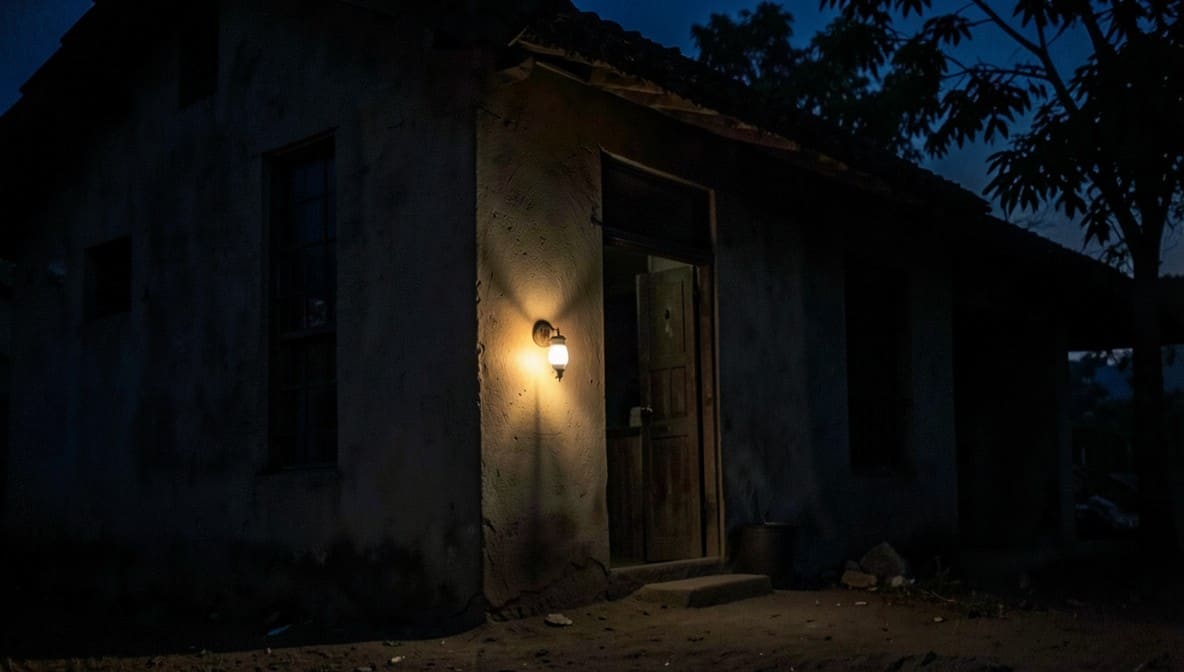
- The occurrence took place at night in a house without electricity, and the prosecution failed to establish adequate visibility for identification
- The conduct of the child witnesses was unnatural and inconsistent with ordinary human behaviour
- The recovery of the ‘Dao’ was from an open pond accessible to all, rendering it unreliable
- The extra-judicial confession was made in the presence of police and villagers, making it unsafe
- Forensic evidence did not establish a scientific linkage between the accused and the crime
- The prosecution failed to explain key facts, such as the whereabouts of PW4 during the night and the timeline of the accused’s apprehension
For the Respondent/State
- The testimonies of PW2, PW3, and PW4 established the participation of the accused, and minor discrepancies were natural given their age and traumatic circumstances
- The prosecution proved a motive arising from a dispute over cattle tethering
- The recovery of the ‘Dao’ and forensic evidence corroborated the ocular testimonies
- The extra-judicial confession was voluntary and trustworthy
- The homicidal nature of the deaths was conclusively established by medical evidence
The Court's Analysis
The Court conducted a meticulous examination of the evidence, emphasizing the following principles:
Evidentiary Value of Child Witnesses
The Court reiterated that the testimony of a child witness is not inherently unreliable merely because of age. However, such evidence must be scrutinized with caution due to the susceptibility of children to influence, tutoring, or imaginative constructions. The Court noted:
"The law does not regard the testimony of a child witness as inherently unreliable merely because of age. Once the court is satisfied that the witness possesses sufficient intelligence to understand the questions put and is capable of furnishing rational answers, the evidence becomes admissible. The subsequent enquiry concerns credibility rather than competency."
The Court further observed that corroboration is a rule of prudence, not of law, and conviction can rest on the testimony of a child witness if it is natural, consistent, and free from taint.
Scrutiny of Child Witness Testimonies
The Court found the testimonies of PW2, PW3, and PW4 to be materially inconsistent:
- PW2 initially claimed to have witnessed the assault but later admitted he was sleeping and did not see the accused
- PW3 claimed to have witnessed the assault through a window but admitted the lamp was turned off and she hid under the bed
- PW4 fled the scene and failed to explain his whereabouts during the night, introducing a different weapon (‘kolom kotari’) instead of the ‘Dao’
The Court held:
"Their testimonies are not merely affected by minor discrepancies but also suffer from infirmities that touch the very question of whether they actually witnessed the occurrence and/or identified the assailants."
Visibility and Identification
The occurrence took place at night in a house without electricity. The prosecution failed to establish the source, intensity, or adequacy of light for identification. The Court noted:
"The identification in darkness requires a careful scrutiny. The identification evidence becomes unsafe where conditions of visibility remain doubtful."
Conduct of Witnesses
The Court found the conduct of PW2 and PW3 unnatural, as they remained hidden under the bed despite repeated cries and violent assaults. No neighbours arrived, and no alarm was raised, which the Court deemed inconsistent with ordinary human behaviour.
Apprehension of Accused
The prosecution’s version regarding the apprehension of the accused was riddled with contradictions:
- No witness explained who apprehended the accused, when, or under what circumstances
- PW1 stated she found no one at the scene in the morning, despite other witnesses claiming the accused were tied up at the scene
- The timeline of events remained unexplained
Recovery of Weapon
The recovery of the ‘Dao’ was doubtful:
- PW7, an independent seizure witness, stated the weapon shown in court was not the one recovered
- The pond from which the ‘Dao’ was allegedly recovered was open and accessible to all
- The accused’s statement was recorded after the recovery, not before, undermining exclusivity
The Court relied on Pulukuri Kotayya v. King-Emperor and State of U.P. v. Deoman Upadhyaya to hold that recovery evidence from an open place is inherently weak unless exclusive knowledge is established.
Extra-Judicial Confession
The alleged extra-judicial confession was made in the presence of police and villagers after the accused were tied up. The Court found:
"The alleged confession admittedly occurred in the presence of police after apprehension and while surrounded by the public. Such a confession becomes legally unsafe and inherently weak."
The prosecution failed to establish the voluntariness of the confession or the exact words used by the accused.
Forensic Evidence
While human blood was detected on seized articles, the prosecution failed to establish the blood groups of the deceased or the accused, rendering the forensic evidence inconclusive. The Court noted:
"Blood stain evidence without conclusive grouping linkage cannot conclusively incriminate the accused."
Medical Evidence
The post-mortem report established homicidal deaths but did not correlate the medical findings with the prosecution’s timeline or identify the assailants.
The Verdict
The Gauhati High Court allowed the appeal and rejected the death sentence reference. The Court set aside the trial court’s judgment dated 21.08.2023 and acquitted the appellants, Mangal Proja and Pagha Proja, of the charges under Section 302/34 IPC, granting them the benefit of doubt. The Court directed their release forthwith if not required in any other case. The trial court’s direction regarding victim compensation under Section 357-A CrPC remained undisturbed.
What This Means For Similar Cases
Child Witness Testimony Requires Rigorous Scrutiny
- Courts must carefully evaluate the spontaneity, consistency, and naturalness of child witness testimonies
- Minor discrepancies may be overlooked, but foundational inconsistencies (e.g., whether the witness actually saw the crime) cannot be ignored
- Corroboration is essential where testimonies suffer from material infirmities
Recovery Evidence Must Establish Exclusivity
- Recovery from open or accessible places is inherently weak unless exclusive knowledge is proved
- Contradictions regarding the identity of the recovered weapon undermine the prosecution’s case
- The chain of custody must be clearly established to rely on recovery evidence
Extra-Judicial Confessions Must Be Voluntary and Trustworthy
- Confessions made in the presence of police or after apprehension are legally unsafe
- The prosecution must establish the voluntariness of the confession and the exact words used
- Confessions before strangers or in coercive circumstances are inherently unreliable