The Bombay High Court has reaffirmed that the issuance of a cheque as security for a loan does not automatically immunize it from prosecution under Section 138 of the Negotiable Instruments Act, provided a legally enforceable debt exists and the accused fails to discharge the burden of rebuttal. This judgment clarifies a persistent ambiguity in commercial litigation where cheques are routinely used as collateral.
Background & Facts
The Dispute
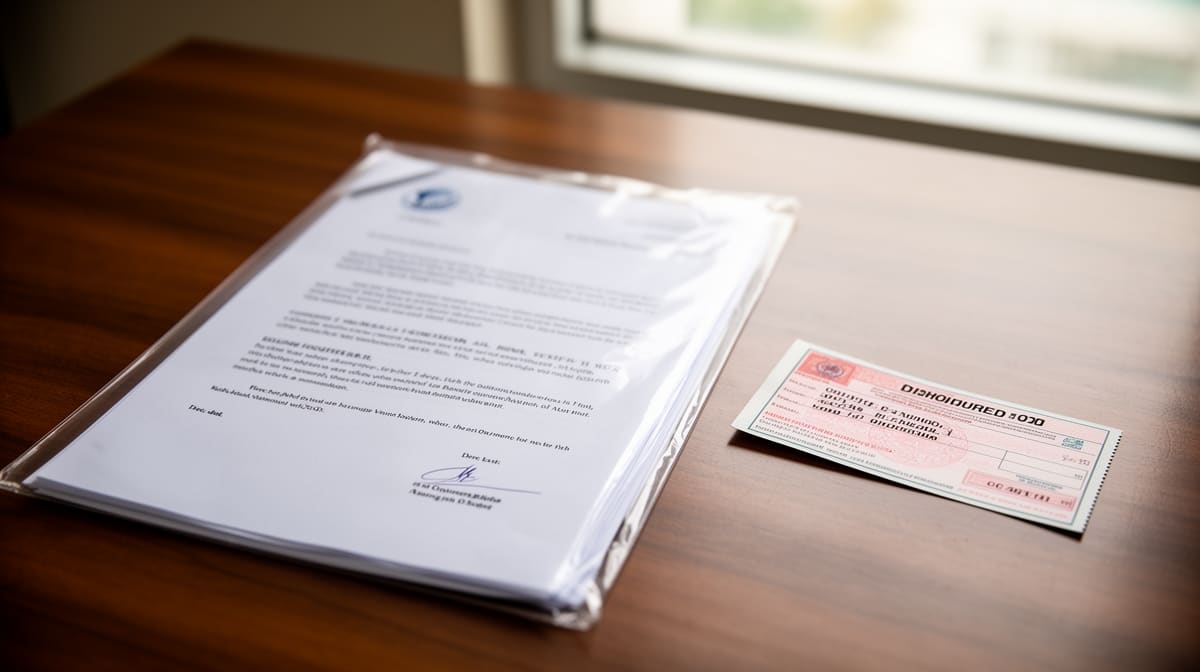
The dispute arose when the revision petitioner, a businessman, issued two cheques of Rs. 3,50,000 each to the complainant, Anil Prabhakar Khare, as part of a repayment arrangement for a hand-loan of Rs. 7,00,000 extended to clear the petitioner’s outstanding dues with Shriram Finance Company. The petitioner executed a written undertaking acknowledging the debt. One of the cheques, bearing no. 018170 dated 27-04-2015, was presented for payment and returned due to "funds insufficient". A legal notice was issued and ignored, prompting the complainant to initiate proceedings under Section 138 of the Negotiable Instruments Act.
Procedural History
The case progressed through the following stages:
- 2015: Original complaint filed before Judicial Magistrate First Class, Aurangabad
- 2018: Trial Court convicted the accused based on documentary evidence and witness testimony
- 2025: Additional Sessions Judge confirmed the conviction on appeal
- 2025: Revision petition filed before the Bombay High Court under Section 397 Cr.P.C.
Relief Sought
The revision petitioner sought quashing of the conviction, arguing that: (1) the cheques were issued as security, not for discharge of debt; (2) no legally enforceable debt existed; and (3) legal notice was not properly served.
The Legal Issue
The central question was whether cheques issued as security for a loan can form the basis of a prosecution under Section 138 of the Negotiable Instruments Act, and whether the accused’s failure to rebut the presumption of debt under the Act invalidates the conviction despite concurrent findings by two lower courts.
Arguments Presented
For the Petitioner
The petitioner contended that the cheques were never intended as payment instruments but as collateral security, citing C.C. Alavi Haji v. Palapetty Muhammed to argue that security cheques are not actionable under Section 138 unless explicitly tied to an existing debt. He further claimed the debt was not legally enforceable due to lack of consideration and that the notice was defective due to incorrect address.
For the Respondent
The respondent argued that the undertaking signed by the petitioner, combined with the testimony of three independent witnesses and documentary evidence (bank passbooks, postal acknowledgments), established a clear, legally enforceable debt. Counsel relied on T. Vasanthakumar v. Vijayakumari and I.C.D.S. Ltd. v. Beena Shabeer to assert that the presumption under Section 138 is triggered upon proof of issuance and dishonor, and the burden shifts to the accused to rebut it.
The Court's Analysis
The Court emphasized that Section 138 operates on a presumption of liability once a cheque is issued for discharge of a debt or liability and is dishonored. The Court noted that the petitioner did not dispute the authenticity of the cheques or his signature, thereby triggering the statutory presumption under Section 139 of the NI Act.
"When there was material to draw some presumption available under the NI Act, accused was expected to discharge the same with rebuttal evidence, which is apparently not forthcoming."
The Court rejected the petitioner’s claim that the cheques were issued as security, observing that the mere assertion of security without corroboration or explanation of the transaction context is insufficient. The petitioner failed to demonstrate when, why, or under what terms the cheques were given as security. In contrast, the complainant’s evidence - including the written undertaking, witness testimonies, and bank records - was consistent, credible, and unchallenged.
The Court also upheld the validity of the legal notice, noting that the postal acknowledgment bore the same address as that in the complaint, the vakalatnama, and the warrant issued by the trial court. The concurrent findings of two courts, the Court held, are entitled to high deference unless patently perverse or based on no evidence.
The Verdict
The revision petition was dismissed. The Court held that cheques issued in discharge of a legally enforceable debt remain prosecutable under Section 138 NI Act, even if characterized as security, provided the accused fails to rebut the statutory presumption. The conviction was upheld, and the accused was directed to forfeit the amount deposited in the trial court.
What This Means For Similar Cases
Security Cheques Are Not Immune from Prosecution
- Practitioners must now argue that a cheque was issued as security only if they can produce contemporaneous documentation or credible testimony establishing the security arrangement
- Mere oral assertions of "security" without supporting evidence will not defeat the presumption under Section 139
- The burden remains on the accused to explain the nature of the transaction at the time of issuance
Concurrent Findings Are Nearly Insurmountable on Revision
- Revision under Section 397 Cr.P.C. is not a second appeal; courts will not reappreciate evidence unless findings are perverse
- Where two courts have independently evaluated witness credibility and documentary evidence, interference is rare
- Practitioners should focus on procedural defects or jurisdictional errors, not factual disputes, in revision petitions
Notice Validity Hinges on Address Consistency
- Postal acknowledgment matching the address in the complaint, vakalatnama, and court records is sufficient to establish service
- Accused cannot evade liability by claiming non-receipt unless they prove the address was materially incorrect or deliberately misstated
- Courts will presume service where the address is consistently used across all legal documents