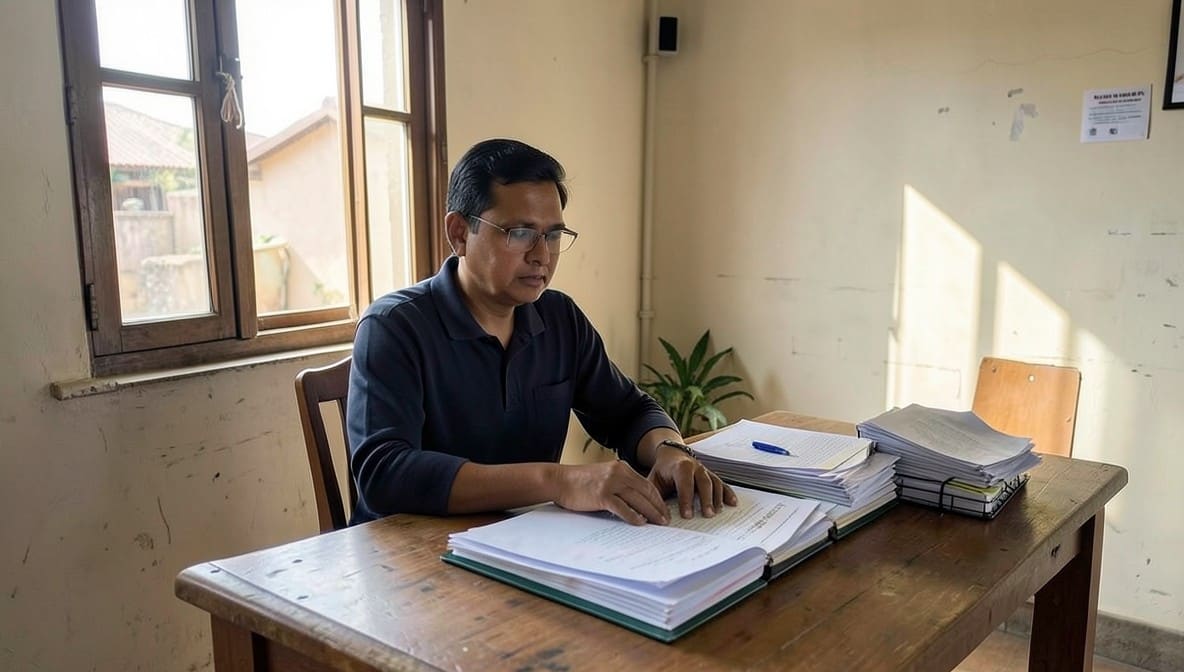
The Madhya Pradesh High Court has intervened in a case involving the arbitrary transfer of a primary teacher engaged in census work, directing the competent authority to consider her representation within 30 days. The judgment underscores the protection afforded to employees involved in critical field operations, such as census work, from disruptive transfers, pending a reasoned decision on their grievances.
Background & Facts
The Dispute
The petitioner, Smt. Krishna Golhani, a Primary Teacher employed under the State of Madhya Pradesh, was transferred from Block Development Officer, Lakhnadon, District Seoni, to Govt. PS Parwat Ghoghri, District Chhindwara, by an order dated 16.06.2026 (Annexure P/1). The petitioner challenged this transfer order under Article 226 of the Constitution of India, arguing that it was arbitrary and violated administrative circulars protecting employees engaged in census work.
Key Facts
- The petitioner was serving as a Primary Teacher at Block Lakhnadon, District Seoni.
- The impugned transfer order was issued on 16.06.2026, transferring her to District Chhindwara.
- The General Administration Department had issued a Circular restricting transfers of employees involved in field operations of Census work.
- No other teacher was transferred in her place, leaving her post potentially vacant.
- The petitioner was actively engaged in Census work, a critical field operation.
Procedural History
- 16.06.2026: Impugned transfer order issued by the competent authority.
- Post-16.06.2026: Petitioner filed Writ Petition No. 22672 of 2026 before the Madhya Pradesh High Court, Jabalpur.
- 29.06.2026: The High Court heard the matter and passed the present order.
The Parties' Positions
For the Petitioner
- Argued that the transfer was arbitrary as no other teacher was transferred in her place.
- Contended that the transfer violated the Circular issued by the General Administration Department, which restricts transfers of employees engaged in Census work.
- Submitted that the transfer would disrupt her ongoing field operations.
For the Respondent/State
- The Government Advocate submitted that the petitioner's representation would be considered and decided in accordance with law.
- Did not contest the factual submissions regarding the Circular or the petitioner's involvement in Census work.
Relief Sought
The petitioner sought:
- Quashing of the impugned transfer order dated 16.06.2026.
- Permission to continue at her current posting (Lakhnadon, District Seoni) pending decision on her representation.
- A direction to the competent authority to consider and decide her representation within a reasonable timeframe.
The Legal Issue
The central question before the Court was whether an administrative transfer order issued to an employee engaged in critical field operations (Census work) could be sustained when:
- The transfer violated a departmental circular restricting such transfers.
- No replacement was provided, potentially disrupting ongoing operations.
- The employee's representation against the transfer was pending consideration.
Arguments Presented
For the Petitioner
- Relied on the Circular issued by the General Administration Department, which explicitly restricts transfers of employees involved in Census work.
- Argued that the transfer was arbitrary and without justification, as no replacement was provided.
- Contended that the transfer would disrupt her ongoing field operations, which were of public importance.
For the Respondent/State
- The Government Advocate did not contest the factual basis of the petitioner's submissions.
- Submitted that the petitioner's representation would be considered and decided in accordance with law, without addressing the merits of the transfer order.
The Court's Analysis
The Court did not delve into a detailed legal analysis but focused on the immediate relief required to prevent disruption of the petitioner's work. The Court observed:
- The petitioner's representation was pending, and no decision had been taken on it.
- The Circular restricting transfers of employees engaged in Census work was a relevant consideration.
- The transfer, if allowed to stand pending the representation, could disrupt critical field operations.
The Court balanced the administrative exigencies with the petitioner's right to a fair consideration of her grievance, directing the competent authority to decide her representation within 30 days. Until such decision, the petitioner was permitted to continue at her current posting, provided no replacement had been transferred in her place.
The Verdict
The Court disposed of the writ petition with the following directions:
- The respondent-competent authority was directed to consider and decide the petitioner's representation by passing a reasonable and speaking order within 30 days from the receipt of the certified copy of the order.
- If no other person had been transferred in place of the petitioner, she was permitted to continue at her current posting (Lakhnadon, District Seoni) until her representation was decided.
- The Court did not express any opinion on the merits of the case, leaving the final decision to the competent authority.
What This Means For Similar Cases
Protection Against Arbitrary Transfers During Critical Operations
- Employees engaged in time-bound or critical field operations (e.g., Census work, election duties, disaster management) can seek interim protection against transfers that violate departmental circulars or disrupt ongoing work.
- Practitioners should emphasize the public importance of the employee's role and the potential disruption caused by the transfer, especially when no replacement is provided.
Representation Must Be Decided Expeditiously
- The Court's direction to decide the representation within 30 days sets a timeline for administrative authorities to act on grievances.
- Employees can cite this judgment to demand timely consideration of their representations, particularly when their postings are protected by circulars or administrative guidelines.
Speaking Orders Are Mandatory
- The Court directed the competent authority to pass a speaking order, which implies that arbitrary or non-reasoned decisions will not withstand judicial scrutiny.
- Practitioners should ensure that representations are decided with reasoned orders, failing which they can approach the Court for appropriate relief under Article 226 of the Constitution.