The Punjab & Haryana High Court has reaffirmed that the personal necessity of a landlord under the East Punjab Urban Rent Restriction Act, 1949, survives the death of co-landlords if at least one remains alive and continues to assert the need. It further held that exclusive possession by a third party, coupled with the absence of any documentary evidence of tenancy, conclusively establishes subletting.
Background & Facts
The Dispute
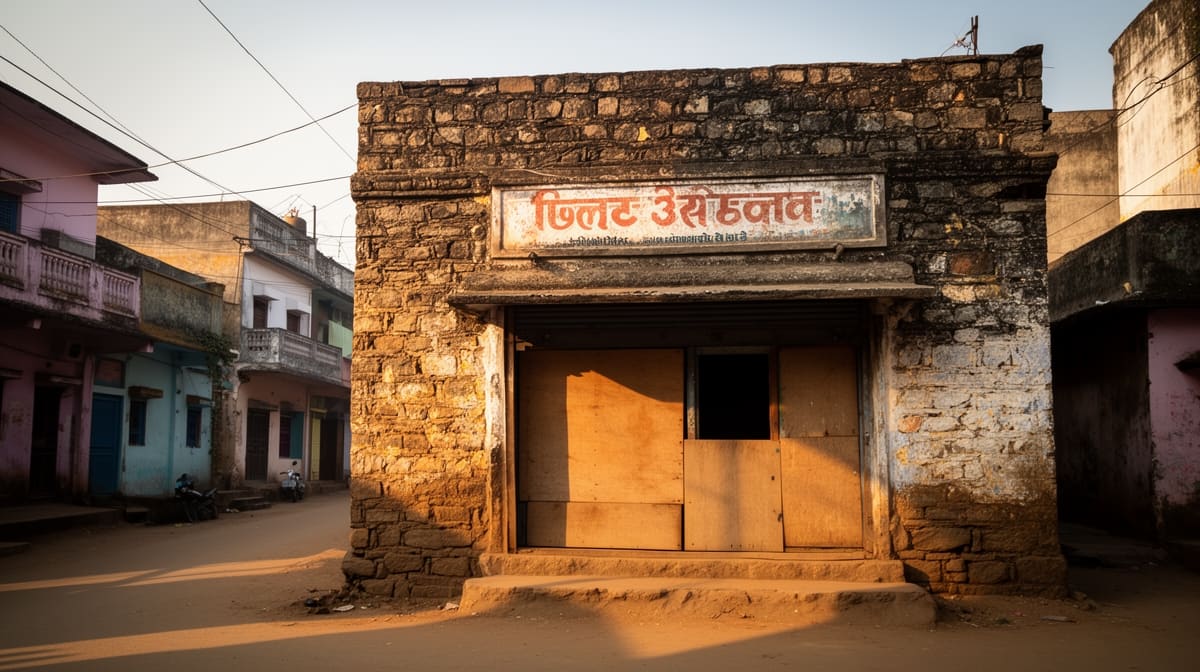
The petitioners, Rattan Lal and Prakash Saini, challenged the eviction order passed by the Rent Controller and upheld by the Appellate Authority under Section 13 of the East Punjab Urban Rent Restriction Act, 1949. The respondents, Shanti Rani and others, sought eviction on two grounds: bonafide personal necessity and subletting. The disputed premises comprised a portion of the ground floor of S.C.F. No. 36, Sector 28-C, Chandigarh, measuring 26’-3” x 4’-4½”.
Key Facts
- The original rent note (Ex.P1) dated 22.01.1974 named Rattan Lal as the sole tenant.
- In December 1981, Rattan Lal allegedly vacated the premises and moved to his industrial plot in Industrial Area, Phase 1, Chandigarh.
- Prakash Saini, then aged 17 or 18, claimed he was inducted as a tenant by the then-owner Krishan Lal Sahni through an oral agreement.
- Prakash Saini began operating his business, M/s Rattan Electric Company, from the premises.
- The respondents, Krishan Lal Sahni and his family, operated Sahni Medicos from another part of the ground floor.
- Krishan Lal Sahni died before the final hearing. Respondents no. 1 and 3 also died during pendency of the appeal.
- Respondent no. 2, Sudesh Kumar Sahni, remains alive and continues to run Sahni Medicos.
- No rent note, agreement, or document was produced to substantiate the alleged oral tenancy in favor of Prakash Saini.
- The petitioners did not call Rattan Lal as a witness.
Procedural History
- 07.12.2016: Rent Controller ordered eviction on grounds of bonafide necessity and subletting.
- 21.01.2023: Appellate Authority dismissed the petitioners’ appeal, affirming the Rent Controller’s findings.
- 16.04.2026: Present revision petition filed before the Punjab & Haryana High Court under Section 115 CPC.
The Parties' Positions
Petitioners (Tenants):
- Argued that personal necessity ceased upon the death of respondents no. 1 and 3.
- Claimed oral tenancy was established in December 1981 when Krishan Lal Sahni inducted Prakash Saini as tenant.
- Asserted that the Rent Controller and Appellate Authority ignored this crucial fact.
Respondent no. 2 (Landlord):
- Contended that the need for the premises remains valid as respondent no. 2 is alive and seeks to expand his medical business.
- Emphasized that Rattan Lal was the only tenant named in the rent note.
- Highlighted that Prakash Saini had exclusive possession of the entire premises while Rattan Lal resided elsewhere.
- Argued that an oral tenancy at age 17 - 18, without any document, is implausible and unproven.
Relief Sought
The petitioners sought quashing of the eviction orders dated 07.12.2016 and 21.01.2023, and restoration of their tenancy rights. They also sought a declaration that the alleged oral tenancy was valid and enforceable.
The Legal Issue
The central questions were: (1) Whether the death of two co-landlords extinguishes the bonafide personal necessity pleaded in an eviction petition, if one co-landlord remains alive and continues to assert the need; and (2) Whether exclusive possession by a third party, coupled with the absence of any written tenancy document, is sufficient to establish subletting under the East Punjab Urban Rent Restriction Act, 1949.
Arguments Presented
For the Petitioner
Learned counsel for the petitioners contended that the ground of personal necessity was rendered infructuous after the deaths of respondents no. 1 and 3, as the original plea was joint and indivisible. They relied on the principle that necessity must exist at the time of adjudication, not merely at the time of filing. They further argued that the Appellate Authority erred in dismissing the claim of oral tenancy, citing customary practices in commercial tenancies and the fact that Prakash Saini had been in continuous possession since 1981. They submitted that the Rent Controller and Appellate Authority had ignored the testimony of RW-1 and misapplied the burden of proof.
For the Respondent
Senior counsel for respondent no. 2 submitted that the plea of personal necessity was not confined to the deceased co-landlords but extended to respondent no. 2 and his children, who are actively engaged in expanding Sahni Medicos. He cited Hindustan Petroleum Corporation Limited v. Dilbahar Singh to emphasize that revisional jurisdiction is not a second appeal and that concurrent findings of fact are binding unless perverse. He stressed that the rent note (Ex.P1) was the only documentary evidence of tenancy, and the absence of any document in favor of Prakash Saini, combined with his age and exclusive possession, rendered the oral tenancy claim legally unsustainable. He further argued that subletting was evident from the fact that the tenant named in the rent note (Rattan Lal) no longer occupied the premises, while the business was run by another person without consent.
The Court's Analysis
The Court examined both grounds of eviction in light of statutory provisions and binding precedents. On the issue of personal necessity, the Court held that the requirement must be assessed at the time of filing the petition, and subsequent events such as death of co-landlords do not automatically vitiate the claim if the surviving landlord continues to assert the need. The Court noted that respondent no. 2, Sudesh Kumar Sahni, was alive and actively running the business from the premises, and the original petition explicitly included his need for expansion of the medical clinic and laboratory. The Court observed:
"...still since in the original petition the requirement of respondent no.2 and the children of respondents no.2 and 3 has also been projected, who all are admittedly living, thus, it cannot remotely be said that the said requirement no longer subsists."
The Court further relied on Sarla Ahuja v. United India Insurance Co., affirming that the landlord’s necessity is to be viewed from his perspective, not dictated by the tenant.
On the issue of subletting, the Court emphasized that the rent note (Ex.P1) was the only legally recognized proof of tenancy, and it named only Rattan Lal. The petitioners failed to produce any document - written or registered - to establish a subsequent tenancy in favor of Prakash Saini. The Court noted that RW-1, Prakash Saini himself, admitted in cross-examination that there was no written agreement with Krishan Lal Sahni. The Court found it highly improbable that a minor aged 17 - 18 could have been inducted as a tenant to run a commercial enterprise without any documentation. The Court held:
"The onus of proving that petitioner no.2 was subsequently inducted as a tenant... was on petitioner no.2. The said onus has not even remotely been discharged."
The Court concluded that exclusive possession by a person not named in the rent note, coupled with the absence of any proof of tenancy, constitutes subletting under Section 13 of the Act. The concurrent findings of the Rent Controller and Appellate Authority were found to be based on a proper appreciation of evidence and were not perverse.
The Verdict
The revision petition was dismissed. The High Court upheld the eviction orders dated 07.12.2016 and 21.01.2023. The petitioners were directed to vacate the premises within 8 weeks from the date of the judgment. The Court affirmed that the ground of personal necessity survives the death of co-landlords if a surviving landlord continues to assert the need, and that subletting is established when the person named in the rent note ceases occupation and another person occupies the premises without documentary proof of tenancy.
What This Means For Similar Cases
Personal Necessity Is Not Extinguished by Death of Co-Landlords
- Practitioners must argue that the necessity pleaded in the eviction petition must be assessed as a whole, including the needs of all co-landlords named in the petition.
- Death of one or more co-landlords does not invalidate the claim if the surviving landlord continues to assert the same need.
- Evidence must show continuity of need - e.g., ongoing business expansion plans, family use, or structural modifications.
Documentary Evidence Is Paramount in Tenancy Disputes
- Oral tenancies, especially in commercial premises, are highly vulnerable to challenge.
- A rent note is the primary and often conclusive proof of tenancy under the Rent Control Act.
- Absence of any written document in favor of a person claiming tenancy, even if in possession, will lead to a finding of subletting.
- Tenants must produce contemporaneous documents - rent receipts, agreements, or registration - to rebut a rent note.
Courts Will Not Interfere in Concurrent Findings Without Perversity
- Revisional jurisdiction under Section 115 CPC is narrow and not meant to re-appreciate evidence.
- Courts will not set aside findings merely because they would have decided differently.
- Perversity must be demonstrated - e.g., ignoring material evidence, drawing illogical inferences, or misreading testimony.
- The burden to prove perversity lies squarely on the petitioner.