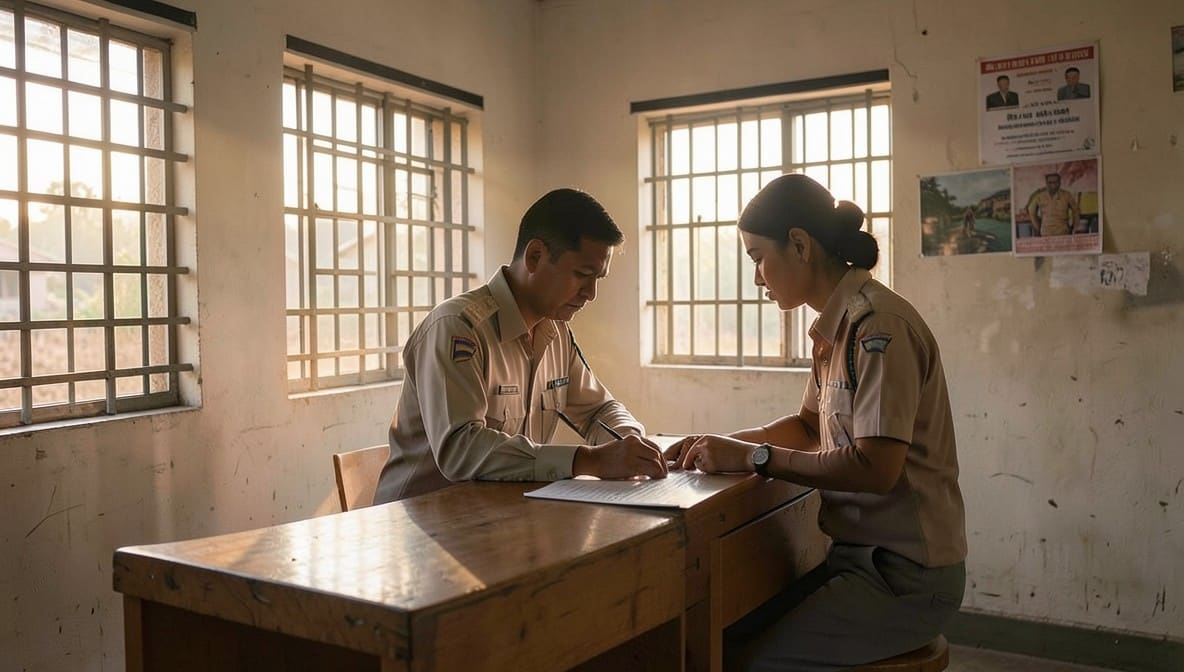
The Patna High Court has laid down a conditional framework for granting anticipatory bail in cases under the Bihar Prohibition and Excise Act, 2022, emphasizing judicial scrutiny of prior criminal antecedents as a precondition for confirmation. This order introduces a novel procedural safeguard against mechanical implicatory practices in excise enforcement.
Background & Facts
The Dispute
The petitioner, Subodh Kumar S/o Ramekwal Chaurasiya, resides in Village Dhane, Goraul, District Vaishali. He apprehends arrest in connection with PS Case No. 122/2026, registered under Section 30(a) of the Bihar Prohibition and Excise (Amendment) Act, 2022, for alleged possession and storage of illicit liquor.
Key Facts
- The FIR alleges recovery of 12 litres of liquor from a motorcycle, 7.5 litres from the house of one Rahul, and 580.510 litres from the washroom of Deo Narayan Bhagat
- The petitioner was not present at the time of recovery
- No liquor was recovered from his person or immediate possession
- The petitioner is not the owner of the motorcycle
- He has no known relationship with Rahul or Deo Narayan Bhagat
- The petitioner claims he was implicated solely due to a personal enmity with the chowkidar who filed the complaint
- The chowkidar allegedly knew of the petitioner’s alleged involvement but did not report it until after the FIR was filed
- The petitioner has two prior cases under the Excise Act
Procedural History
- 2026: FIR registered as PS Case No. 122/2026 at Goraul Police Station
- 06.05.2026: Petitioner filed Criminal Miscellaneous No. 29977 of 2026 seeking anticipatory bail before the Patna High Court
- 06.05.2026: Oral hearing conducted before Justice Satya Vrat Verma
The Parties' Positions
For the Petitioner:
- Argued that the prosecution case is based on suspicion and not credible evidence
- Highlighted absence of direct connection to seized items
- Alleged that police routinely implicate individuals with prior excise cases without proper investigation
- Contended that the chowkidar’s delayed complaint casts doubt on the veracity of the case
- Stated that he has only two prior excise cases, which he disclosed
For the Respondent (State):
- Opposed the grant of anticipatory bail
- Did not dispute the factual claims but emphasized the seriousness of the offence under the Excise Act
- Did not contest the petitioner’s antecedent record
Relief Sought
The petitioner sought anticipatory bail in the event of arrest, with conditions to ensure his cooperation with investigation and prevent tampering with evidence.
The Legal Issue
The central question was whether a court may grant provisional anticipatory bail subject to verification of prior criminal antecedents, and whether such a condition can determine the final confirmation of bail under Section 482 of the Bharatiya Nagarik Suraksha Sanhita (BNSS).
Arguments Presented
For the Petitioner
The petitioner’s counsel relied on the principle that anticipatory bail is a preventive remedy meant to protect personal liberty from arbitrary arrest. He cited Gurbaksh Singh Sibbia v. State of Punjab to argue that courts must balance the right to liberty against the need for investigation. He emphasized that the petitioner’s lack of possession, absence of motive, and the questionable role of the chowkidar rendered the case weak. He further submitted that the petitioner had voluntarily disclosed his two prior cases, indicating transparency.
For the Respondent
The State did not present detailed counter-arguments beyond opposing the prayer. The Additional Public Prosecutor did not dispute the factual assertions made by the petitioner, nor did he contest the accuracy of the antecedent record. The opposition appeared to rest on the general seriousness of offences under the Excise Act, without addressing the specific irregularities in the case.
The Court's Analysis
The Court acknowledged the petitioner’s claim of being falsely implicated due to personal enmity with the chowkidar. It noted the absence of any direct link between the petitioner and the seized contraband, and the failure of the prosecution to explain why the chowkidar delayed reporting despite alleged prior knowledge. The Court observed that in excise cases, there is a well-documented pattern of mechanical implicatory practices, often relying on local informants or unverified confessional statements.
"Once an accused is implicated in a case relating to excise, the police starts implicating mechanically either through chowkidar, local person, confessional statement or secret information without holding a proper investigation."
The Court held that while the offence under Section 30(a) is serious, the facts of this case do not prima facie establish active participation by the petitioner. It further noted that the petitioner had disclosed his two prior excise cases, which, if true, indicated candor.
The Court introduced a novel procedural mechanism: granting provisional anticipatory bail contingent upon verification of antecedents by the trial court. It reasoned that this condition serves a dual purpose: it protects the petitioner’s liberty while ensuring that the court is not misled by concealment of prior cases. The Court explicitly linked the confirmation of bail to the accuracy of the petitioner’s disclosure.
The Verdict
The petitioner was granted provisional anticipatory bail. He shall be released on furnishing bail bonds of Rs. 10,000 with two sureties of like amount each, subject to conditions under Section 482(2) of the BNSS. The provisional bail shall be confirmed only if the trial court verifies that the petitioner has exactly two prior excise cases. If more than two prior cases are found, the bail order shall stand cancelled. If exactly two are confirmed, the bail shall be confirmed forthwith. The petitioner must surrender within six weeks from the date of this order.
What This Means For Similar Cases
Anticipatory Bail May Be Conditional on Antecedent Verification
- Practitioners must now prepare to submit verified records of prior cases when seeking anticipatory bail in excise or similar regulatory offences
- Courts may impose conditions requiring trial courts to verify antecedents before confirming bail
- Failure to disclose prior cases accurately may result in automatic cancellation of bail
Police Reliance on Informants Will Be Scrutinized
- Courts will now examine the timing and motive behind complaints by chowkidars or local informants
- Delayed reporting without explanation may be treated as a red flag for fabrication
- Prosecution must establish a direct, credible link between the accused and the seized contraband
Procedural Transparency Is Now a Factor in Bail Decisions
- Voluntary disclosure of antecedents may weigh in favour of the accused
- Concealment, even if later discovered, will trigger automatic consequences
- This creates a new benchmark for honesty in bail applications, particularly in cases involving repeated regulatory violations