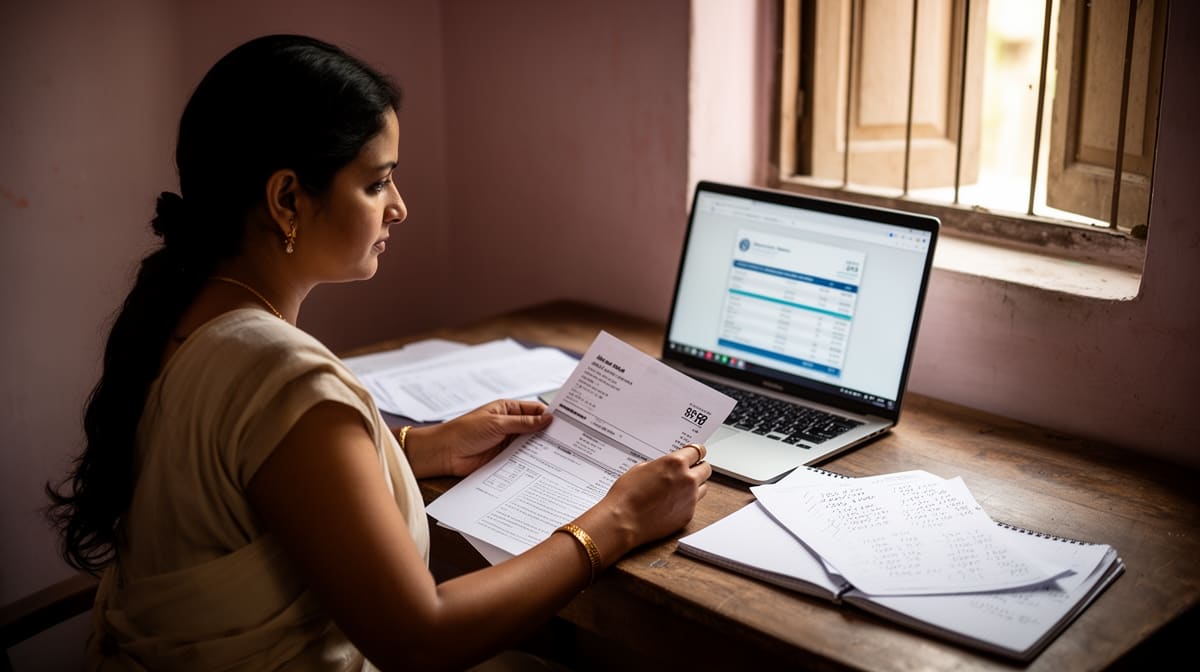
The Madhya Pradesh High Court has reaffirmed that interim maintenance orders under Section 144 of the Bharatiya Nagarik Suraksha Sanhita, 2023, cannot be sustained when both parties fail to disclose income, assets, and liabilities as mandated by the Supreme Court in Rajnesh v. Neha. This judgment underscores the non-negotiable requirement of financial transparency in family proceedings.
Background & Facts
The Dispute
The petitioner, Mohit Aswani, challenged the order dated 28.07.2025 passed by the Second Additional Principal Judge, Family Court, Bhopal, which granted interim maintenance of Rs.23,000 per month to the respondent-wife (Rekha Aswani) and Rs.12,000 per month to their minor son (respondent 2), totaling Rs.35,000 per month. The order was passed on an application filed on 30.09.2024 under Section 144 of the Bharatiya Nagarik Suraksha Sanhita, 2023 (BNSS), during the pendency of proceedings under the Protection of Women from Domestic Violence Act, 2005.
Key Facts
- The petitioner is engaged in a wholesale medical business but did not disclose any income or assets in his affidavit filed before the Family Court.
- The respondent-wife claimed to be employed as a 'Senior Representative Executing Events' with a monthly salary of Rs.16,000 in proceedings under the Domestic Violence Act, but omitted this information in her affidavit filed under Section 144 BNSS.
- Neither party filed a complete affidavit disclosing income, assets, or liabilities as required by the Supreme Court in Rajnesh v. Neha (2021) 2 SCC 324.
- The Family Court made no specific findings regarding the income of either party.
- The petitioner has been paying the awarded maintenance amount regularly since the order was passed.
- The minor son is approximately seven years old.
Procedural History
- 30.09.2024: Application for interim maintenance filed under Section 144 BNSS.
- 28.07.2025: Family Court awarded interim maintenance of Rs.23,000 to wife and Rs.12,000 to minor son.
- 10.04.2026: Criminal Revision No. 4284/2025 was reserved for orders.
- 16.04.2026: Judgment pronounced by the Madhya Pradesh High Court.
The Parties' Positions
For the Petitioner (Husband): Argued that the Family Court erred in awarding maintenance without verifying income disclosures. Cited Rajnesh v. Neha and Rupali Gupta v. Rajat Gupta (Delhi HC) and Amil v. Smt. Namita (MP HC) to assert that non-disclosure vitiates the order. Contended that the wife’s undisclosed employment income of Rs.16,000 p.m. renders the maintenance amount unjustified.
For the Respondents (Wife and Minor Son): Argued that the wife’s private employment is irregular and does not constitute regular income. Asserted that the petitioner’s medical business generates substantial income, which he deliberately concealed. Cited Shyam Mohan v. State of U.P. to argue that the Family Court rightly considered the petitioner’s status and ability to pay.
Relief Sought
The petitioner sought quashing of the Family Court’s order dated 28.07.2025 and a direction to reconsider the maintenance application with full financial disclosures. The respondents sought dismissal of the revision.
The Legal Issue
The central question was whether an interim maintenance order under Section 144 of the BNSS can be upheld when both parties have failed to disclose income, assets, and liabilities as mandated by the Supreme Court in Rajnesh v. Neha, and when the Family Court has not recorded any findings on the financial status of either party.
Arguments Presented
For the Appellant/Petitioner
The petitioner’s counsel contended that the Family Court acted illegally by awarding maintenance without any basis in disclosed financial data. Relied on Rajnesh v. Neha, which mandates complete disclosure of income, assets, and liabilities in affidavit form before any maintenance order is passed. Cited Rupali Gupta v. Rajat Gupta and Amil v. Smt. Namita to show that courts have consistently set aside maintenance orders where disclosures are incomplete or misleading. Argued that the wife’s prior disclosure of Rs.16,000 p.m. income in domestic violence proceedings contradicts her silence in the BNSS application, amounting to suppression of material facts.
For the Respondent/State
The respondents’ counsel countered that the wife’s employment is informal and her income is unstable, and therefore not comparable to regular salary. Emphasized that the petitioner, engaged in a lucrative medical business, has deliberately concealed his income, as evidenced by his incomplete affidavit. Cited Shyam Mohan v. State of U.P. to argue that courts may infer financial capacity from lifestyle and business nature when disclosures are absent. Asserted that the petitioner’s consistent payment of Rs.35,000 per month confirms his ability to pay and validates the Family Court’s order.
The Court's Analysis
The High Court observed that the Family Court failed to record any findings regarding the income or financial status of either party. Despite clear directives from the Supreme Court in Rajnesh v. Neha, both parties submitted incomplete affidavits. The wife omitted her disclosed employment income of Rs.16,000 p.m., while the husband concealed his earnings from the medical business.
"It is surprising that despite clear directions/guidelines issued by the Hon'ble Supreme Court... both have not disclosed their income, assets and liabilities... which gives impression that the petitioner and respondent 1 both want to suppress reality from the Court."
The Court noted that the Family Court’s reliance on the petitioner’s business engagement alone, without quantifying income, was legally insufficient. The absence of any analysis of assets, liabilities, or actual earning capacity rendered the order speculative. The Court further held that the fact that the petitioner has been paying the amount does not validate the legal basis of the order.
"The impugned order being passed in the lack of the said description, becomes unsustainable."
The Court emphasized that Rajnesh v. Neha is binding and non-compliance cannot be overlooked, even if the outcome appears equitable. The Family Court’s failure to enforce disclosure norms undermines the integrity of the process.
The Verdict
The petitioner succeeded in part. The High Court set aside the Family Court’s order dated 28.07.2025 awarding interim maintenance of Rs.23,000 to the wife and Rs.12,000 to the minor son. The matter was remanded to the Family Court for fresh adjudication in strict compliance with Rajnesh v. Neha. The petitioner is directed to continue paying the Rs.35,000 per month until the new order is passed.
What This Means For Similar Cases
Disclosure Is Mandatory, Not Optional
- Practitioners must ensure affidavits in maintenance proceedings under BNSS or DV Act include complete details of income, assets, and liabilities.
- Failure to disclose, even by the alleged victim, renders the application vulnerable to quashing.
- Courts will not infer income from vague assertions of business or employment without documentary proof.
Judicial Discretion Cannot Override Statutory Guidelines
- Family Courts cannot rely on perceived status or lifestyle to justify maintenance amounts.
- The Rajnesh v. Neha guidelines are not advisory - they are mandatory prerequisites.
- Any order passed without compliance is liable to be set aside on revision or appeal.
Payment History Does Not Validate Illegal Orders
- Regular payment of interim maintenance does not cure procedural defects.
- Courts must distinguish between voluntary compliance and legally mandated compliance.
- Practitioners should not assume payment = validity; always challenge non-compliant orders on procedural grounds.