The Madhya Pradesh High Court has reaffirmed that interim maintenance under Section 125 CrPC must be determined on a prima facie assessment of income and needs, not on contested financial transactions or unsubstantiated claims. This ruling reinforces the protective intent of social welfare legislation at the interim stage, ensuring that dependent spouses and children are not left without support while lengthy proceedings unfold.
Background & Facts
The Dispute
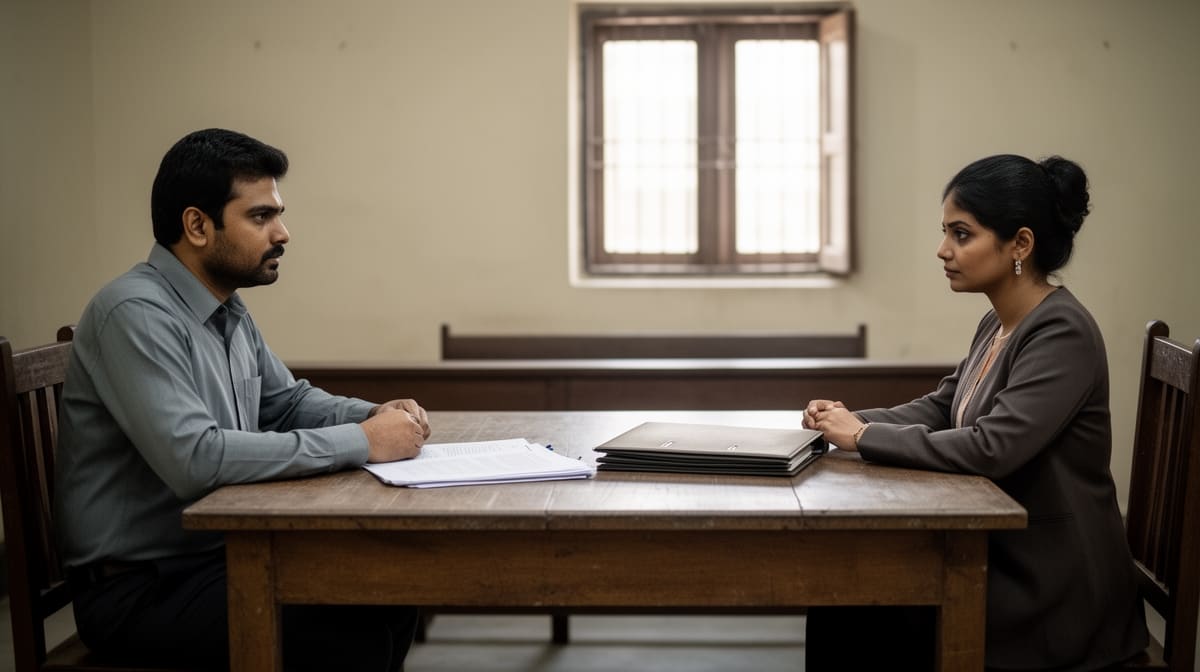
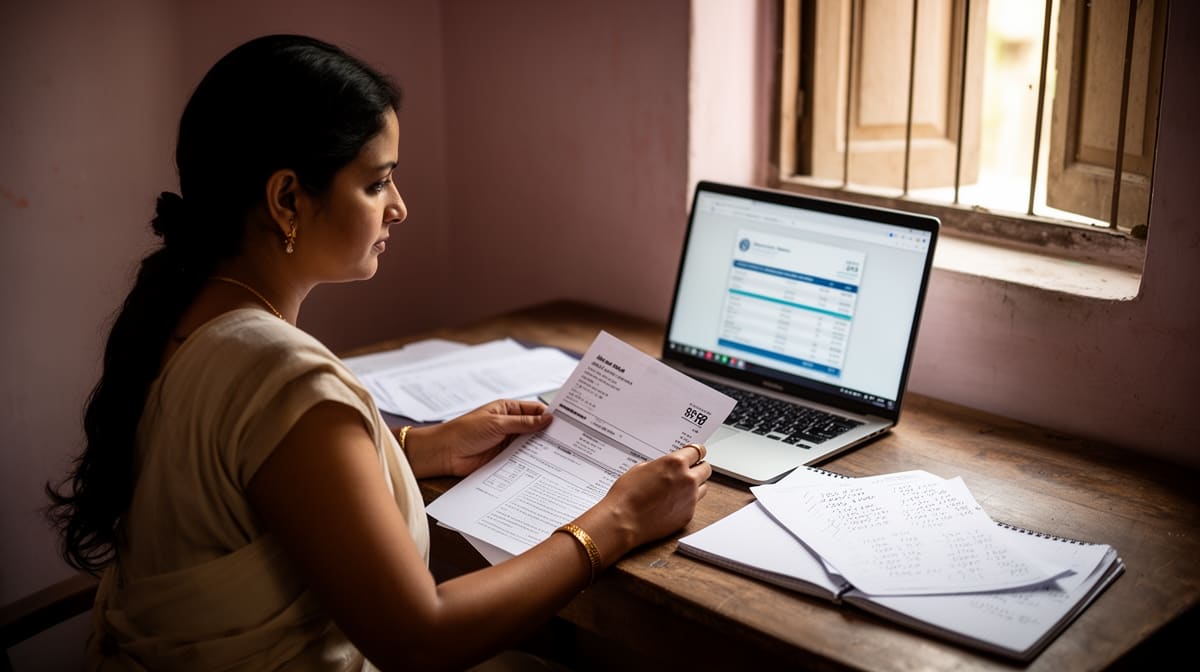
The petitioner, Ashish Khare, challenged an interim maintenance order passed by the Family Court, Gwalior, directing him to pay Rs. 20,000 per month to his wife, Smt. Shweta Khare, and Rs. 5,000 per month to their minor son, effective from June 21, 2022. The wife alleged sustained dowry demands, cruelty, and eventual ejection from the matrimonial home in May 2022. The petitioner denied all allegations, claiming she left voluntarily and is financially independent through tuition classes.
Procedural History
- June 21, 2022: Application filed under Section 125 CrPC for maintenance and interim relief
- January 20, 2025: Family Court awarded interim maintenance of Rs. 25,000 per month
- February 2025: Criminal Revision filed under BNSS Section 438/442 read with Family Courts Act Section 19(4)
- February 23, 2026: High Court dismissed the revision and affirmed the interim order
Relief Sought
The petitioner sought quashing or reduction of the interim maintenance order, arguing that the wife’s alleged income, voluntary transfers exceeding maintenance, and her refusal to cohabit barred her claim under Section 125(4) CrPC.
The Legal Issue
The central question was whether voluntary financial transfers and unsubstantiated claims of the wife’s income can justify interference with an interim maintenance order under Section 125 CrPC, and whether Section 125(4) applies at the interim stage without conclusive evidence of refusal to cohabit.
Arguments Presented
For the Petitioner
Counsel argued that the wife’s alleged monthly income of Rs. 40,000 - 50,000 from tuition renders her capable of self-maintenance, invoking Section 125(4) CrPC to bar her claim. He further contended that Rs. 13.33 lakh transferred to her account during the pendency of proceedings exceeded the maintenance liability, constituting an overpayment. He cited his housing EMI, parental obligations, and lack of ITR verification as grounds for reducing the award.
For the Respondent
Counsel countered that the petitioner’s income of Rs. 60,000 per month was self-declared and corroborated by ITR for AY 2023 - 24 showing total income of Rs. 11.34 lakh. The alleged Rs. 13.33 lakh transfers were explained as non-maintenance: Rs. 10 lakh was routed for flat purchase, Rs. 90,000 was returned via UPI, and Rs. 50,000 was an execution deposit. No documentary proof supported the wife’s alleged income, and the petitioner failed to disclose dependents in his affidavit.
The Court's Analysis
The Court emphasized that Section 125 CrPC is a social welfare provision, and interim maintenance orders are not final adjudications. The scope of revisional jurisdiction is narrow: interference is warranted only if the order is unconscionable, arbitrary, or contrary to law.
"For passing the order of interim maintenance, the Court is required to make an objective assessment of approximate amount to be awarded towards maintenance on the basis of the pleadings filed by both the parties and the affidavit of disclosure."
The Court found the Family Court’s assessment of the petitioner’s income - Rs. 60,000 per month - was based on his own affidavit, making it legally sound. The wife’s alleged tuition income was dismissed as unsubstantiated, lacking bank statements, fee receipts, or ITRs. The Court held that even if she earned some income, it does not disentitle her to maintenance if her standard of living in the matrimonial home was higher.
The petitioner’s claim of Rs. 13.33 lakh in overpayments was rejected as a factual dispute requiring evidence and cross-examination, which cannot be resolved at the interim stage. Voluntary EMI payments and obligations to parents were deemed irrelevant to "free income" for maintenance purposes. The Court reiterated that Section 125(4) cannot be invoked at the interim stage without conclusive proof of refusal to cohabit without cause.
The Court further noted that the Family Court retains full authority to reassess maintenance upon final evidence, and any observations made here do not prejudice the final adjudication.
The Verdict
The petitioner’s revision was dismissed. The High Court affirmed the interim maintenance order of Rs. 25,000 per month, holding that the Family Court’s decision was neither arbitrary nor contrary to law. The Court directed the Family Court to dispose of the main application within six months.
What This Means For Similar Cases
Interim Maintenance Cannot Be Reduced on Unverified Transfers
- Practitioners must not rely on bank statements alone to argue overpayment at the interim stage
- Any claim of excess payment must be substantiated with evidence of intent and character - e.g., whether funds were meant as maintenance or for other purposes
- Courts will treat disputed transfers as factual issues for trial, not revision
Income Claims Require Documentary Corroboration
- Allegations of spouse’s income from private work (tuitions, freelancing) must be backed by ITRs, bank entries, or fee receipts
- Oral assertions or self-serving affidavits are insufficient to disentitle maintenance
- The burden of proof lies on the party alleging higher income to produce credible evidence
Section 125(4) Bar Does Not Apply at Interim Stage
- The bar under Section 125(4) for refusal to cohabit cannot be invoked without conclusive evidence
- At the interim stage, courts must assume the wife’s allegations are prima facie valid
- Petitioners must preserve this defense for final hearing, not use it to defeat interim relief