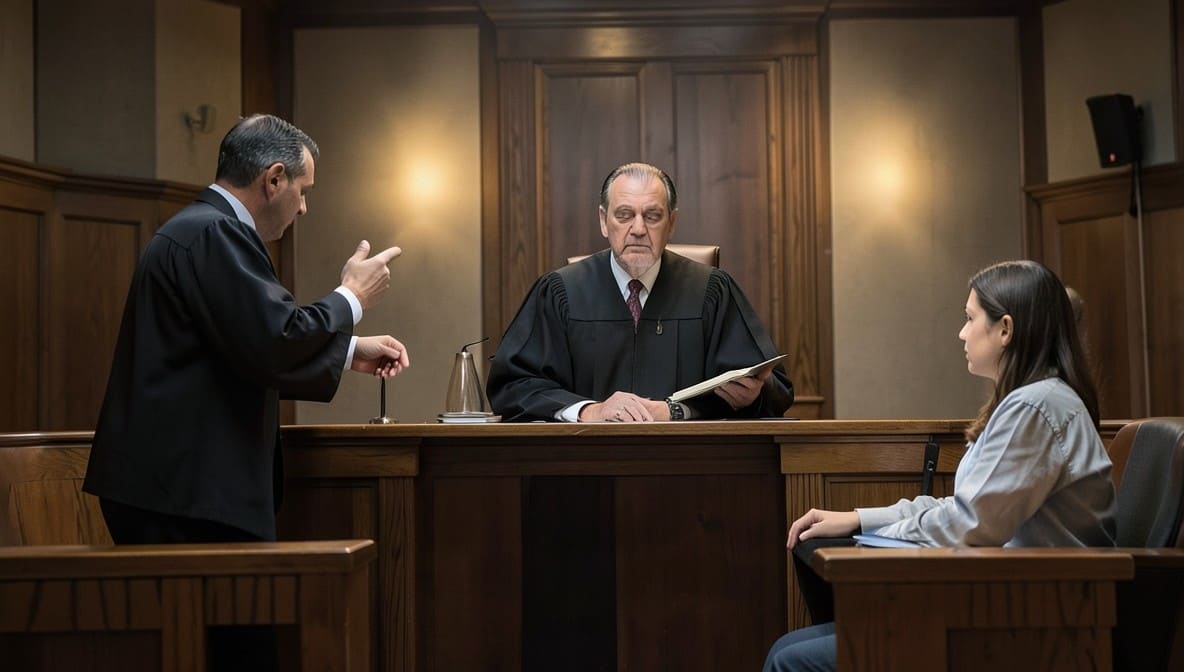
The Allahabad High Court has granted bail to an applicant accused under Section 64 of the Bharatiya Nyaya Sanhita (BNSS) in a case involving serious allegations of rape. The Court emphasized the delay in lodging the FIR, contradictions in the victim's statement, and the absence of documentary proof regarding her age. The decision underscores the importance of procedural safeguards in bail jurisprudence, particularly in cases involving delayed complaints and weak medical evidence.
Background & Facts
The Genesis
The applicant, Satish Giri, was arrested on 12.04.2026 in connection with Case Crime No. 178 of 2026 registered at Police Station Cantt, District Bareilly under Section 64 BNSS. The FIR was lodged on 11.04.2026, alleging that the applicant had established a physical relationship with the victim against her consent on 28.02.2026 and one month prior to that date.
Key Facts
- The alleged incident occurred on 28.02.2026, while the FIR was lodged on 11.04.2026, indicating a delay of one and a half months.
- The victim's age was determined to be 18 years based on radiological examination, but there was no documentary evidence such as a High School certificate or certificate of school first attended.
- The medico-legal report did not support the commission of rape by the applicant on the victim.
- The applicant had been in custody since 12.04.2026 and had no prior criminal history.
Procedural History
- 28.02.2026: Alleged incident of rape.
- 11.04.2026: FIR lodged at Police Station Cantt, District Bareilly.
- 12.04.2026: Applicant arrested and remanded to judicial custody.
- 2026: Present bail application filed before the Allahabad High Court.
The Parties' Positions
For the Applicant
The applicant's counsel argued that:
- The applicant had been falsely implicated in the case.
- There were material contradictions in the victim's statement recorded under Sections 180 and 183 of the Bharatiya Nagarik Suraksha Sanhita (BNSS).
- The delay in lodging the FIR was unexplained and significant.
- The medico-legal report did not corroborate the allegations.
- The applicant had no criminal history and would cooperate in the trial proceedings if granted bail.
For the State
The State, represented by the learned A.G.A., opposed the bail application but did not dispute the factual submissions made by the applicant's counsel.
Relief Sought
The applicant sought bail during the pendency of the trial, subject to conditions ensuring his cooperation and non-interference with the investigation or trial.
The Legal Issue
The central question was whether the applicant was entitled to bail under Section 64 BNSS, considering the delay in lodging the FIR, contradictions in the victim's statement, and the absence of documentary proof regarding her age.
Arguments Presented
For the Applicant
The applicant's counsel relied on the following points:
- The delay of one and a half months in lodging the FIR raised doubts about the credibility of the allegations.
- The victim's statement contained material contradictions, particularly regarding the timeline and circumstances of the alleged incident.
- The radiological examination report, while suggesting the victim was 18 years old, lacked documentary corroboration such as a High School certificate.
- The medico-legal report did not support the allegations of rape.
- The applicant had no criminal history and had been in custody since 12.04.2026.
For the Respondent
The State did not dispute the factual submissions made by the applicant's counsel but vehemently opposed the bail application on the grounds of the serious nature of the offence.
The Court's Analysis
The Court examined the following aspects:
- The delay in lodging the FIR and its impact on the credibility of the prosecution's case.
- The contradictions in the victim's statement recorded under Sections 180 and 183 BNSS.
- The absence of documentary proof regarding the victim's age, despite the radiological examination suggesting she was 18 years old.
- The medico-legal report, which did not support the allegations of rape.
- The applicant's lack of criminal history and his willingness to cooperate in the trial proceedings.
The Court also considered the overcrowded state of jails and the heavy pendency of criminal cases before the trial courts. It relied on the Supreme Court's judgment in Kapil Wadhawan v. Central Bureau of Investigation (2025 SCC OnLine SC 3038) and the guidelines laid down by this Court in Maya Tiwari v. State of U.P. (2024 SCC Online All 6765) regarding the grant of bail.
"Considering the entire facts and circumstances of the case, submissions of learned counsel for the parties and keeping in view the nature of offence, evidence, complicity of the accused and taking into account overcrowded jails and heavy pendency of criminal cases before the trial courts as well as considering the mandate of the judgement of the Apex Court in the case of Kapil Wadhawan vs Central Bureau of Investigation reported in 2025 SCC OnLine SC 3038 as well as guideline of this Court in the case of Maya Tiwari Vs. State of U.P. reported in 2024 SCC Online All 6765 regarding grant of bail and without expressing any opinion on the merits of the case, I am of the opinion that the applicant is entitled to be enlarged on bail."
The Verdict
The Allahabad High Court allowed the bail application. The applicant, Satish Giri, was directed to be released on bail on furnishing a personal bond and two sureties each in the like amount, subject to the following conditions:
- The applicant shall not directly or indirectly make any inducement, threat, or promise to any person acquainted with the facts of the case to dissuade them from disclosing such facts to the Court or any police officer or tamper with the evidence.
- The applicant shall cooperate in the trial/investigation sincerely without seeking any adjournment.
- The applicant shall not indulge in any criminal activity or commission of any crime after being released on bail.
- The applicant shall attend in accordance with the conditions of the bond executed by him.
In case of breach of any of the above conditions, it shall be a ground for cancellation of bail. The trial court was directed to send the release order to the concerned jail through the Bail Order Management System (BOMS) to ensure early release of the applicant. The Court also directed the office to send a copy of the order to the applicant through the concerned Jail Superintendent via e-mail or e-prison portal within 24 hours.
What This Means For Similar Cases
Delay in FIR Weakens Prosecution's Case
- Delays in lodging FIRs can significantly impact the credibility of the prosecution's case, particularly in cases involving serious offences.
- Courts are increasingly scrutinizing such delays and may grant bail if the delay is unexplained and materially affects the prosecution's case.
Contradictions in Victim's Statement Are Critical
- Material contradictions in the victim's statement, particularly regarding the timeline and circumstances of the alleged incident, can undermine the prosecution's case.
- Such contradictions may justify bail, especially when coupled with other weaknesses in the evidence.
Documentary Evidence Trumps Oral Testimony
- In cases involving allegations of age or other critical facts, documentary evidence is crucial.
- The absence of such evidence, even if the radiological examination suggests a certain age, can weaken the prosecution's case and support bail applications.
Overcrowded Jails and Pendency of Cases Are Relevant Factors
- Courts are increasingly considering the practical realities of overcrowded jails and the heavy pendency of criminal cases when deciding bail applications.
- These factors can tip the balance in favor of granting bail, particularly in cases where the evidence is weak or the allegations are not strongly supported by documentary or medical evidence.