The Supreme Court has reaffirmed that blacklisting of contractors by state departments is a severe administrative penalty requiring strict adherence to principles of natural justice. In a landmark ruling, the Court set aside a five-year blacklisting order against a construction firm, emphasizing that termination of a contract does not automatically justify blacklisting, and that a distinct, unambiguous show-cause notice must precede such action.
Background & Facts
The Dispute
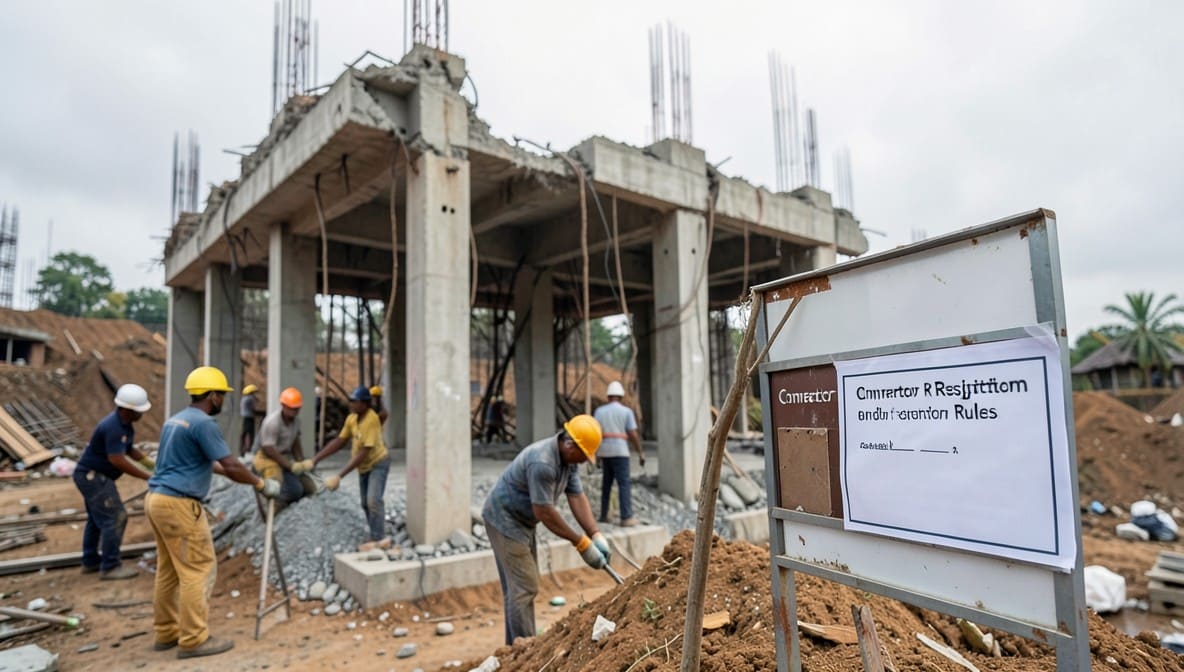
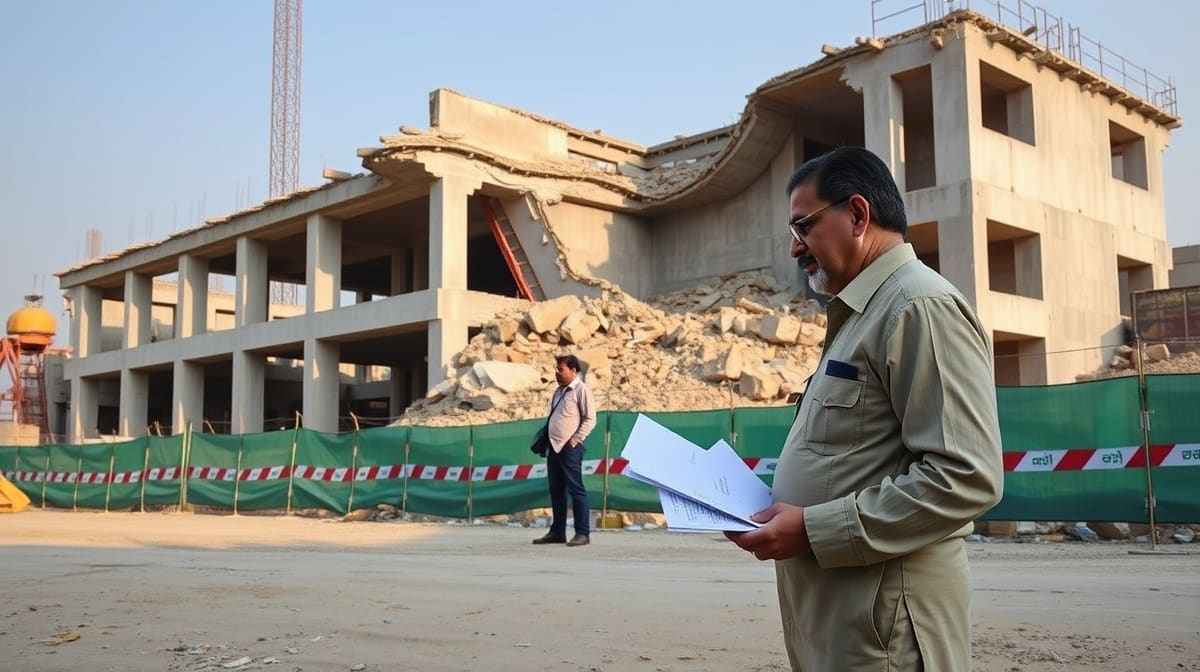
M/s A.K.G. Construction and Developers Pvt. Ltd., a registered contractor with the Water and Sanitation Department of Jharkhand, was engaged for the construction of an Elevated Service Reservoir (ESR) under the Koderma-Domchonch Jaynagar Mega Rural Water Supply Scheme. The Letter of Acceptance (LOA) was issued on 06.03.2023. On 01.06.2024, the top dome of the under-construction reservoir collapsed. The appellant attributed the collapse to an unexpected cyclone and offered to reconstruct the structure at its own cost. The Department, however, viewed the incident as indicative of negligence and initiated disciplinary proceedings.
Key Facts
- The ESR collapse occurred on 01.06.2024
- The appellant submitted a written explanation on 06.06.2024, denying negligence and attributing the collapse to natural causes
- The Department issued a show cause notice dated 04.06.2024, seeking explanation for "negligence and bad quality of work" and stating: "why action should not be taken against you as per rules"
- A three-member inquiry committee submitted its report on 06.06.2024, concluding negligence in construction
- The Superintending Engineer and technical experts from Birsa Institute of Technology, Sindri, and IITs Delhi, Madras, and Bombay corroborated findings of non-compliance with approved designs
- The Chief Engineer passed the termination cum blacklisting order on 23.08.2024, invoking Rule 10.1.8 and 10.1.15 of the Contractor Registration Rules, 2012
- The order blacklisted the appellant for five years, cancelled all registrations, forfeited security deposits, and halted all ongoing works
- The Appellate Authority dismissed the appeal on 05.12.2024
- The Jharkhand High Court dismissed the writ petition on 07.02.2025, imposing Rs. 2 lakhs costs
- The High Court dismissed the review petition on 04.08.2025
- The present appeals were filed before the Supreme Court on 23.08.2025
Procedural History
- 06.03.2023: Letter of Acceptance issued for ESR construction
- 01.06.2024: Collapse of ESR dome
- 04.06.2024: Show cause notice issued by Department
- 06.06.2024: Contractor’s reply and inquiry committee report submitted
- 21.06.2024: Superintending Engineer’s report confirming negligence
- 23.08.2024: Termination and blacklisting order issued
- 05.12.2024: Appellate Authority dismissed appeal
- 07.02.2025: High Court dismissed writ petition and imposed Rs. 2 lakh costs
- 04.08.2025: High Court dismissed review petition
- 23.08.2025: Civil Appeals filed in Supreme Court
- 02.04.2026: Supreme Court delivered judgment
Relief Sought
The appellant sought: (1) quashing of the blacklisting order dated 23.08.2024; (2) setting aside of the High Court’s judgment and review order; (3) restoration of its registration; and (4) deletion of the five-year blacklisting period. The Department defended the order as lawful under Rule 10 of the Contractor Registration Rules, 2012.
The Legal Issue
The central question was whether a show-cause notice issued for termination of contract, without explicitly indicating intent to blacklist, satisfies the mandatory requirement under Rule 10.5 of the Contractor Registration Rules, 2012 for imposing blacklisting, and whether blacklisting can be inferred as a logical consequence of termination.
Arguments Presented
For the Appellant
Mr. M.S. Ganesh, Senior Counsel, argued that the show-cause notice dated 04.06.2024 was framed solely for termination under Clause 59 of the General Conditions of Contract (GCC), and did not mention blacklisting as a proposed consequence. He emphasized that Rule 10.5 mandates a specific notice for blacklisting, and that the Department’s failure to distinguish between termination and blacklisting violated audi alteram partem. He cited Erusian Equipment & Chemicals Ltd. v. State of West Bengal and UMC Technologies Pvt Ltd v. Food Corporation of India to underscore that blacklisting is stigmatic, exclusionary, and requires a distinct, unambiguous notice. He further contended that the order was arbitrary because it terminated all existing contracts and barred future participation without individualized assessment.
For the Respondent
Mr. Kumar Anurag Singh, Counsel for the State, argued that Clause 59 of GCC permits termination without prior notice, and that the show-cause notice dated 04.06.2024, by using the phrase "why action should not be taken against you as per rules," implicitly covered blacklisting under Rule 10.1. He relied on the concurrent findings of negligence and the appellant’s offer to reconstruct the ESR as evidence of admission of fault. He submitted that the Department’s order was a composite decision, and that the procedural safeguards were satisfied through the multi-layered inquiry process.
The Court's Analysis
The Court began by affirming the legality of the termination order, noting that the findings of negligence were corroborated by technical reports and the appellant’s own conduct in offering reconstruction. However, the Court drew a sharp distinction between termination and blacklisting. While termination addresses the breach of a specific contract, blacklisting imposes a civil disability that bars future participation in government contracts for five years. The Court held that blacklisting is not an automatic consequence of termination.
"Blacklisting, being stigmatic and exclusionary in nature, cannot be imposed mechanistically but must comport with principles of natural justice and reasonableness."
The Court examined Rule 10.5, which mandates: "Before blacklisting a contractor of a particular category, it will be necessary to issue a show cause notice." It held that this provision is not a mere procedural formality but a substantive safeguard rooted in natural justice. The Court relied on UMC Technologies and Erusian Equipment to affirm that the notice must clearly indicate the intention to blacklist and the grounds for it.
"For a show-cause notice to constitute the valid basis of a blacklisting order, such notice must spell out clearly, or its contents be such that it can be clearly inferred therefrom, that there is intention on the part of the issuer of the notice to blacklist the noticee."
The Court found that the show-cause notice dated 04.06.2024 referred only to "negligence and bad quality of work" and sought explanation for "action" under general rules, without specifying blacklisting as a possible outcome. The final order dated 23.08.2024 also failed to articulate why blacklisting was necessary beyond the termination. The Court rejected the argument that the phrase "why action should not be taken" was sufficient, noting that such vagueness deprived the contractor of a meaningful opportunity to defend against the specific penalty of exclusion.
The Court further cited Techno Prints to caution against the overuse of blacklisting as a default penalty, comparing it to the police power of arrest: "The Police has the power to arrest but it is not necessary that in all cases arrest must be effected."
The Verdict
The Supreme Court dismissed the appeal insofar as it challenged the termination order, upholding it as lawful and substantiated. However, the Court set aside the blacklisting order dated 23.08.2024 as violative of Rule 10.5 and principles of natural justice. In light of the passage of over 18 months since the order and to avoid further litigation, the Court moulded the relief by directing that the blacklisting order shall cease to operate with immediate effect. No fresh show-cause notice was directed. The costs imposed by the High Court of Rs. 2 lakhs were set aside.
What This Means For Similar Cases
Blacklisting Cannot Be Inferred from Termination Notices
- Practitioners must now challenge any blacklisting order where the show-cause notice does not explicitly mention blacklisting as a proposed penalty
- Departments must issue separate, specific notices for blacklisting, even if termination proceedings are ongoing
- Vague phrases like "action as per rules" or "disciplinary action" are insufficient to satisfy Rule 10.5
Procedural Rigor Is Non-Negotiable in Administrative Sanctions
- Blacklisting triggers civil consequences beyond contractual remedies and must be treated as a quasi-judicial action
- Technical reports and admissions of fault do not substitute for a procedurally valid notice
- The burden lies on the authority to demonstrate application of mind and intent to blacklist, not on the contractor to guess the penalty
Courts Will Mould Relief to Prevent Futile Litigation
- Where blacklisting is illegal but the contractor has already suffered significant delay, courts may set aside the order outright rather than remand for fresh proceedings
- This precedent discourages departments from using blacklisting as a punitive default, reducing unnecessary litigation in High Courts