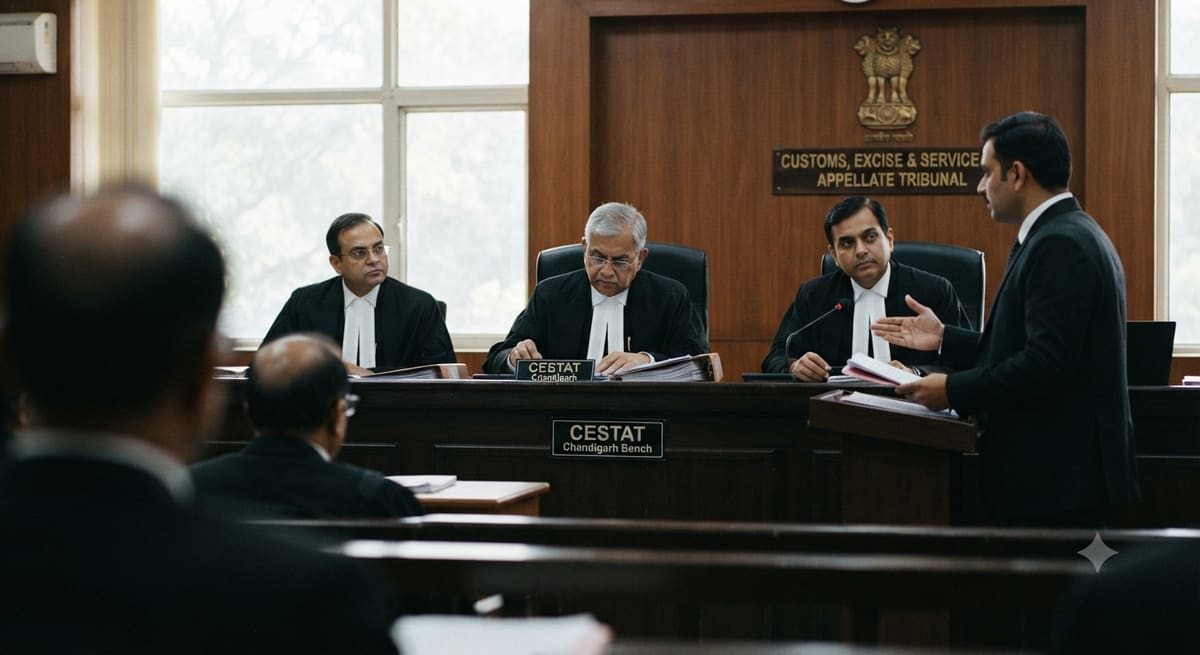
The Customs, Excise & Service Tax Appellate Tribunal has affirmed a foundational principle in indirect tax jurisprudence: when a clarificatory circular issued by the CBIC benefits the assessee, it must be applied retrospectively, even to transactions concluded before its issuance. This decision resolves long-standing ambiguity regarding the binding nature of such circulars and provides critical relief to importers facing retrospective tax demands based on evolving interpretations of GST rates.
Background & Facts
The Dispute
The appellant, Quality Systems and Equipments P. Ltd., imported poultry machinery and parts between September 2017 and December 2021, classifying them under CTSH 84362900 and 84369100 and paying IGST at 12% under Serial No. 199 of Schedule II of the IGST Notification dated 28.06.2017. The Commissioner of Customs later contended that these goods should have been classified under Serial No. 453 of Schedule III, attracting an 18% IGST rate, resulting in a differential demand of ₹63,36,223 plus interest and penalties.
Procedural History
- 2022: Show cause notice issued alleging underpayment of IGST
- 2023: Two hearing notices issued; one hearing adjourned due to Commissioner’s unavailability
- 2024: Appellant emailed request for adjournment on 21.08.2024 citing Director’s illness; final hearing held on 20.08.2024 without appellant’s presence
- 12.09.2024: Commissioner passed order imposing differential IGST, interest, redemption fine, and penalties
- 2025: Appeal filed before CESTAT Mumbai
Relief Sought
The appellant sought setting aside of the order on grounds of procedural irregularity and the binding retrospective effect of CBIC Circulars No. 229/23-2024/GST (15.07.2024) and No. 236/30/2024-GST (11.10.2024), which clarified that payment of IGST at 12% on parts under CTSH 84369100 was valid and constituted full tax payment.
The Legal Issue
The central question was whether clarificatory CBIC circulars issued after the transaction but favoring the assessee have retrospective effect under the Customs Act, 1964, and whether such circulars bind departmental officers even when issued post-adjudication.
Arguments Presented
For the Appellant
The appellant relied on Ranadey Micronutrients v. Collector of Central Excise (1996) and Suchitra Components Ltd. v. Commissioner (2008) to argue that beneficial circulars issued under Section 151A of the Customs Act (analogous to Section 37B of the Central Excise Act) are binding and retrospective when they clarify existing law, not create new obligations. It further submitted that the circulars explicitly stated that past cases were to be regularized on an "as is where is" basis, meaning payments made at 12% were deemed valid. The appellant also highlighted procedural lapses: failure to provide adequate notice and opportunity of hearing.
For the Respondent
The Revenue contended that the circulars were issued after the show cause notice and adjudication, and therefore could not affect a concluded order. It relied on Union of India v. Intercontinental Consultants and Technocrats Pvt. Ltd. (2018) to argue that circulars cannot override statutory provisions and have only prospective effect unless expressly stated. The Department maintained that Serial No. 199 did not explicitly cover parts of machinery, and the higher rate under Serial No. 453 was applicable.
The Court's Analysis
The Tribunal rejected the Revenue’s argument that circulars cannot have retrospective effect merely because they were issued after the adjudication. It emphasized that Section 151A of the Customs Act empowers the Board to issue binding instructions to officers, and such instructions are not advisory but mandatory. The Court distinguished Intercontinental Consultants by noting that case dealt with circulars that altered statutory interpretation, whereas here, the circulars merely clarified an existing ambiguity.
"Further, on the basis of recommendations of GST Counsel, in view of prevailing genuine doubts, the issue for the past period are regularized on 'as is where is basis' which was further clarified to be proper payment of duty even at the lower rate of 12% vide clarificatory circular dated 11.10.2024."
The Tribunal held that the retrospective application of beneficial circulars is well-established in Ranadey Micronutrients and Suchitra Components, and that the Department cannot deny the applicability of such clarifications merely because they were issued after the notice. The circulars were not creating new law but resolving a genuine doubt that existed during the import period. Furthermore, the Tribunal found the Commissioner’s order procedurally defective: the appellant had sought an adjournment, and the hearing proceeded without proper notice, violating principles of natural justice.
The Verdict
The appellant won. The Tribunal held that beneficial CBIC circulars clarifying GST rates have retrospective effect and bind departmental officers, even when issued after adjudication. The order imposing differential IGST, interest, and penalties was set aside as unsustainable in law and fact.
What This Means For Similar Cases
Clarificatory Circulars Are Binding and Retrospective
- Practitioners must now argue that any CBIC circular resolving ambiguity in favor of the assessee applies retroactively, regardless of when it was issued
- Revenue authorities cannot rely on post-facto interpretations to impose demands on past transactions if a clarificatory circular exists
- This applies to IGST, CGST, and customs duty matters alike
Procedural Fairness Is Non-Negotiable
- Failure to provide adequate notice of hearing, even after a request for adjournment, renders an order voidable
- Email communications seeking adjournment must be treated as formal requests; ignoring them violates Article 14 and 21 of the Constitution
- Practitioners should document all communication attempts and cite this judgment to challenge ex parte orders
Genuine Doubt Justifies Lower Rate Payment
- Where there is a genuine doubt about tariff classification or applicable rate, payment at the lower rate is not tax evasion
- The burden shifts to the Department to prove dishonest intent or fraudulent classification - not mere error
- This judgment reinforces that taxpayer-friendly interpretations prevail in cases of ambiguity