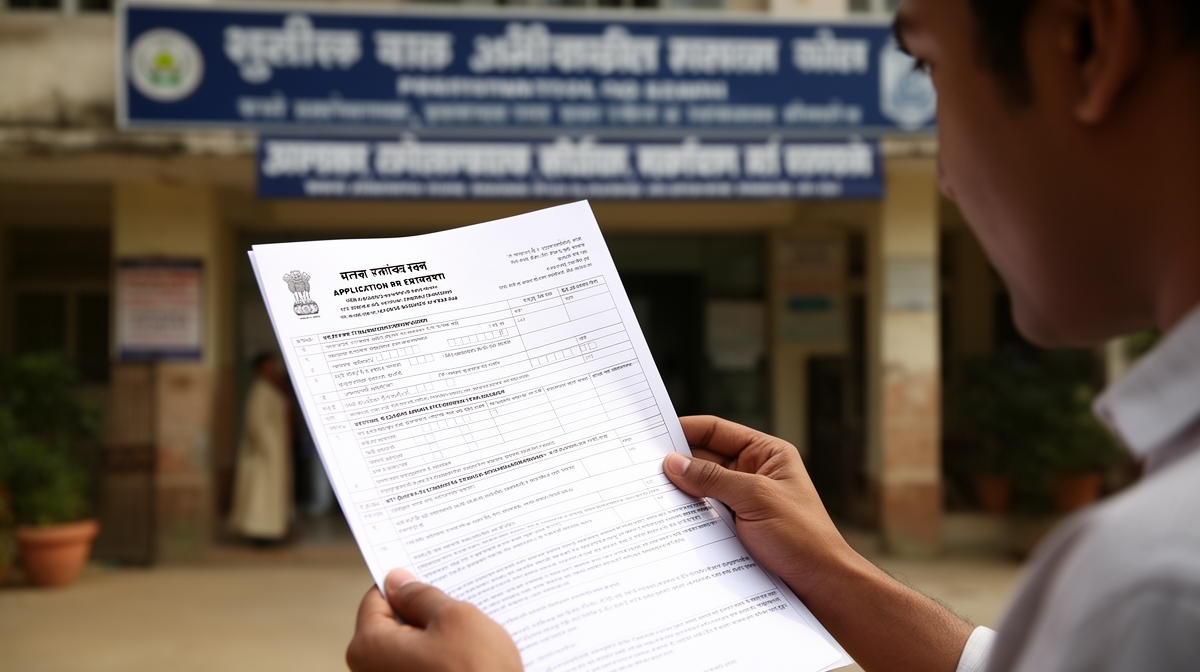

The Rajasthan High Court has granted bail to two accused persons who had been in custody for over a month following the filing of a First Information Report under Sections 109(1), 75(2), 115(2), and 189(2) of the Indian Penal Code. The Court emphasized that prolonged pre-trial detention without a completed investigation or demonstrated flight risk constitutes a violation of the fundamental right to liberty under Article 21 of the Constitution.
The Verdict
The petitioners won. The High Court granted bail to both accused persons after they had served over a month in custody, holding that prolonged pre-trial detention without a completed investigation or risk of tampering with evidence violates Article 21. The Court directed them to furnish a personal bond of one lakh rupees and two sureties of fifty thousand rupees each, subject to regular court appearances.
Background & Facts
The two petitioners, Prakash and Ishwar Lal, were arrested on 10 December 2025 following a First Information Report filed at Police Station Kotda, District Udaipur. The FIR alleged a violent altercation involving threats and physical assault under Sections 109(1), 75(2), 115(2), and 189(2) of the Indian Penal Code. The complainant alleged that the petitioners had engaged in a coordinated act of intimidation and violence.
The petitioners have remained in custody since their arrest. Their counsel submitted that the investigation was complete, forensic and witness statements had been recorded, and no further custodial interrogation was required. They argued that continued detention served no legitimate purpose and amounted to punitive confinement prior to trial.
The Public Prosecutor opposed bail, contending that the nature of the offence was serious and that the accused posed a potential threat to witnesses or the course of justice. However, no specific evidence of witness intimidation or flight risk was presented.
The petitioners filed the bail application under Section 439 of the Code of Criminal Procedure, 1973, seeking release on personal bond and sureties.
The Legal Issue
The central question was whether prolonged pre-trial detention, exceeding one month, without any ongoing investigative necessity or demonstrated risk of tampering or flight, violates the right to liberty under Article 21 of the Constitution, thereby warranting bail even in cases involving serious allegations.
Arguments Presented
For the Petitioner
The petitioners’ counsel argued that the investigation had been completed, as evidenced by the closure of the FIR process and the absence of any direction for further remand. They cited the Supreme Court’s decision in State of Rajasthan v. Bhagwan Das (2021) to assert that pre-trial detention must be justified by necessity, not convenience. They emphasized that the petitioners had no prior criminal record, were residents of the same locality, and had cooperated fully with authorities. The prolonged detention, they argued, was disproportionate and contrary to the presumption of innocence.
For the Respondent
The Public Prosecutor contended that the allegations involved organized violence and threats, which warranted caution. He argued that the gravity of the offence under Sections 115 and 189 IPC, which relate to criminal intimidation and public mischief, justified continued custody. He did not, however, provide any specific evidence of witness tampering, destruction of evidence, or likelihood of absconding.
The Court's Analysis
The Court undertook a structured review of the factual posture and legal principles governing bail in non-bailable offences. It noted that while the allegations were serious, the nature of the offence did not inherently preclude bail, particularly where the investigation was complete and no new evidence was expected.
"The right to liberty is not a privilege to be granted at the State’s discretion, but a constitutional guarantee that must be preserved unless compelling reasons exist to override it."
The Court observed that the petitioners had been in custody for over a month, a period sufficient for the completion of investigation and filing of chargesheet. No application for further remand had been made, nor was there any indication that custodial interrogation was required. The Court rejected the generalized assertion of risk, holding that speculative concerns cannot override the constitutional mandate of Article 21.
It distinguished this case from those involving organized crime, terrorism, or repeated offences, where the risk of reoffending or witness intimidation is demonstrable. Here, the accused were first-time offenders with deep local roots, and the complainant’s allegations had already been recorded in the FIR.
The Court further noted that bail is not an admission of guilt, nor is it a reward for cooperation. It is a procedural safeguard to prevent the erosion of liberty before conviction. The Court held that the balance of convenience and justice tilted decisively in favor of release, subject to conditions.
What This Means For Similar Cases
This judgment reinforces the principle that pre-trial detention must be proportionate and time-bound. Practitioners should now routinely assess whether the investigation is complete and whether continued custody serves any legitimate purpose beyond mere delay. In cases where the chargesheet has been filed and no further remand is sought, courts are expected to scrutinize the necessity of custody more rigorously.
The ruling does not diminish the seriousness of offences under Sections 115 or 189 IPC, but clarifies that gravity alone cannot justify indefinite detention. Future bail applications must be supported by evidence of investigative necessity or specific risk factors - not general apprehensions.
This decision also signals a shift toward greater judicial vigilance over custodial practices, aligning with the Supreme Court’s consistent emphasis on Article 21 as a non-derogable right. Lawyers should cite this judgment when opposing prolonged pre-trial detention in non-violent or non-organized crime cases.