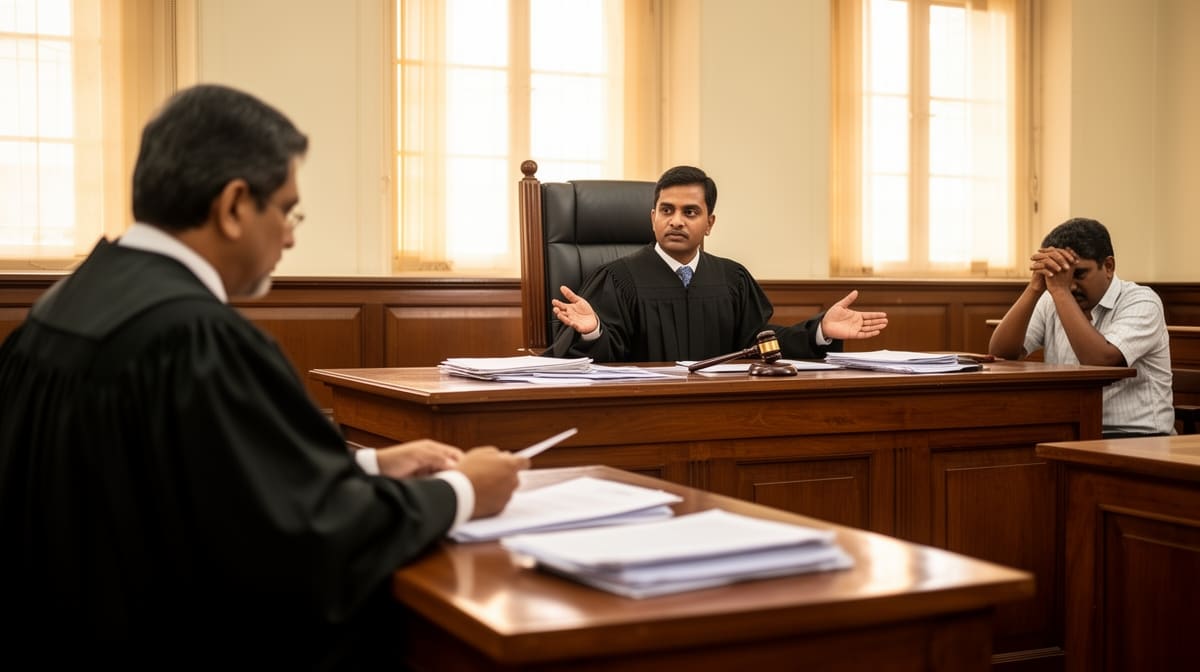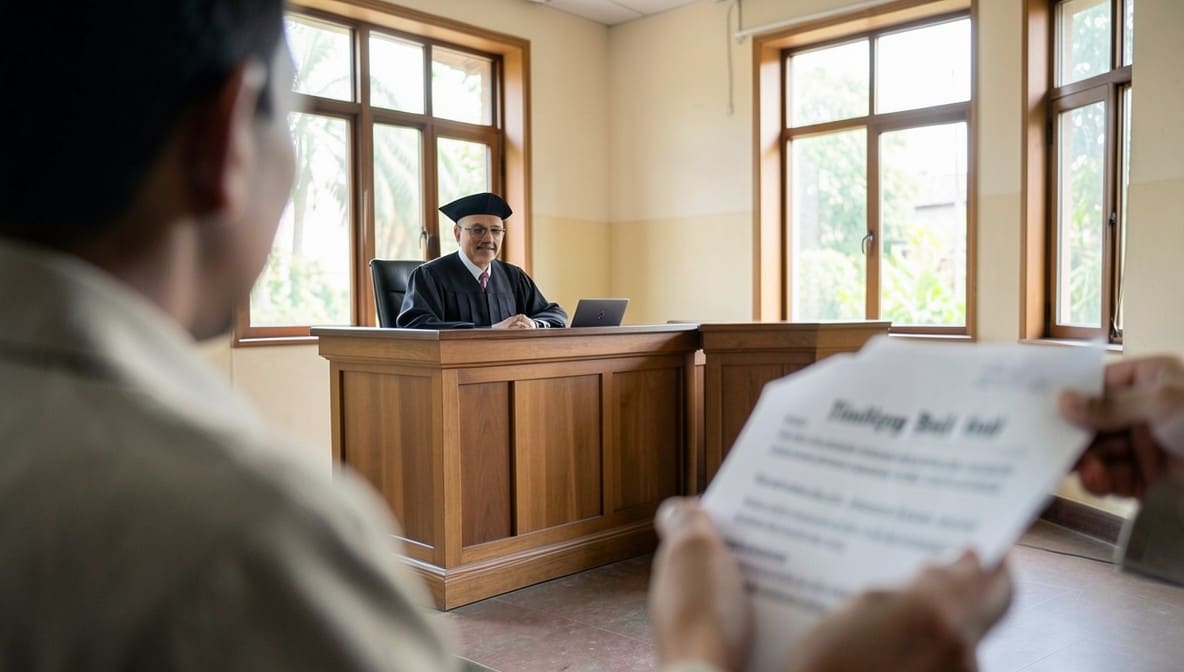
The Kerala High Court recently modified a bail condition to permit the accused to travel to his native place for two months, subject to filing an undertaking to return. This decision underscores the court's balancing act between ensuring the accused's cooperation with the investigation and respecting his personal liberty, particularly when the investigation is nearing completion.
Background & Facts
The Dispute
The petitioner, Tapan Das, is the second accused in Crime No. 1564 of 2025 registered by the Sakthikulangara Police Station, Kollam. The case involves offences under Sections 336(2), 337(1), 339, and 340(2) read with Section 3(5) of the Bharatiya Nyaya Sanhita, 2023, Section 21 of the Immigration and Foreigners Act, 2005, and Section 66(c) of the Information Technology Act. The petitioner, a resident of West Bengal, was enlarged on bail by the Kerala High Court on 08.12.2025 (Annexure A2), subject to several conditions, including a restriction on leaving the State of Kerala without the Trial Court's permission.
Key Facts
- The petitioner was granted bail on 08.12.2025 with conditions, including a restriction on leaving Kerala (Annexure A2).
- The petitioner sought permission from the Judicial Magistrate of First Class, Chavara (Trial Court) to travel to West Bengal to visit his family.
- The Trial Court dismissed the application on 23.05.2026 (Annexure A3), reasoning that the petitioner's family could visit him in Kerala.
- The petitioner filed the present Criminal Miscellaneous Case (Crl.M.C. No. 4799 of 2026) challenging the Trial Court's order.
Procedural History
- Crime No. 1564 of 2025: Registered by Sakthikulangara Police Station for offences under BNS, Immigration and Foreigners Act, and IT Act.
- 08.12.2025: Petitioner enlarged on bail by Kerala High Court (B.A. No. 14356 of 2025) with conditions, including restriction on leaving Kerala.
- 23.05.2026: Trial Court dismisses petitioner's application for travel permission (CMP No. 3/2026).
- 10.07.2026: Present Crl.M.C. filed before Kerala High Court.
Relief Sought
The petitioner sought modification of condition No. (vi) in Annexure A2 to permit him to travel to West Bengal for a short period to visit his family, subject to filing an undertaking to return to Kerala.
The Legal Issue
The central question was whether a bail condition restricting the accused from leaving the State could be modified to permit temporary travel to his native place, given his cooperation with the investigation and compliance with bail conditions.
Arguments Presented
For the Petitioner
- The petitioner has scrupulously complied with all bail conditions imposed by the High Court.
- The investigation is at its fag end, and the final report is expected to be filed within four months.
- The petitioner's request is reasonable and temporary, as he seeks to visit his family in West Bengal for a short period.
- The Trial Court's refusal to permit travel is unreasonable and unsustainable, as it disregards the petitioner's personal circumstances.
For the Respondent/State
- The learned Public Prosecutor submitted that the investigation is nearing completion and the petitioner has cooperated with the investigation.
- No specific opposition was raised to the petitioner's request, provided he files an undertaking to return.
The Court's Analysis
The Court observed that the petitioner had cooperated with the investigation and complied with all bail conditions. The investigation was at its fag end, and the final report was expected to be filed within four months. The Court noted that the petitioner's request to travel to West Bengal for a short period was reasonable, particularly as he had agreed to return to Kerala within two months.
The Court emphasized the need to balance the requirements of the investigation with the personal liberty of the accused. Given the petitioner's compliance and the stage of the investigation, the Court held that permitting him to travel to his native place for two months, subject to filing an undertaking to return, would not prejudice the investigation.
"Taking into consideration the peculiar facts and circumstances of the case, particularly the fact that the petitioner has co-operated with the investigation and scrupulously complied with all the conditions imposed by this Court, I am of the definite view that the petitioner can be permitted to go to his native place for two months, subject to the condition that he files an undertaking before the Trial Court that he would return back to Kerala on or before 10.09.2026 and also comply with all the other conditions in Annexure A2 order."
The Verdict
The Kerala High Court allowed the Criminal Miscellaneous Case and modified condition No. (vi) of Annexure A2 order. The petitioner was permitted to travel to West Bengal for a period of two months, subject to the following conditions:
- The petitioner must file an undertaking before the Trial Court stating that he will return to Kerala on or before 10.09.2026.
- The petitioner must comply with all other conditions imposed in Annexure A2 order.
The Crl.M.C. was disposed of accordingly.
What This Means For Similar Cases
Bail Conditions Must Balance Investigation Needs and Personal Liberty
This judgment reinforces that bail conditions must strike a balance between ensuring the accused's cooperation with the investigation and respecting their personal liberty. Courts are likely to consider the following factors when deciding whether to modify bail conditions:
- The stage of the investigation (e.g., whether it is nearing completion).
- The accused's compliance with existing bail conditions.
- The reasonableness of the request (e.g., temporary travel for personal reasons).
- The absence of prejudice to the investigation or trial.
Practitioners should argue for modification of bail conditions where the accused has demonstrated compliance and the investigation is not hindered by temporary travel.
Undertaking as a Safeguard
The Court's reliance on the petitioner's undertaking to return highlights a practical safeguard for ensuring compliance with modified bail conditions. Key takeaways include:
- Undertakings can be an effective tool to secure the accused's return, particularly in cases where the investigation is at an advanced stage.
- Courts may be more inclined to permit temporary travel if the accused agrees to strict timelines for return and provides assurances.
- Practitioners should proactively propose undertakings to address concerns about flight risk or non-compliance.
Trial Courts' Discretion Must Be Reasonable
The judgment underscores that Trial Courts must exercise discretion reasonably when imposing or refusing to modify bail conditions. The High Court's intervention in this case suggests:
- Arbitrary refusals to modify bail conditions, without considering the accused's cooperation or the stage of investigation, may be overturned.
- Personal circumstances of the accused, such as the need to visit family, should be given due weight.
- Practitioners can challenge unreasonable bail conditions by demonstrating compliance and the absence of prejudice to the investigation.