The Income Tax Appellate Tribunal, Delhi, has clarified that delivery order charges collected by a foreign airline for cargo delivery in India constitute profits from the operation of aircraft in international traffic, and are therefore exempt from taxation in India under Article 8 of the India-Turkey Double Taxation Avoidance Agreement. This decision reinforces the principle that ancillary charges directly connected to international air transport fall within the exclusive taxing rights of the airline’s residence state.
Background & Facts
The Dispute
The assessee, Turkish Airlines Inc., a resident of the Republic of Turkey, operates international air cargo services between Turkey and India. During the assessment year 2023-24, the Assessing Officer (AO) made an addition of Rs. 12,21,76,345/-, representing net delivery order (DO) charges collected in India upon delivery of cargo to consignees. The AO treated these charges as separate income taxable in India, rejecting the assessee’s claim that they formed part of profits from international air transport under Article 8 of the India-Turkey DTAA. The Dispute Resolution Panel (DRP) confirmed this addition.
Key Facts
- Turkish Airlines Inc. is a resident of Turkey with its principal place of business in Istanbul
- The airline operates scheduled international cargo flights between Turkey and India
- Delivery Order Charges are levied separately from air freight charges and collected in India at the time of cargo handover to consignees
- These charges are invoiced post-transportation to facilitate customs clearance and cargo retrieval by importers
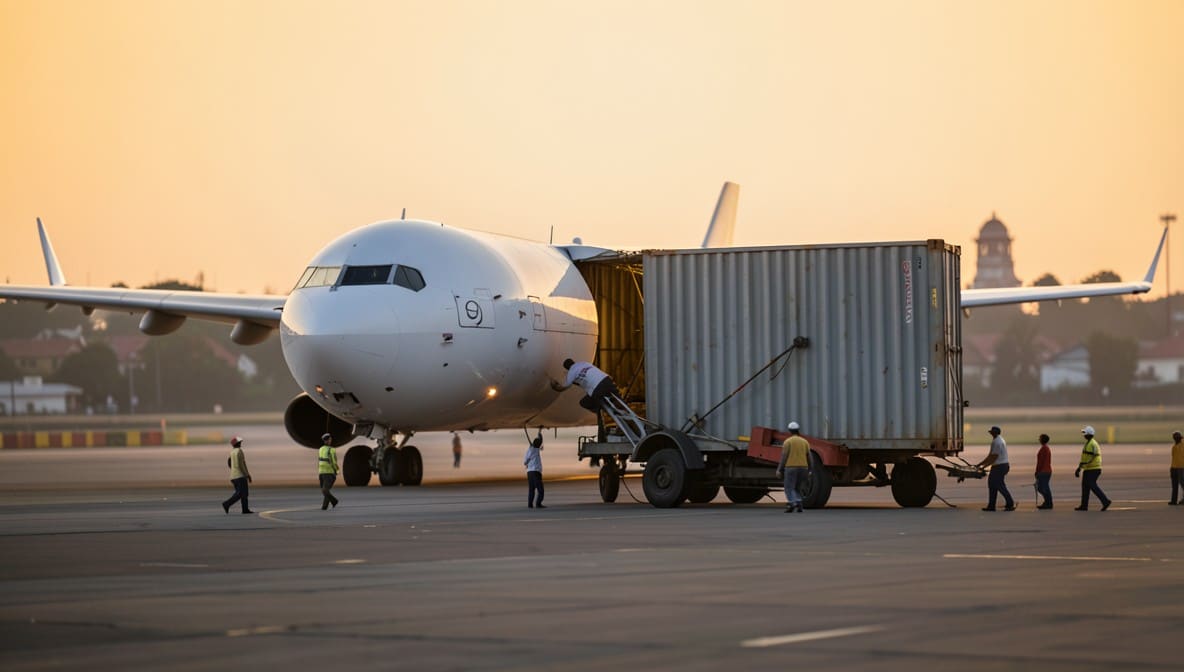
- The assessee’s business model involves end-to-end cargo logistics, with delivery completion occurring only upon physical handover in India
- The amount of DO charges for A.Y. 2023-24 was Rs. 12,21,76,345/- (net after 20% expenses)
- Similar issues arose in A.Y. 2021-22 and A.Y. 2022-23, with ITAT Delhi deciding both in favour of the assessee
Procedural History
- 25.08.2025: Final Assessment Order passed by Assessing Officer under Section 143(3) r.w.s. 144C(13) of the Income Tax Act, 1961, adding Rs. 12,21,76,345/- as income
- 09.07.2025: DRP hearing attended by authorised representative Mr. Rajiv Pal Puri; assessee drew attention to ITAT order in A.Y. 2021-22
- 22.12.2023: Appeal filed before ITAT Delhi in A.Y. 2021-22 (ITA No. 3776/Del/2023)
- 26.03.2025: ITAT Delhi delivered order in ITA No. 3776/Del/2023, deleting DO charges as non-taxable in India
- 03.09.2025: ITAT Delhi delivered order in ITA No. 942/Del/2025 (A.Y. 2022-23), similarly deleting DO charges
- 12.03.2026: Appeal filed by assessee against FAO dated 25.08.2025; heard and pronounced on same day
Relief Sought
The assessee sought deletion of the addition of Rs. 12,21,76,345/- on account of Delivery Order Charges, asserting that such receipts are profits from international air transport under Article 8 of the India-Turkey DTAA and thus taxable only in Turkey.
The Legal Issue
The central question was whether delivery order charges collected by a foreign airline in India upon delivery of cargo constitute profits from the operation of aircraft in international traffic under Article 8 of the India-Turkey DTAA, and whether such profits are taxable exclusively in the airline’s country of residence.
Arguments Presented
For the Appellant/Petitioner
The assessee’s counsel contended that delivery order charges are not a separate or independent income stream but are intrinsically linked to the completion of international air transport. He relied on the UN and OECD Model Convention Commentaries, which interpret "other activities directly connected with such transportation" broadly to include ancillary services integral to the transport process. He cited two binding precedents from coordinate benches of ITAT Delhi: ITA No. 3776/Del/2023 (A.Y. 2021-22) and ITA No. 942/Del/2025 (A.Y. 2022-23), both of which held that DO charges are part of international transport profits. He argued that the DRP’s failure to consider these binding decisions rendered the order legally unsustainable.
For the Respondent/State
The Revenue’s representative argued that since DO charges are collected in India after the aircraft has landed, they constitute a local service rendered within Indian territory and are therefore taxable under domestic law. He contended that the charges are not directly tied to the operation of the aircraft but to post-transportation logistics, and thus fall outside the scope of Article 8. He relied on the literal interpretation of "operation of aircraft" and suggested that the assessee’s conduct in other jurisdictions was irrelevant.
The Court's Analysis
The Tribunal observed that the dispute was not novel and had been consistently resolved in favour of the assessee in two preceding assessment years. It emphasized that the nature of the business - international air cargo transport - must be viewed holistically. The Tribunal noted that the delivery process, including collection of DO charges, is not a standalone commercial activity but an essential component of the transport chain. As stated in the earlier order cited: "The transportation in air cargo activities does not get completed till the time it issues the consignment to the receiver after collection of delivery charges."
"Profits from the operation of ships or aircraft in international traffic shall mean profits derived by an enterprise... from the transportation... of passengers, mail, livestock or goods carried on by the owners or lessees or charterers of ships or aircraft including: (b) other activity directly connected with such transportation."
The Tribunal held that the collection of DO charges is a direct consequence of the international transport service and occurs as part of the final stage of cargo delivery. It rejected the Revenue’s argument that location of collection determines taxability, noting that Article 8 is based on the nature of the enterprise and the character of the income, not the territorial locus of payment. The Tribunal further held that the DRP’s failure to consider the binding precedent from ITA No. 3776/Del/2023 was a legal error, violating the principle of consistency in adjudication.
The Verdict
The appeal of the assessee was allowed. The Tribunal deleted the addition of Rs. 12,21,76,345/- on account of Delivery Order Charges, holding that such receipts are profits from the operation of aircraft in international traffic under Article 8 of the India-Turkey DTAA and are therefore taxable only in Turkey. The order of the Assessing Officer and DRP were set aside. No further directions were issued as the matter was fully resolved by deletion of the addition.
What This Means For Similar Cases
Delivery Charges Are Not Separate Income Streams
- Practitioners must argue that ancillary charges like DO, handling, or customs clearance fees are inseparable from international transport if collected as part of the same contractual obligation
- Any attempt to bifurcate such charges as "local services" will fail if the underlying activity is international air cargo
- The burden shifts to the Revenue to prove that the charge is truly independent of transport operations
Precedent Binding on Coordinate Benches
- ITAT benches are bound by their own prior decisions on identical facts unless overruled by a larger bench
- Failure to consider a binding precedent renders an order legally unsustainable
- Practitioners must cite prior ITAT orders in identical matters and request the bench to follow them under the doctrine of stare decisis
DTAA Interpretation Must Align with Model Conventions
- Article 8 must be interpreted in light of the UN and OECD Model Convention Commentaries
- Narrow, territorial interpretations of "operation of aircraft" are inconsistent with international tax norms
- Tax authorities cannot override treaty obligations by invoking domestic accounting practices