The Madhya Pradesh High Court recently dismissed a petition challenging an interim maintenance order under the Hindu Adoption and Maintenance Act, 1956, reinforcing that supervisory jurisdiction under Article 227 is limited and does not extend to reappreciating evidence or interfering with interim orders unless jurisdictional errors are apparent. The Court emphasized that settlements reached outside judicial proceedings, such as in a Panchayat, cannot override judicial orders unless properly pleaded before the court.
Background & Facts
The Dispute
The petitioner, Kamal Singh Kushwah, challenged an order dated 15.05.2025 passed by the First District Judge, Ambah, District Morena (Madhya Pradesh), in MJC No. 32/2023. The order directed the petitioner to pay interim maintenance of Rs. 2000 per month to the respondent, Smt Janvi, his daughter-in-law, under the Hindu Adoption and Maintenance Act, 1956. The respondent claimed to be the wife of the petitioner’s son, Late Shri Aditya Singh Kushwah, who went missing while in service with the S.A.F. in Chhattisgarh.
Key Facts
- The respondent filed an application under Sections 19, 21, and 22 of the Hindu Adoption and Maintenance Act, 1956, seeking maintenance of Rs. 30,000 per month from the petitioner.
- She also sought interim maintenance pending the final disposal of the proceedings.
- The trial court granted interim maintenance of Rs. 2000 per month vide order dated 15.05.2025.
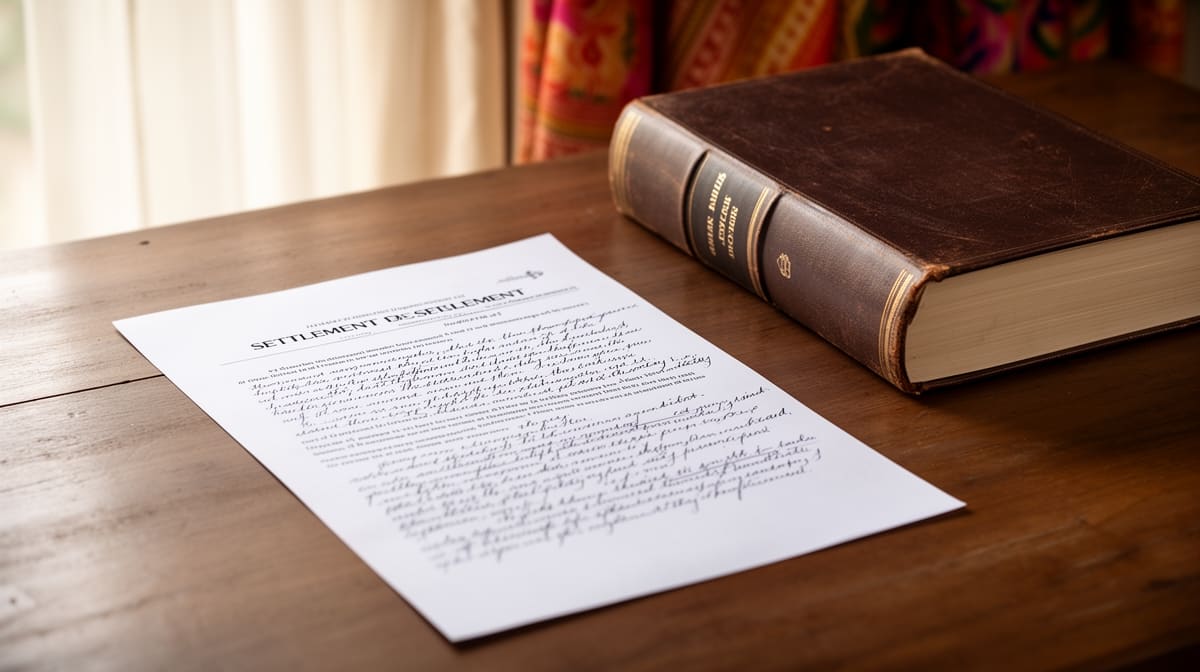
- The petitioner claimed that a Panchayat was constituted after his son’s disappearance, wherein a settlement was reached (Annexure P/6). Under this settlement, the respondent received gold ornaments, Rs. 5,00,000 in cash, and certain lands.
- The petitioner argued that the respondent, being educated and financially settled, was not entitled to interim maintenance.
Procedural History
- Date of Incident: The petitioner’s son went missing while in service (exact date not specified).
- Date of Application: The respondent filed an application for maintenance under the Hindu Adoption and Maintenance Act, 1956 (date not specified).
- 15.05.2025: Trial court passed an order granting interim maintenance of Rs. 2000 per month.
- MJC No. 32/2023: Proceedings for maintenance pending before the trial court.
- Filing of Petition: The petitioner filed the present miscellaneous petition under Article 227 of the Constitution of India challenging the interim order.
The Parties' Positions
Petitioner’s Contention
The petitioner argued that the respondent was not entitled to interim maintenance because:
- She had received Rs. 5,00,000, gold ornaments, and lands under a settlement arrived at in a Panchayat (Annexure P/6).
- She was educated and capable of maintaining herself.
- The trial court erred in fastening the liability of interim maintenance on him without considering the settlement.
Respondent’s Position
Though the respondent’s arguments are not explicitly detailed in the judgment, the trial court’s order indicates that:
- The respondent was not in receipt of family pension or other financial support.
- The petitioner had the financial capacity to pay interim maintenance.
- The settlement details were not pleaded before the trial court, and thus, the court could not consider them.
Relief Sought
The petitioner sought the quashing of the trial court’s order dated 15.05.2025, which directed him to pay Rs. 2000 per month as interim maintenance to the respondent.
The Legal Issue
The primary legal question before the High Court was whether the trial court’s order granting interim maintenance of Rs. 2000 per month under the Hindu Adoption and Maintenance Act, 1956 was suffering from jurisdictional error or illegality warranting interference under Article 227 of the Constitution of India, particularly in light of the settlement reached in the Panchayat, which was not pleaded before the trial court.
Arguments Presented
For the Petitioner
- The petitioner’s counsel argued that the respondent had already received substantial financial benefits under the Panchayat settlement, including Rs. 5,00,000, gold ornaments, and lands.
- The respondent was educated and capable of maintaining herself, and thus, the trial court’s order was erroneous.
- The settlement details, though not pleaded before the trial court, should have been considered as they negated the respondent’s claim for maintenance.
The Court's Analysis
The High Court examined the scope of Article 227 of the Constitution of India, which confers supervisory jurisdiction over subordinate courts and tribunals. The Court reiterated that this jurisdiction is limited and does not permit reappreciation of evidence or interference with interim orders unless they suffer from jurisdictional errors or illegality.
The Court observed that:
"A perusal of the order impugned indicates that the factum as regards transfer of a sum of Rs.5,00,000/- and the lands, etc., in terms of settlement arrived at in the Panchayat, as contained in Annexure P/6, in favour of the respondent, was neither pleaded by her in the maintenance petition nor there is any averment in that regard in the reply filed by the petitioner herein."
The Court held that since the settlement details were not pleaded before the trial court, the trial court could not have considered them while passing the interim order. The trial court had taken into account the respondent’s financial needs and the petitioner’s capacity to pay, and thus, the order could not be termed illegal or suffering from jurisdictional error.
The Court further noted that the interim maintenance of Rs. 2000 per month was a paltry sum and did not warrant interference under Article 227. The purpose of interim maintenance is to secure the ends of justice by providing temporary relief to the dependent party, pending final adjudication.
The Verdict
The High Court declined admission to the petition and dismissed it. The Court upheld the trial court’s order dated 15.05.2025, which directed the petitioner to pay interim maintenance of Rs. 2000 per month to the respondent. No costs were awarded, and no specific compliance timeline was set by the Court.
What This Means For Similar Cases
Settlement Details Must Be Pleaded Before the Court
- Practitioners must ensure that all relevant facts, including settlements or financial arrangements reached outside judicial proceedings (e.g., in Panchayats), are properly pleaded before the trial court.
- Failure to plead such details may result in the court disregarding them while passing interim orders, as seen in this case.
- This judgment reinforces that judicial proceedings are bound by pleadings, and courts cannot consider facts not brought on record.
Limited Scope of Article 227 in Interim Orders
- Article 227 is not an appellate remedy and does not permit reappreciation of evidence or factual disputes.
- Interference under Article 227 is warranted only if the impugned order suffers from jurisdictional error, illegality, or perversity.
- Courts are reluctant to interfere with interim orders unless they are grossly unjust or arbitrary, as interim relief is intended to be temporary and subject to final adjudication.
Financial Capacity and Need Determine Interim Maintenance
- In maintenance proceedings, courts consider the financial capacity of the payer and the financial need of the claimant.
- Even if the claimant has received financial benefits outside court proceedings, interim maintenance may still be granted if the trial court finds the claimant in need of immediate support.
- Practitioners should present comprehensive evidence of the claimant’s financial status and the payer’s capacity to avoid adverse interim orders.