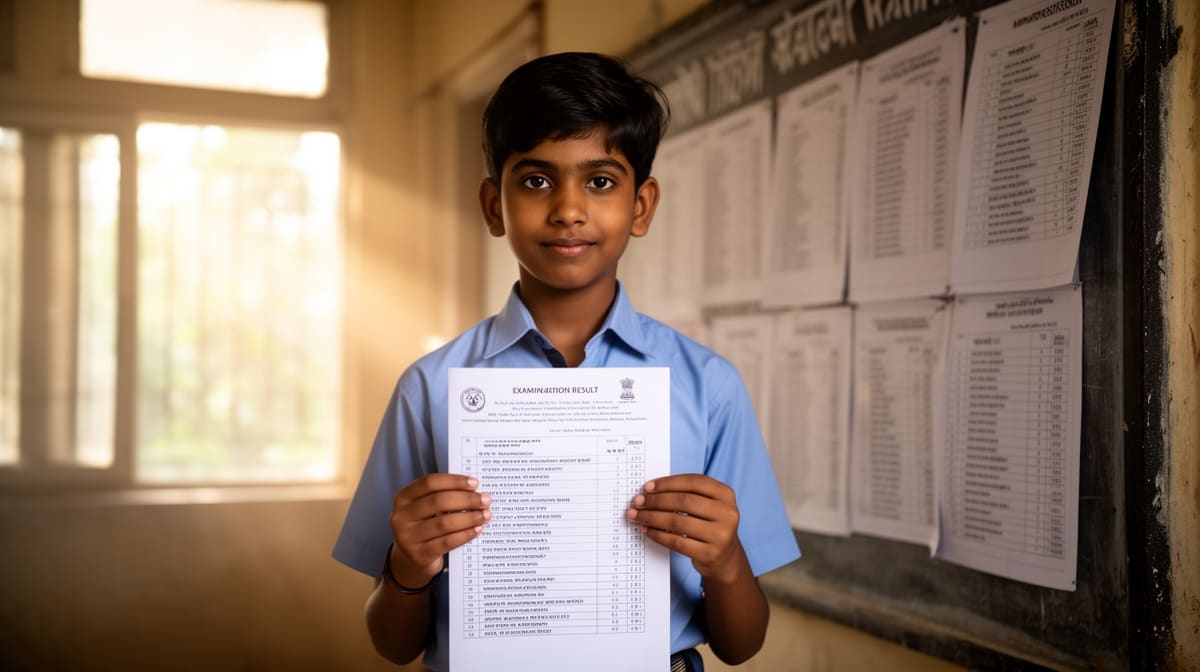
The Madhya Pradesh High Court has affirmed its power under Article 226 to intervene decisively when the academic future of students is at risk, even where the primary dispute has been rendered infructuous. In a swift and pragmatic order, the Court directed the immediate declaration of Class 10 and 12 examination results, emphasizing that procedural technicalities must yield to the paramount interest of children’s education.
Background & Facts
The Dispute
The petitioner, Habiba Higher Secondary School, Sironj, filed a writ petition challenging the rejection of its school recognition by successive authorities of the State of Madhya Pradesh. The impugned orders dated 29.01.2025, 20.04.2025, 17.07.2025, and 04.08.2025 had collectively denied the renewal of the school’s recognition, threatening its operational continuity and the validity of examinations conducted under its banner.
Key Facts
- The petitioner school had been operating under provisional recognition pending final decision by the State authorities
- Students of Class 10 and Class 12 appeared for board examinations in early 2025 under an interim protective order issued by this Court
- The interim order ensured that the examinations would be treated as valid pending final adjudication of recognition status
- On 04.05.2026, prior to the final hearing, the petitioner received a renewal order for school recognition for five years, rendering the challenge to the rejection orders infructuous
- Despite renewal, the Board of Secondary Education, Bhopal, had not declared the results of students who appeared under the Court’s interim protection
- The petitioner filed an application seeking impleadment of the Board of Secondary Education as respondent No.5 on 28.04.2026
Procedural History
- 15.01.2025: First rejection order issued by District Education Officer (Annexure P-5)
- 20.04.2025: Second rejection order issued by Regional Director, School Education (Annexure P-6)
- 17.07.2025: Third rejection order issued by Director, School Education (Annexure P-7)
- 04.08.2025: Fourth rejection order issued by Secretary, School Education (Annexure P-15)
- 22.08.2025: Writ Petition No. 32457 of 2025 filed before the High Court, Gwalior
- 10.09.2025: Interim order passed by the Court directing that examinations be conducted and results withheld pending final decision
- 04.05.2026: Recognition renewed by State authorities; petitioner received renewal order
- 04.05.2026: Application for impleadment of Board of Secondary Education filed
- 05.05.2026: Final hearing before Justice Milind Ramesh Phadke
Relief Sought
The petitioner sought:
- Quashing of all four rejection orders
- A writ of mandamus directing renewal of recognition
- Declaration of results for Class 10 and 12 students who appeared under the Court’s interim protection
The Parties' Positions
The petitioner contended that despite renewal of recognition, the non-declaration of results was causing irreparable harm to students, including loss of admission opportunities, delayed higher education, and psychological distress. The State did not oppose the prayer for result declaration, acknowledging the urgency.
The Legal Issue
Can the High Court, under Article 226, issue a direction to declare examination results to prevent irreparable harm to students, even when the primary grievance regarding recognition has been resolved?
Arguments Presented
For the Petitioner
Learned counsel submitted that while the recognition issue was now resolved, the failure to declare results constituted a continuing violation of students’ fundamental right to education under Article 21. Reliance was placed on the Court’s inherent power to secure complete justice and prevent irreparable injury. The application for impleadment of the Board demonstrated the petitioner’s good faith effort to bring the responsible authority before the Court.
For the Respondent/State
The State did not oppose the prayer for result declaration. The Government Advocate acknowledged the urgency and conceded that the Board’s delay was unjustified, particularly given the interim order’s protective nature.
The Court's Analysis
The Court observed that the primary dispute regarding recognition had become infructuous due to the renewal of the school’s recognition. However, it emphasized that the petition had not become infructuous in its entirety, as the students’ results remained undelivered despite the passage of months.
"The power of this Court under Article 226 of the Constitution of India is wide enough to issue necessary directions in order to secure complete justice and to prevent irreparable injury, especially where the rights of students are involved and any delay in declaration of results may result in serious adverse consequences."
The Court held that the Board of Secondary Education, though not yet formally impleaded, was the functional authority responsible for result declaration and had been put on notice through the application for impleadment. The Court exercised its extraordinary jurisdiction not to adjudicate the merits of recognition, but to prevent a manifest injustice to children whose academic futures were being held hostage by administrative delay.
The Court rejected any notion that procedural non-compliance with impleadment rules could bar relief where substantive rights of students were at stake. The principle of actio personalis moritur cum persona does not apply to public duties owed to children.
The Verdict
The petition was disposed of with the direction that the Secretary, Board of Secondary Education, Bhopal, Madhya Pradesh, shall declare forthwith the results of all students of Class 10 and Class 12 who appeared in the examinations under the protection of the Court’s interim order. A copy of this order was directed to be forwarded to the Board for immediate compliance. No costs were awarded.