The Sikkim High Court has reaffirmed that a valid arbitration clause embedded in a contract survives its termination, and the existence of such an alternate remedy bars the invocation of writ jurisdiction under Article 226 of the Constitution. This judgment underscores the primacy of contractual dispute resolution mechanisms over judicial intervention, even where parties allege arbitrary state action.
Background & Facts
The Dispute
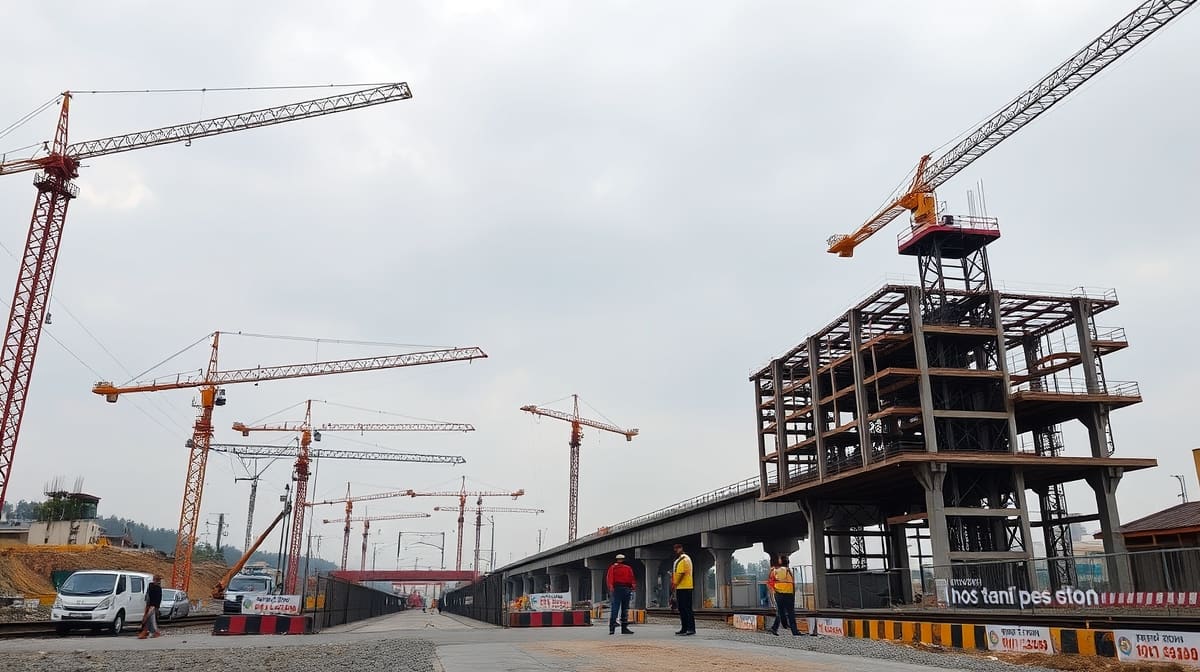
The Petitioner, TT Energy Private Limited, is a Special Purpose Vehicle incorporated for the development of the 99 MW Ting-Ting Hydroelectric Project on the river Rathong Chu in West Sikkim. The Respondents, the Principal Chief Engineer-cum-Secretary, Energy and Power Department, Government of Sikkim, and another, entered into an Implementation Agreement (IA) dated 03-09-2008 with the Petitioner for the Project. A Supplementary Agreement dated 11-03-2010 extended the term of the IA to thirty-five years, ending on 03-09-2043.
Key Facts
- The Petitioner invested ₹30,00,00,000 (Rupees thirty crores) in the Project and paid a non-refundable processing fee of ₹9,00,000 as stipulated under the IA.
- Necessary statutory clearances were obtained between 2007 and 2012.
- On 08-02-2012, the State Government issued a Notification closing the Project citing Public Interest (Religious Sentiments), without formally terminating the IA.
- Between 2012 and 2014, approximately fifteen letters were exchanged between the parties regarding the closure.
- On 03-03-2014, the Petitioner invoked Article 9 of the IA, seeking arbitration.
- On 06-07-2015, the Petitioner submitted three names for appointment of an Arbitrator.
- On 22-08-2015, the Respondent No.1 proposed Justice Malay Sengupta, former Judge of the Sikkim High Court, as the sole Arbitrator.
- The Petitioner confirmed this appointment via letter dated 03-09-2008 (Annexure R3).
- No arbitration proceedings were initiated after this.
- The Petitioner remained silent for over ten years, from May 2014 until 28-03-2025.
- On 28-03-2025, the Petitioner proposed reviving the IA.
- On 26-06-2025, the Petitioner sought permission to commence the Project.
- On 19-09-2025, the Respondent issued a fresh Request for Proposal (RFP) for the same Project on BOOT basis.
Procedural History
- 03-09-2008: Implementation Agreement executed between Petitioner and Respondent No.1.
- 11-03-2010: Supplementary Agreement executed, extending term to 2043.
- 08-02-2012: State Government issued Notification closing Project.
- 03-03-2014: Petitioner invoked arbitration under Article 9 of IA.
- 06-07-2015: Petitioner submitted names for Arbitrator.
- 22-08-2015: Respondent proposed Justice Malay Sengupta as sole Arbitrator.
- 03-09-2008: Petitioner confirmed appointment of Arbitrator (Annexure R3).
- 2014 - 2025: No arbitration initiated; no legal challenge to closure Notification.
- 28-03-2025: Petitioner proposed revival of IA.
- 19-09-2025: Respondent issued fresh RFP (No.022/Power/IPP/2025-26/03).
- 09-04-2026: Writ Petition dismissed by Sikkim High Court.
Relief Sought
The Petitioner sought: (a) Quashing of RFP dated 19-09-2025; (b) Specific performance of the IA dated 03-09-2008; (c) Stay of the RFP’s implementation; (d) Restraint on creation of third-party interests; (e) Any other relief deemed just.
The Legal Issue
The central question was whether the existence of a valid arbitration clause in the Implementation Agreement bars the invocation of writ jurisdiction under Article 226 of the Constitution, even when the underlying contract is alleged to have been terminated unilaterally by the State.
Arguments Presented
For the Petitioner
The Petitioner contended that the IA is a binding, enforceable contract that cannot be terminated except under Article 5, which requires breach or default - neither of which occurred. The closure Notification dated 08-02-2012 was not challenged, nor was the IA formally rescinded. The force majeure clause, if invoked, only suspends obligations, does not terminate them. The Petitioner argued that the State’s issuance of a fresh RFP in 2025 was a blatant breach of contract and an abuse of power. Reliance was placed on M.P. Power Management Company Ltd. v. Sky Power Southeast Solar India Pvt. Ltd., Subodh Kumar Singh Rathour v. CEO, Whirlpool Corporation v. Registrar of Trade Marks, S.J.S. Business Enterprises v. State of Bihar, and Gujarat State Financial Corporation v. Lotus Hotels Pvt. Ltd. to argue that the writ jurisdiction is maintainable where no efficacious alternate remedy exists, and where state action is arbitrary.
For the Respondent
The Respondent raised a preliminary objection on maintainability, arguing that Article 9 of the IA contains a clear, binding arbitration clause. The Petitioner had invoked arbitration in 2014 and even agreed to a specific Arbitrator in 2015, yet took no further steps for over a decade. The Petitioner’s inaction constituted abandonment. The Respondent relied on Reva Electric Car Co. Pvt. Ltd. v. Green Mobil, Linkwell Telesystems Pvt. Ltd. v. State of Sikkim, and Swadhi Health Management LLP v. State of Sikkim, emphasizing that where a contractual remedy exists, writ jurisdiction must be declined unless exceptional circumstances - such as bad faith or complete denial of remedy - are proven. The Petitioner’s suppression of letters dated 06-07-2015 and 22-08-2015 further undermined its credibility.
The Court's Analysis
The Court began by affirming that the Implementation Agreement dated 03-09-2008, as supplemented by the 2010 Agreement, contained a valid arbitration clause under Article 9, satisfying the requirements of Section 7 of the Arbitration and Conciliation Act, 1996. The clause was in writing, clearly defined, and mutually agreed upon.
The Court then examined the doctrine of separability under Section 16(1) of the Arbitration Act, which provides that an arbitration agreement is independent of the underlying contract. The Court cited In Re: Interplay between Arbitration Agreements under Arbitration and Conciliation Act, 1996 and Stamp Act, 1899 to hold that even if the IA were deemed terminated or void, the arbitration clause survives as a distinct agreement.
"The separability presumption gives effect to this by ensuring the validity of an arbitration agreement contained in an underlying contract, notwithstanding the invalidity, illegality, or termination of such contract."
The Court emphasized that the Petitioner had not only invoked arbitration in 2014 but had also agreed to a specific Arbitrator in 2015. The failure to pursue arbitration for over ten years constituted laches and abandonment. The Court noted that the Petitioner’s belated challenge in 2025, after the State had issued a fresh RFP, was an attempt to circumvent the agreed dispute resolution mechanism.
The Court further relied on Linkwell Telesystems v. State of Sikkim and Swadhi Health Management v. State of Sikkim, quoting the Supreme Court’s position in Bhaven Construction v. Sardar Sarovar Narmada Nigam Ltd. that writ jurisdiction under Article 226 must not be entertained where an efficacious alternate remedy exists, unless there is bad faith or a complete denial of remedy.
The Court held that the Petitioner had not demonstrated any exceptional circumstance to justify bypassing arbitration. The mere allegation of arbitrariness by the State, without challenging the closure Notification or pursuing arbitration, was insufficient to invoke constitutional jurisdiction.
The Verdict
The writ petition was dismissed as not maintainable. The Court held that the existence of a valid arbitration clause in the Implementation Agreement, which survives even if the contract is terminated, provides an efficacious alternate remedy. The Petitioner’s decade-long inaction in pursuing arbitration precludes it from now seeking judicial intervention under Article 226. All pending applications stand disposed of.
What This Means For Similar Cases
Arbitration Clauses Are Not Rendered Inoperative by Contract Termination
- Practitioners must treat arbitration clauses as autonomous agreements under Section 16(1) of the Arbitration Act, regardless of the status of the underlying contract.
- Even if a contract is allegedly terminated by one party, the arbitration clause remains enforceable and must be exhausted before approaching courts under Article 226.
Delay and Inaction Bar Writ Jurisdiction
- A party’s prolonged inaction in initiating arbitration - especially after agreeing to an Arbitrator - constitutes abandonment and defeats claims of urgency or lack of remedy.
- Courts will not entertain writ petitions where parties have deliberately delayed invoking contractual remedies, particularly when the delay coincides with adverse developments by the other party.
State Action Alone Does Not Override Contractual Remedies
- Allegations of arbitrariness or bad faith by the State are insufficient to bypass arbitration unless accompanied by evidence of procedural denial or mala fide intent.
- Practitioners must first exhaust arbitration before seeking constitutional remedies, even in public law contexts involving government entities.