The Punjab & Haryana High Court has reaffirmed that anticipatory bail cannot be denied merely because an accused is named in an FIR under the NDPS Act, where no contraband is recovered from their possession and the case rests on inadmissible custodial disclosures by co-accused. This ruling reinforces the principle that mere nomination as an accused, without independent corroborative evidence, cannot justify pre-arrest detention.
Background & Facts
The Dispute
The petitioner, Harwinder Singh, was named as an accused in FIR No. 42 dated 26.05.2025, registered at Police Station Sadar Rampura, District Bathinda, under Section 21(b) of the Narcotic Drugs and Psychotropic Substances Act, 1985 (NDPS Act), and Section 223 of the Bharatiya Nyaya Sanhita, 2023 (BNS). Sections 27 and 29 of the NDPS Act were later added to the FIR. The petitioner was not present at the time of seizure, and no contraband was recovered from his person, residence, or vehicle.
Key Facts
- The petitioner was named as an accused solely on the basis of a disclosure statement made by a co-accused.
- The co-accused made the disclosure statement on 28.05.2025, two days after the petitioner’s arrest.
- The disclosure statement was recorded while the co-accused was in police custody.
- The petitioner has no prior conviction under the NDPS Act.
- The petitioner is currently on bail in two other pending NDPS cases.
- No material evidence, such as recovered contraband, phone records, financial transactions, or eyewitness accounts, links the petitioner directly to the alleged offence.
Procedural History
- 26.05.2025: FIR No. 42 registered at Police Station Sadar Rampura, Bathinda.
- 28.05.2025: Co-accused makes custodial disclosure implicating the petitioner.
- 29.07.2025: Petitioner files anticipatory bail petition under Section 482 of the Bharatiya Nagarik Suraksha Sanhita, 2023 (BNSS).
- 29.07.2025: High Court passes interim order directing petitioner to appear before Investigating Officer within two weeks, with interim anticipatory bail contingent on cooperation.
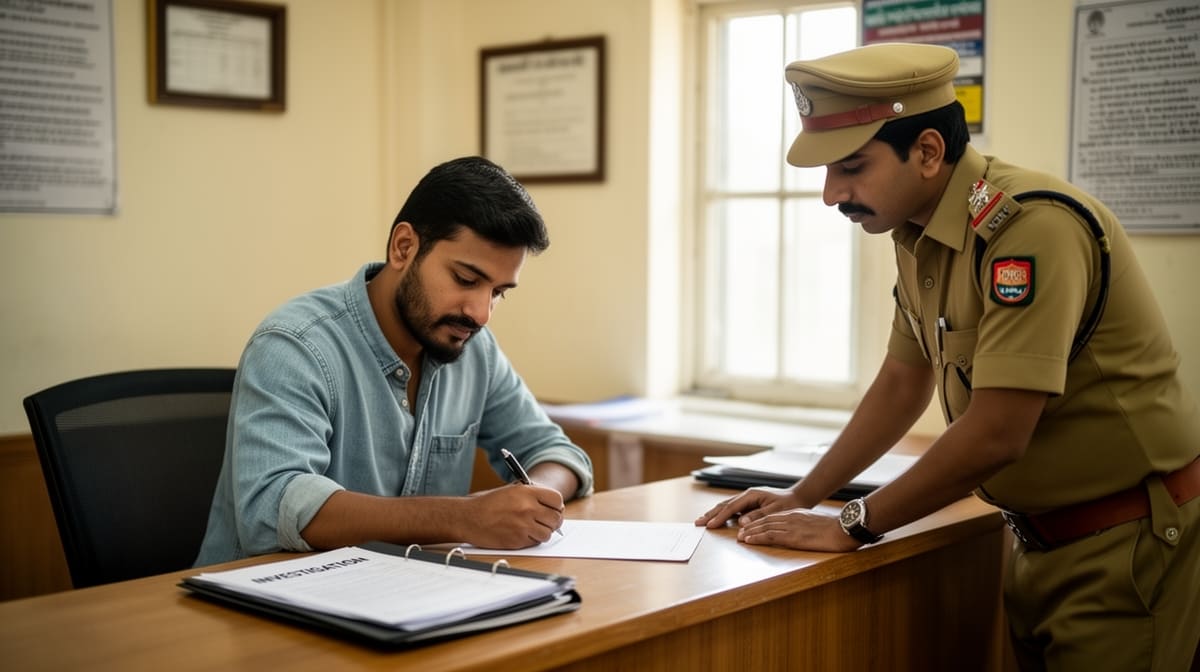
- 01.08.2025 to 19.03.2026: Petitioner appears before Investigating Officer on multiple occasions, provides statements, and fully cooperates with investigation.
- 20.03.2026: Petitioner appears before the Court for final hearing on anticipatory bail.
The Parties' Positions
For the Petitioner
The petitioner’s counsel argued that:
- No contraband was recovered from the petitioner’s conscious possession.
- The sole basis of accusation is a custodial disclosure statement of a co-accused, which is inadmissible under Section 25 and 26 of the Indian Evidence Act, 1872, now Sections 23(1) and 23(2) of the Bharatiya Sakshya Adhiniyam, 2023.
- The petitioner has consistently cooperated with the investigation since the interim order.
- The Supreme Court in Satender Kumar Antil v. CBI, Arnesh Kumar v. State of Bihar, and Sushila Aggarwal v. State of NCT Delhi has held that anticipatory bail should be granted unless there is a clear risk of tampering with evidence or fleeing justice.
- The petitioner’s involvement in other cases cannot be the sole ground to deny bail, as per Prabhakar Tiwari v. State of UP and Maulana Mohd. Amir Rashadi v. State of U.P.
For the Respondent
The State counsel, on instructions, conceded that:
- The petitioner has fully complied with the interim order dated 29.07.2025.
- The petitioner has appeared before the Investigating Officer whenever required.
- At this stage, no further custodial interrogation of the petitioner is required.
- The State does not oppose the grant of absolute anticipatory bail.
Relief Sought
The petitioner sought absolute grant of anticipatory bail under Section 482 BNSS, subject to conditions, and prayed that the interim order dated 29.07.2025 be made absolute.
The Legal Issue
The central question was whether anticipatory bail under Section 482 BNSS can be denied solely on the basis of a custodial disclosure statement by a co-accused, where no contraband or corroborative evidence is recovered from the accused, and the accused has demonstrated full cooperation with the investigation.
Arguments Presented
For the Petitioner
The petitioner relied on the Supreme Court’s jurisprudence in Satender Kumar Antil v. CBI (2022) 10 SCC 51, which mandates that arrest should not be automatic in non-heinous offences, and Arnesh Kumar v. State of Bihar (2014) 8 SCC 273, which holds that courts must examine whether arrest is necessary for investigation. The counsel emphasized that custodial confessions are inadmissible under Sections 23(1) and 23(2) of the Bharatiya Sakshya Adhiniyam, 2023, rendering the sole basis of accusation legally worthless. Further, the petitioner’s compliance with the interim order and absence of flight risk justified bail.
For the Respondent
The State did not contest the grant of anticipatory bail. It acknowledged the petitioner’s full cooperation and conceded that no further custodial interrogation was required. The State accepted that the legal principles laid down in Sushila Aggarwal and Prabhakar Tiwari applied, and that the petitioner’s involvement in other cases could not be a ground for denial.
The Court's Analysis
The Court observed that the entire case against the petitioner hinges on a disclosure statement made by a co-accused while in police custody. Such statements, as held in State of U.P. v. Mirza Mohammad and reiterated under Sections 23(1) and 23(2) of the Bharatiya Sakshya Adhiniyam, 2023, have no evidentiary value and cannot form the basis of prosecution. The Court noted:
"The absence of recovery from the petitioner, coupled with the reliance on an inadmissible custodial statement, renders the case against him speculative at this stage."
The Court further emphasized that the petitioner had not only appeared before the Investigating Officer as directed on 29.07.2025, but had done so repeatedly and without any delay or evasion. The State itself confirmed that no further custodial interrogation was required. The Court held that the petitioner posed no risk of tampering with evidence or fleeing, especially given his consistent cooperation and existing bail in other cases.
The Court also reiterated the Supreme Court’s directive in Sushila Aggarwal that anticipatory bail should be the norm, not the exception, particularly in cases where arrest is not essential for investigation. The Court rejected any notion that involvement in other cases, without more, could justify denial of bail.
The Verdict
The anticipatory bail petition is allowed. The interim order dated 29.07.2025 is made absolute. The petitioner is granted anticipatory bail under Section 482 BNSS, subject to compliance with conditions under Section 482(2) BNSS. The petitioner shall cooperate fully with the investigation and appear before the Investigating Officer whenever required. If the petitioner fails to comply, the State may apply for cancellation of bail. No costs are awarded.
What This Means For Similar Cases
Custodial Disclosure Alone Cannot Sustain Arrest
- Practitioners must challenge arrests in NDPS and other cases where the sole basis is a co-accused’s custodial statement.
- File applications under Sections 23(1) and 23(2) of the Bharatiya Sakshya Adhiniyam, 2023 to exclude such statements from consideration.
- Argue that absence of recovery from the accused negates the necessity of arrest under Satender Kumar Antil.
Cooperation with Investigation Is a Strong Bail Factor
- Document every appearance before the Investigating Officer with receipts, timestamps, and signed acknowledgments.
- Use compliance with interim bail conditions as evidence of non-fleeing risk in bail applications.
- Cite Sushila Aggarwal to argue that cooperation negates the need for custodial interrogation.
Multiple Cases Do Not Justify Denial of Bail
- Where an accused is already on bail in other cases, argue that denial of anticipatory bail violates the principle of proportionality.
- Cite Prabhakar Tiwari and Maulana Mohd. Amir Rashadi to counter arguments that prior cases indicate propensity to offend.