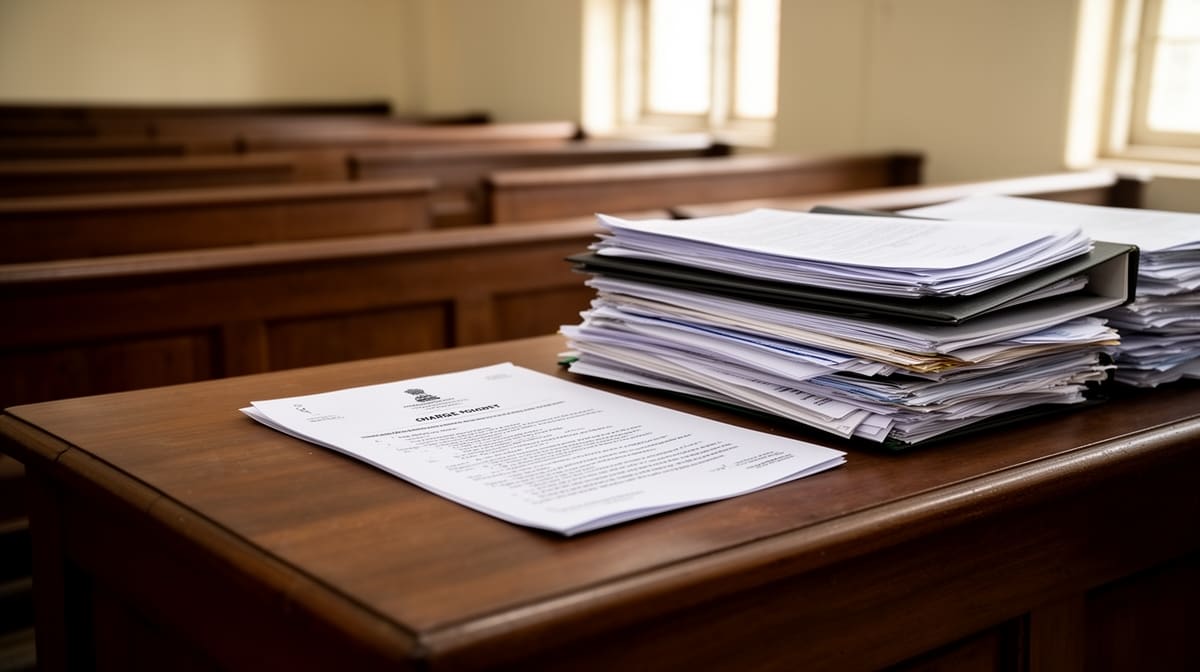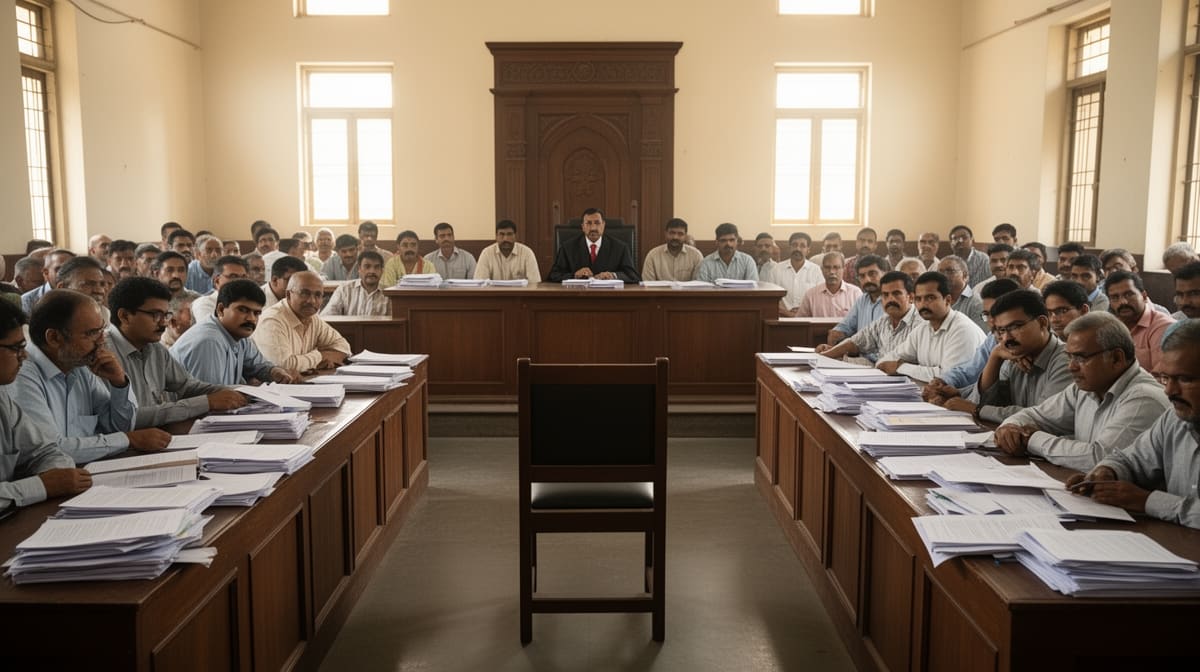
The Bombay High Court has reaffirmed that a plea of alibi cannot be adjudicated at the stage of quashing criminal proceedings under Section 482 of the Criminal Procedure Code. The judgment underscores that factual defenses must be tested through evidence during trial, not through affidavits or submissions at the pre-trial stage.
Background & Facts
The Dispute
The applicant, Ghanshyam Rajendra Dhole, an advocate, sought to quash criminal proceedings registered against him under Sections 354, 294, 295, and 506 of the Indian Penal Code. The allegations stemmed from an incident at a temple in Malkapur, where the complainant, Lata Tayde, accused him of throwing cow dung, assaulting her, abusing her in filthy language, and threatening her life. The applicant claimed the complaint was motivated by a long-standing property dispute over the management of a religious trust.
Procedural History
- 29.02.2024: Complaint filed by Lata Tayde with Police Station, Malkapur Gramin
- 2024: Crime No.56/2024 registered; chargesheet No.77/2024 submitted
- 2025: RCC No.283/2025 initiated before the Sessions Court
- 2024: Applicant filed Criminal Application No.463/2024 before the Bombay High Court seeking quashing under Section 482 CrPC
Relief Sought
The applicant sought quashing of the criminal proceedings on the ground of alibi, asserting that on the date of the alleged incident, he was present at the Civil Judge’s Court in Malkapur attending proceedings in SCC No.893/2021. He submitted copies of court records and affidavits to substantiate his absence from the temple.
The Legal Issue
The central question was whether a plea of alibi, supported by documentary evidence and affidavits, can be accepted at the stage of quashing proceedings under Section 482 of the Criminal Procedure Code, without a full trial and cross-examination.
Arguments Presented
For the Petitioner
The applicant relied on the affidavits and court attendance records to establish his physical presence elsewhere on the date of the alleged incident. He argued that the prosecution’s case was inherently false and motivated by malice, and that allowing the proceedings to continue would cause irreparable harm to his reputation and livelihood. He contended that the High Court, in its extraordinary jurisdiction under Section 482, could and should intervene where the complaint is manifestly baseless.
For the Respondent/State
The State, through the Additional Public Prosecutor, argued that the plea of alibi is a factual defense that must be established during trial through proper evidence and cross-examination. The submission of affidavits before the High Court, without opportunity for the prosecution to rebut them, cannot substitute for trial proceedings. The State cited Rajendra Singh v. State of U.P. to emphasize that the burden of proving alibi lies on the accused and cannot be discharged at the quashing stage.
The Court's Analysis
The Court examined the legal framework governing the plea of alibi under the Indian Evidence Act and the scope of Section 482 CrPC. It held that while Section 482 empowers the High Court to quash proceedings to prevent abuse of process, it does not permit the court to act as a trial court. The Court emphasized that Section 103 of the Evidence Act places the burden of proving alibi squarely on the accused, and this burden cannot be discharged through untested affidavits.
"The burden of establishing the plea of alibi set up by the respondent... lies squarely upon him. This could be done by leading evidence in the trial and not by filing some affidavits before the High Court."
The Court distinguished between a prima facie case of abuse of process and a factual dispute requiring evidentiary evaluation. It noted that the prosecution’s version, however contested, was not so inherently improbable or legally unsustainable as to warrant quashing. The Court further cited Gurcharan Singh v. State of Punjab and State of Haryana v. Sher Singh to reinforce that alibi must be proven with certainty during trial, not through pre-trial submissions.
The Court concluded that the applicant’s reliance on court attendance records and affidavits, without opportunity for cross-examination, was insufficient to establish his alibi as a matter of law at this stage. The High Court’s role under Section 482 is not to weigh evidence but to prevent manifest injustice.
The Verdict
The applicant’s petition was dismissed. The Court held that the plea of alibi cannot be adjudicated at the quashing stage under Section 482 CrPC and must be raised and proved during trial through proper evidence and cross-examination.
What This Means For Similar Cases
Alibi Must Be Proven at Trial
- Practitioners must advise clients that affidavits or court records alone are insufficient to secure quashing on alibi grounds
- Applications under Section 482 CrPC must focus on legal defects, not factual disputes
- Alibi defenses require witness testimony, documentary corroboration, and opportunity for rebuttal - all of which occur only at trial
Section 482 Is Not a Substitute for Trial
- Courts will not entertain factual defenses under Section 482 unless the complaint is legally unsustainable on its face
- Even if the prosecution’s case appears weak, the High Court cannot substitute its judgment for that of the trial court
- This ruling reinforces the principle that presumption of innocence operates within the framework of trial, not pre-trial quashing
Documentary Evidence Alone Is Insufficient
- Court attendance slips, digital records, or affidavits without sworn testimony are not admissible as proof of alibi at the quashing stage
- Practitioners should prepare for trial by securing witness statements, timestamps, and corroborative evidence well in advance
- The burden remains on the accused to establish alibi with certainty - no presumption arises from mere absence from the scene