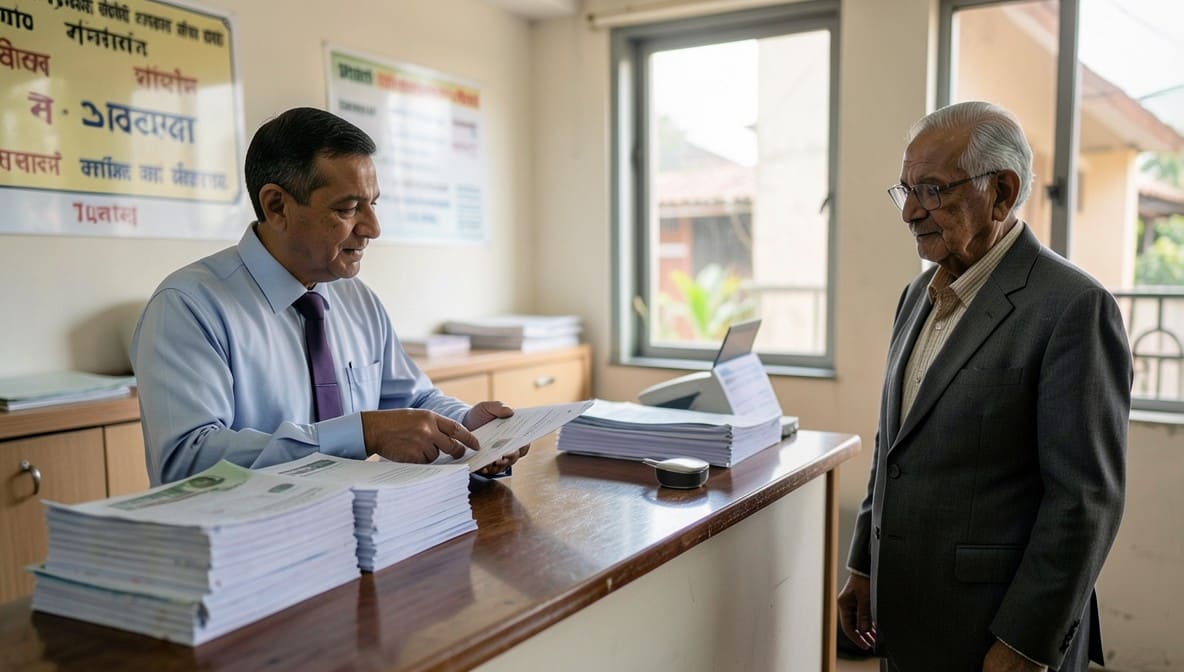
The Delhi High Court held that a college’s attempt to recover alleged excess provident fund credits from retired employees by adjusting against their gratuity amounts is untenable, reinforcing the equitable protection afforded to retirees and the statutory safeguards under the Payment of Gratuity Act.
Background & Facts
The Dispute
The petitioners, former teaching and non-teaching employees of Shivaji College who retired between 2001 and 2011, challenged recovery notices issued by the College alleging over-payment into their college-maintained Provident Fund (PF) accounts. The College sought to set off the alleged PF liabilities against enhanced gratuity payable upon increase of the gratuity ceiling.
Key Facts
- The College maintains a separate PF account, investing contributions in fixed deposits and distributing interest as per Central Government rates.
- In 2007, anomalies were detected in PF accounts covering the period 1990-91 to 2009-10, prompting a Special Audit.
- 6 June 2011: Special Audit Report received, identifying errors in deposit transactions, interest calculations, omissions, and balancing mistakes.
- December 2012: PF Committee resolved to prepare corrected statements for each subscriber.
- 20 January 2014: Meeting of PF subscribers held; anomalies and proposed rectifications explained.
- Re-calculated accounts showed amounts payable to some retirees and amounts recoverable from others. The College computed INR 58,26,165 payable to certain retirees and INR 65,68,839 recoverable from others.
- Retired employees collectively deposited INR 17,60,404.41; INR 13,91,167.85 was distributed pro-rata to those with dues.
- 2014: Recovery notices issued to petitioners; 2017: reminder notices sent.
- Specific demands: INR 1,39,435.52 from S.C. Sharma, INR 4,81,662.73 from U.S. Chauhan, INR 3,58,136.96 from P.D. Sharma.
- Upon enhancement of the gratuity ceiling, the College adjusted alleged PF dues against the enhanced gratuity. Examples:
- S.C. Sharma: enhanced gratuity INR 74,169 adjusted against PF liability INR 1,39,435, leaving further demand of INR 65,266.
- B.P. Maithani: INR 91,171 adjusted against gratuity INR 35,075, balance demand INR 56,096.
- G.C. Mittal: INR 92,591 adjusted against gratuity INR 97,825, remaining credit INR 5,234.
- 28 January 2019: Notice issued in CM APPL. 4005/2019 staying further recovery until further orders.
Procedural History
- 28 January 2019: Stay order issued in CM APPL. 4005/2019.
- W.P.(C) 558/2019 writ petition filed (exact filing date not stated).
- 31 August 2026: Judgment pronounced by Justice Sanjeev Narula.
Relief Sought
The petitioners sought:
- Quashing of all recovery notices and adjustments made under the Special Audit.
- Prohibition on any further recovery of alleged PF excess, including set-off against gratuity.
- Directions for the College to prepare and communicate statements of any amounts recovered or adjusted, and to refund any such amounts with interest.
The Legal Issue
Whether, after retirement and settlement of their college-maintained Provident Fund accounts, the College can recover alleged excess PF credits by withholding or adjusting the enhanced gratuity payable to the retirees, in view of equitable principles and the statutory framework of the Payment of Gratuity Act, 1972 and the Provident Fund Act, 1925.
Arguments Presented
For the Petitioners
- Relied on State of Punjab v. Rafiq Masih and subsequent Supreme Court decisions (Thomas Daniel, Jogeswar Sahoo) that bar recovery of excess payments from retirees where the employee is not at fault and where a long lapse of time makes recovery inequitable.
- Emphasised that no fraud, misrepresentation, or negligence on their part contributed to the alleged excess credits.
- Asserted that the gratuity is a statutory retirement benefit protected under Section 13 of the Payment of Gratuity Act, 1972, which cannot be attached to satisfy unrelated claims.
- Contended that the College’s adjustment amounts to an unlawful set-off, not a legitimate recovery, and that limitation bars any enforcement.
For the College
- Argued that the PF is a pooled fund belonging to all subscribers; excess credit to one subscriber reduces the pool available for others, justifying recovery.
- Cited Section 8(2) of the Provident Fund Act, 1925 and related Government notifications as authorising the College to determine interest rates and to rectify accounts.
- Maintained that the lapse of limitation only bars court enforcement, not the administrative adjustment of gratuity against the alleged liability.
- Asserted that the College’s action was a permissible “adjustment” rather than a coercive recovery, and therefore not subject to the equitable restraints highlighted in the Supreme Court precedents.
The Court's Analysis
The Court first narrowed the controversy, observing that the audit and the authority to recalculate PF accounts were undisputed (para 17). The real issue was whether, after retirement and final settlement, the College could reopen accounts and recover amounts by adjusting them against gratuity (para 17-18).
The Court reiterated the equitable doctrine articulated in Rafiq Masih: an employer may have a right to recover an over-payment, but that right is restrained where recovery would be harsh, inequitable, or where the employee had no role in the mistake (para 18). The Court highlighted the three situations identified by the Supreme Court - recovery from retired employees, recovery after a lapse of more than five years, and recovery that would be harsh or inequitable - all of which were present here.
Subsequent Supreme Court rulings (Thomas Daniel, Jogeswar Sahoo) were applied to underscore that the protection extends beyond pay-fixation errors to any erroneous credit where the employee is blameless (paras 19-20). The Court also noted the applicability of the principle in Umesh Chand Tyagi where a General Provident Fund credit error was quashed despite the account’s different character (para 21).
The petitioners’ factual matrix satisfied the equitable bar: the PF accounts were maintained by the College, interest was credited by it, and statements were issued annually. The retirees had received final settlements and had no knowledge of any excess credit (paras 22-23). The Court rejected the College’s contention that the 2012 minutes, which treated retirement payments as provisional, could retrospectively convert settled amounts into provisional ones (para 24).
Regarding the gratuity, the Court examined the Payment of Gratuity Act, 1972. It observed that forfeiture is permissible only under Section 4(6) for termination due to misconduct, and that Section 13 protects gratuity from attachment in execution of court orders (paras 31-32). Since the College’s claim arose from a later PF audit and not from misconduct, the statutory shield barred any set-off against gratuity.
The Court further dismissed the College’s reliance on the pooled-fund argument, stating that systemic accounting errors affecting the pool do not create a direct claim against individual retirees whose accounts were already settled (paras 26-28).
Finally, the Court held that limitation was irrelevant because the College’s adjustment was not a lawful recovery; even if it were barred by limitation, a unilateral set-off without statutory authority could not stand (paras 29-30).
"The recovery sought from the Petitioners, whether by direct demand or by adjustment against gratuity, cannot be sustained."
The Verdict
The writ petition is allowed. The recovery notices issued under the Special Audit, together with all subsequent demands and adjustments, are set aside. The College is prohibited from effecting any further recovery from the petitioners, including any adjustment against gratuity. Within four weeks of the judgment, the College must prepare and communicate to each petitioner a statement of any amount recovered or adjusted. Any amount so recovered, adjusted, or withheld must be refunded within eight weeks, with interest at 6% per annum from the date of recovery, adjustment or withholding until payment.
What This Means For Similar Cases
Equitable Bar on Post-Retirement Recovery
- Courts will apply the Rafiq Masih principle to bar recovery of excess payments from retirees where the employee bore no fault and a substantial time has elapsed.
- Practitioners must assess the temporal gap and the employee’s involvement before pursuing recovery.
Gratuity Cannot Be Set-Off Against PF Claims
- Section 13 of the Payment of Gratuity Act, 1972 shields gratuity from attachment; any attempt to appropriate it to satisfy unrelated claims will be struck down.
- Employers should seek alternative recovery mechanisms that do not infringe statutory protection.
Limitation Is Not a Shield for Unlawful Set-Off
- Even if a claim is time-barred, a unilateral adjustment without statutory authority is invalid.
- Legal counsel must ensure that any set-off is expressly authorized by a rule, contract, or statute.
Practical Takeaways
- Verify whether the employee contributed to the excess payment before initiating recovery.
- Obtain explicit contractual or statutory provision before adjusting statutory retirement benefits.
- Document employee consent or acknowledgment of any provisional settlement.
- Advise clients that equitable considerations may outweigh strict legal rights in post-retirement contexts.