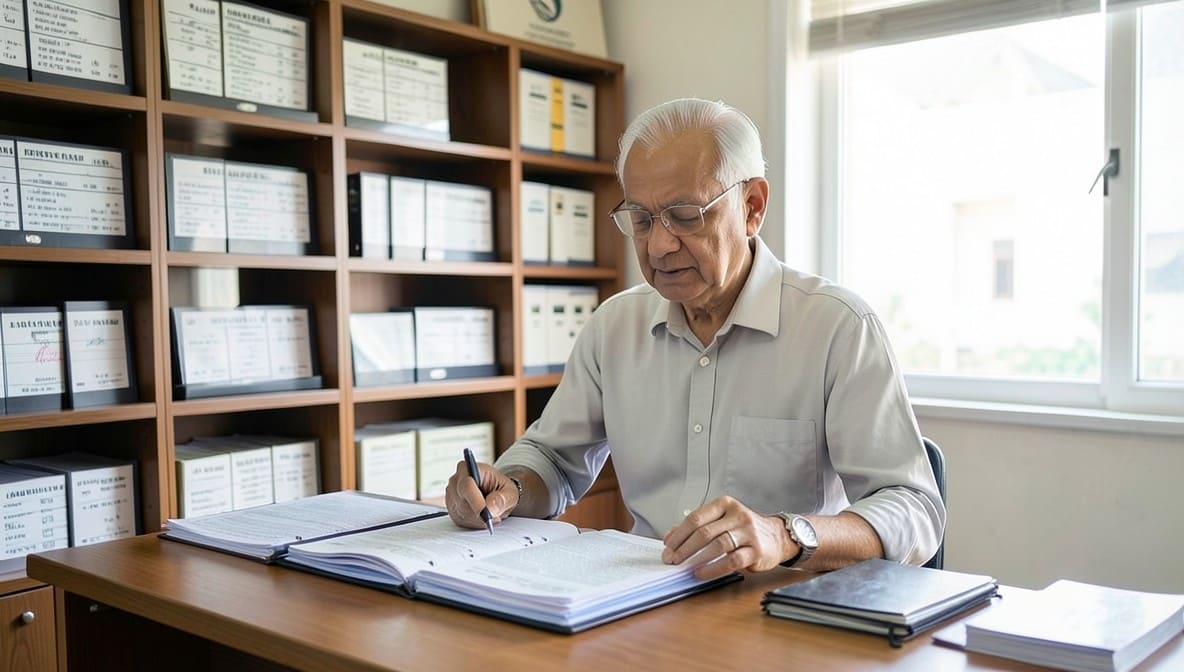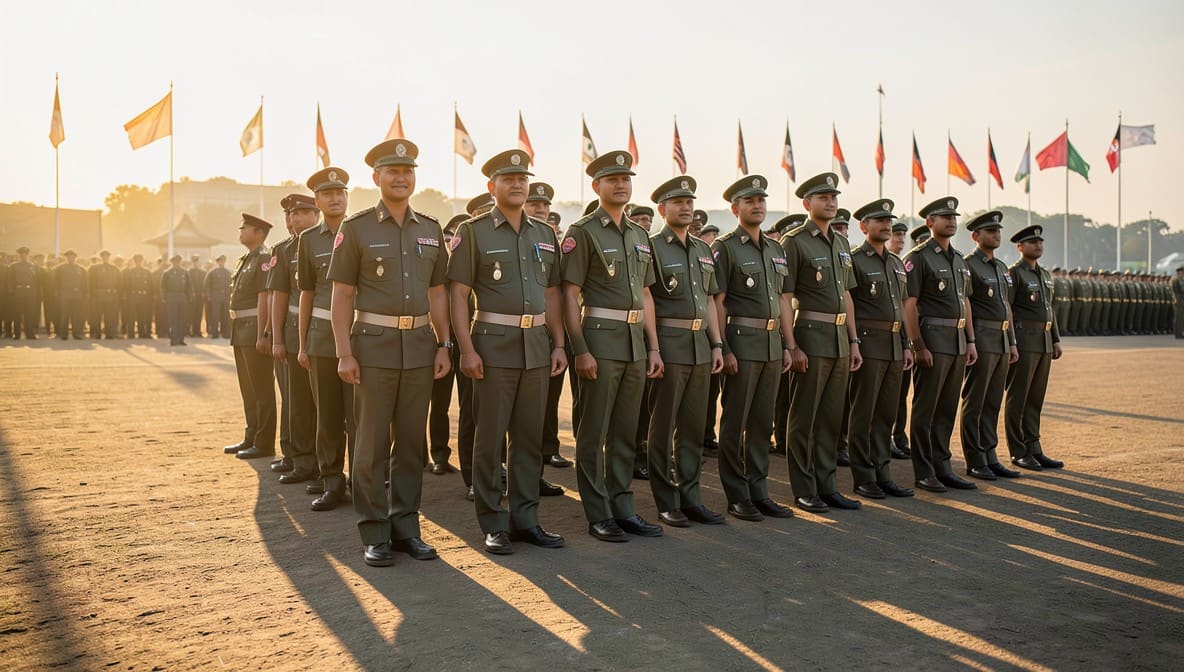
The Supreme Court has held that the denial of Permanent Commission to women officers of the Indian Army, based on merit assessments tainted by systemic bias in Annual Confidential Reports (ACRs) and unequal access to career-enhancing opportunities, violates constitutional guarantees of equality. In a landmark ruling, the Court invoked its extraordinary powers under Article 142 to provide remedial justice to hundreds of Short Service Commission Officers (SSCOs) who were evaluated under a framework that penalized them for structural disadvantages they could not control.
Background & Facts
The Dispute
The dispute concerns the denial of Permanent Commission (PC) to approximately 73 women officers of the Indian Army, commissioned between September 2010 and March 2012, alongside their male counterparts in the same batches. These officers, known as Short Service Commission Women Officers (SSCWOs), were initially ineligible for PC under policy until the Supreme Court’s 2020 decision in Babita Puniya v. Union of India, which mandated their inclusion in PC consideration on equal terms. Despite this, their applications for PC were rejected by the Armed Forces Tribunal (AFT) on grounds of lower comparative merit, based on evaluations conducted under a system that had historically disadvantaged them.
Key Facts
- The first batch of women officers was inducted under the Women Special Entry Scheme (WSES) on 15.02.1992, with explicit exclusion from PC eligibility.
- On 12.03.2010, the Delhi High Court in Babita Puniya v. Secretary held that women officers in all cadres must be considered for PC if their male counterparts were.
- The Supreme Court affirmed this on 17.02.2020, directing that all serving SSCWOs be considered for PC irrespective of tenure.
- The policy circular dated 15.01.1991 capped PC grants at 250 per year, with vacancies apportioned based on batch strength.
- The Appellant-SSCWOs belonged to four batches: SSCWOs-4 (commissioned September 2010), SSCWOs-5 (March 2011), SSCWOs-6 (September 2011), and SSCWOs-7 (March 2012).
- The first regular No. 5 Selection Board considering these women alongside men was held in December 2020.
- Results dated 11.01.2021 showed only 34.4% of SSCWOs-4 and 27.27% of SSCWOs-5 were granted PC.
- ACRs, accounting for 75 out of 100 marks in the evaluation, were written between 2010 and 2020 - a period when women were officially ineligible for PC.
- The Military Secretary’s Branch issued a directive on 23.10.2020 instructing reporting officers to carefully fill ACRs for SSCWOs, acknowledging prior negligence.
- Only 17.72% of the 158 courses completed by the Appellants received an ‘A’ grade; the majority received ‘B’ or ‘C’.
- The Appellants were routinely denied criteria appointments (e.g., Officer Commanding roles) and excluded from key courses like the Junior Command Course, which male officers routinely attended after six years of service.
- Between 1999 and 2012, the 250-vacancy cap was breached multiple times, including during the Kargil War and Operation Parakram, and during transitional policy shifts.
- The AFT dismissed the Original Applications on 03.07.2024 and 04.09.2024.
- Writ Petitions were filed before the Supreme Court in 2024.
- On 09.05.2025 and 19.05.2025, the Supreme Court ordered that all pending officers not be released from service.
Procedural History
- 15.02.1992: Women inducted under WSES, ineligible for PC.
- 12.03.2010: Delhi High Court holds women officers entitled to PC consideration in all cadres.
- 02.09.2011: Supreme Court declines to stay High Court’s order; it remains in force.
- 24.02.2012: Policy issued introducing 95% computerised evaluation and 5% value judgement for PC.
- 17.02.2020: Supreme Court in Babita Puniya directs inclusion of all SSCWOs in PC consideration.
- 14.08.2020: Instructions issued for regular No. 5 Selection Board for SSCWOs-4, -5, SSC-90, SSC-91.
- 23.10.2020: MS Branch issues directive to correct ACRs for SSCWOs.
- 19.11.2020: Results of Special No. 5 Selection Board for earlier batches declared.
- 11.01.2021: Results of regular No. 5 Selection Board for SSCWOs-4 and -5 declared.
- 25.03.2021: Supreme Court in Lt. Col. Nitisha v. Union of India directs PC for all SSCWOs in Special Board who scored 60% or above.
- 12.06.2021: AFT receives Original Applications from Appellant-SSCWOs.
- 03.07.2024 & 04.09.2024: AFT dismisses applications, holding no discrimination.
- 28.03.2024: Civil Appeals filed before Supreme Court.
- 24.03.2026: Judgment delivered.
The Parties' Positions
Appellants (SSCWOs and some male SSCOs): Argued that ACRs were graded casually during a period when women were ineligible for PC, resulting in systematically lower scores. Denied access to criteria appointments and career-enhancing courses, which affected value judgement. The 250-vacancy cap was inconsistently applied and should not bar corrective relief. The male officers’ claim of legitimate expectation was invalid post-Babita Puniya.
Respondents (Union of India): Maintained that the evaluation was anonymised and fair. The 250-vacancy cap was sacrosanct for cadre management. The policy was gender-neutral. Male officers had a legitimate expectation to compete only against male peers. The AFT’s findings were correct.
Relief Sought
The Appellants sought:
- Grant of Permanent Commission to all SSCWOs who scored 60% or above in the 2020 - 2021 Selection Boards.
- Deemed completion of 20 years of service for those released during pendency, entitling them to pension.
- Correction of vacancy calculation to reflect calendar-year batch apportionment.
- Review of ACR evaluation methodology for future batches.
The Legal Issue
The central questions were: (1) Whether the ACRs of SSCWOs were graded casually due to their prior ineligibility for PC, thereby distorting their comparative merit? (2) Whether systemic denial of criteria appointments and career courses adversely affected their value judgement scores? (3) Whether the 250-vacancy cap can operate as an absolute barrier to remedial justice where systemic bias is established? (4) Whether male SSCOs had a legitimate expectation to compete only against other male officers for PC?
Arguments Presented
For the Appellant/Petitioner
Senior counsel argued that ACRs, constituting 75% of the evaluation, were written during a period when women were officially excluded from PC, leading to routine middling grades. This institutional bias was judicially acknowledged in Lt. Col. Nitisha v. Union of India. The exclusion from criteria appointments and key courses like the Junior Command Course, which male officers routinely attended, directly impacted the subjective 5% value judgement component. The 250-vacancy cap had been breached multiple times since 1999, including during wartime and policy transitions, proving it was never sacrosanct. The male officers’ claim of legitimate expectation was legally unsustainable after the Delhi High Court’s 2010 judgment, which remained in force and was affirmed by the Supreme Court in 2011.
For the Respondent/State
The Additional Solicitor General contended that the evaluation process was anonymised and the recommendation column was removed from the Member Data Sheet, eliminating bias. Criteria appointments were not mandatory for PC and carried no numerical weight. The 250-vacancy cap was essential for maintaining the Army’s pyramidal structure and age profile. The policy had been consistently applied since 1991, and the apportionment of vacancies between September and March batches was correct. Male officers had a legitimate expectation based on decades of practice, and the sudden inclusion of women in the same pool was arbitrary.
The Court's Analysis
The Court conducted a rigorous analysis of the evaluation framework, focusing on the structural inequities embedded in the system. It rejected the Respondents’ reliance on anonymisation, noting that the damage occurred at the ACR-writing stage - years before the Selection Board convened. The assessing officers knew the officers were ineligible for PC and graded accordingly, reserving top marks for men whose careers depended on it.
"The cumulative consequence was a systemic pattern in which women officers outside the JAG and AEC cadres consistently received lower gradings, not due to lack of merit, but due to the absence of any perceived career horizon."
The Court held that the 75 marks from ACRs were irreparably skewed, and the 5 marks from value judgement were further compromised by unequal access to courses and appointments. Even a 0.5-mark difference could determine PC eligibility, making these disparities determinative.
Regarding the 250-vacancy cap, the Court observed that the Respondents had breached it repeatedly between 1999 and 2012, including during the Kargil War and due to policy transitions. The cap was never rigidly enforced, and its invocation here as a shield against constitutional inequality was untenable.
"The invocation of the vacancy cap as a shield against remedial action would be unfair to sustain."
The Court dismissed the male officers’ claim of legitimate expectation, holding that the Delhi High Court’s 2010 judgment, affirmed by the Supreme Court in 2011, rendered any expectation of an all-male PC pool legally invalid. The doctrine of legitimate expectation cannot override constitutional mandates.
"Any expectation to the contrary is inherently illegitimate. The claim made by the Appellant-male SSCOs that they ought not to be considered alongside SSCWOs is therefore liable to be outrightly and decisively rejected."
The Court concluded that the denial of PC was not an individual failure but a systemic consequence of institutional bias.
The Verdict
The appeals of the Appellant-SSCWOs were allowed, and those of the male Appellants were dismissed. The Court directed:
- All SSCWOs who were released from service during the pendency of proceedings shall be deemed to have completed 20 years of qualifying service and shall be entitled to pension and all consequential benefits, except arrears of pay.
- Pension shall be calculated from the date of deemed completion of 20 years, with arrears payable only with effect from 01.01.2025.
- All SSCWOs currently in service who scored 60% or above in the 2020 - 2021 Selection Boards shall be granted Permanent Commission, subject to medical fitness and disciplinary clearance.
- The grant of PC to those already granted PC shall not be disturbed.
- The method of ACR evaluation and cut-off criteria must be reviewed for future batches to eliminate disproportionate impact on women officers.
- The directions do not apply to SSCWOs in JAG and AEC cadres, who were already eligible for PC since 2010.
What This Means For Similar Cases
Systemic Bias Cannot Be Masked by Procedural Formalities
- Practitioners must challenge evaluations where historical exclusion has distorted performance metrics, even if current procedures appear neutral.
- Anonymisation of final assessments does not cure bias introduced years earlier in foundational documents like ACRs.
- Courts may invoke Article 142 to grant relief where systemic discrimination is proven, even if statutory caps exist.
Career Access Disparities Are Legally Relevant
- Denial of access to training, postings, or courses that influence subjective evaluation components constitutes actionable discrimination.
- Even non-quantified factors (e.g., value judgement) can be invalidated if they reflect institutional inequality.
- Evidence of differential access must be documented and presented as part of the discrimination claim.
The 250-Vacancy Cap Is Not Absolute
- Administrative caps are not sacrosanct if they perpetuate constitutional violations.
- Past breaches of caps, even for operational reasons, undermine claims of inflexibility.
- Courts will not permit rigid adherence to policy where it entrenches discrimination against protected groups.
Legitimate Expectation Cannot Override Constitutional Equality
- Claims based on historical exclusion of a group cannot be sustained if a court has already declared such exclusion unconstitutional.
- The doctrine of legitimate expectation is subordinate to fundamental rights.
- Public authorities cannot rely on past discriminatory practices to justify continued exclusion.