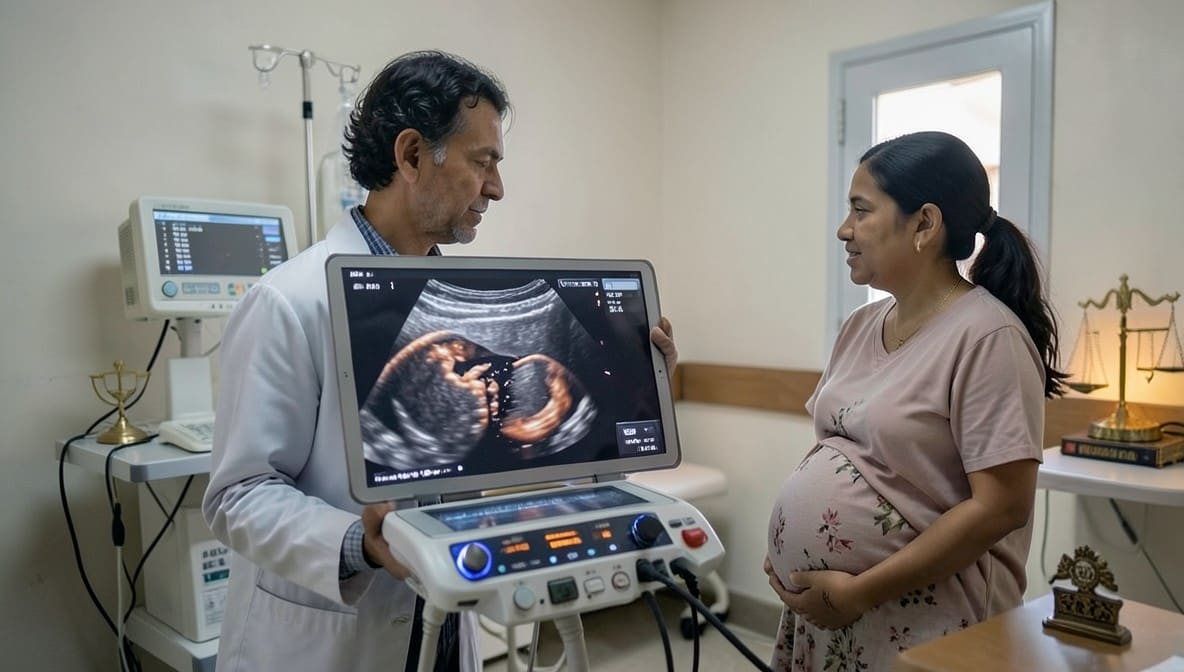
The Kerala High Court has permitted the medical termination of a 26-week pregnancy due to fetal abnormalities, affirming a woman's right to reproductive autonomy. The Court relied on the Supreme Court's recent judgment in S. v. Union of India to underscore that no one can compel a woman to continue an unwanted pregnancy, regardless of the stage. The decision underscores the judiciary's role in safeguarding constitutional rights in matters of personal liberty and bodily integrity.
Background & Facts
The Dispute
The petitioners, a married couple residing in Kothamangalam, Ernakulam district, approached the Kerala High Court seeking permission for the medical termination of the 1st petitioner's pregnancy of approximately 26 weeks. The petitioners contended that the pregnancy was unwanted due to the presence of fetal abnormalities, which posed significant risks to the health and well-being of the mother.
Key Facts
- The 1st petitioner is aged 21 years and the 2nd petitioner is aged 26 years.
- The petitioners reside at Kappilamveettil, Ramalloor, Kothamangalam, Ernakulam district.
- The pregnancy was diagnosed as approximately 26 weeks at the time of filing the petition.
- The petitioners submitted diagnostic reports and scan reports from Rajagiri Hospital (Exhibit P1) and clinical findings from Government Medical College, Kottayam (Exhibit P2).
- The petitioners relied on medical opinions indicating fetal abnormalities necessitating termination.
Procedural History
- 14.07.2026: The Kerala High Court passed an order directing the constitution of a medical board to examine the petitioners.
- 15.07.2026: The medical board submitted its report, opining that the medical termination of pregnancy was medically justified.
- 16.07.2026: The writ petition was heard and disposed of by the Court.
Relief Sought
The petitioners sought a direction to the 2nd respondent (Medical Board) to permit the medical termination of the 1st petitioner's pregnancy of approximately 26 weeks, on account of fetal abnormalities.
The Legal Issue
The central question was whether the petitioners were entitled to medical termination of pregnancy at 26 weeks gestation due to fetal abnormalities, and whether the State could compel continuation of the pregnancy against the woman's will.
Arguments Presented
For the Petitioners
The petitioners, through their counsel Sri. Joseph Jose, argued that the 1st petitioner's pregnancy was unwanted due to fetal abnormalities, which posed significant health risks. They relied on medical reports and sought judicial permission for termination, emphasizing the woman's right to bodily autonomy and reproductive choice.
For the Respondent
The State, represented by the Government Pleader Sri. Balaprasannan, did not oppose the petition. The State placed reliance on the medical board's report, which opined in favor of termination. The State submitted that the termination was medically justified and aligned with the Supreme Court's precedent on women's autonomy.
The Court's Analysis
The Court examined the medical board's report dated 15.07.2026, which opined that the medical termination of pregnancy was necessary due to fetal abnormalities. The Court also considered the Supreme Court's judgment in S. v. Union of India, wherein it was held that no one can compel a woman to continue an unwanted pregnancy, regardless of the stage of gestation.
"The Court held that what matters is whether the pregnant woman intends to give birth to the child or not, and that no one can compel a woman, in any circumstances, to continue a pregnancy."
The Court observed that the medical board's opinion supported the petitioners' request and that the Supreme Court's precedent provided a clear legal basis for permitting the termination. The Court emphasized the importance of upholding a woman's right to reproductive autonomy and bodily integrity.
The Verdict
The writ petition was allowed. The Court directed the 2nd respondent (Medical Board) to provide the medical termination of pregnancy sought by the petitioners, subject to the 1st petitioner furnishing an undertaking consenting to the procedure. The termination was to be performed immediately upon compliance with the undertaking.
What This Means For Similar Cases
Women's Autonomy in Reproductive Choices
Practitioners must now recognize that the Kerala High Court has reaffirmed the principle that a woman's right to reproductive autonomy is paramount. Courts will not compel continuation of pregnancy against a woman's will, even at advanced stages of gestation, if medical evidence supports termination.
- Key takeaway: Medical termination of pregnancy is permitted at any stage if the woman's autonomy and medical necessity are established.
Judicial Deference to Medical Opinion
The decision underscores the judiciary's deference to medical boards' opinions in cases involving fetal abnormalities. Courts will rely on expert medical reports to determine the necessity of termination.
- Key takeaway: Medical evidence is decisive in such cases, and courts will not substitute their judgment for that of medical experts.
Constitutional Safeguards for Bodily Integrity
The judgment reinforces the constitutional safeguards for bodily integrity and personal liberty under Articles 21 and 19(1)(a) of the Constitution. It serves as a precedent for future cases involving reproductive rights and medical termination of pregnancy.
- Key takeaway: Bodily integrity and reproductive autonomy are fundamental rights, and any attempt to compel continuation of pregnancy will be struck down.