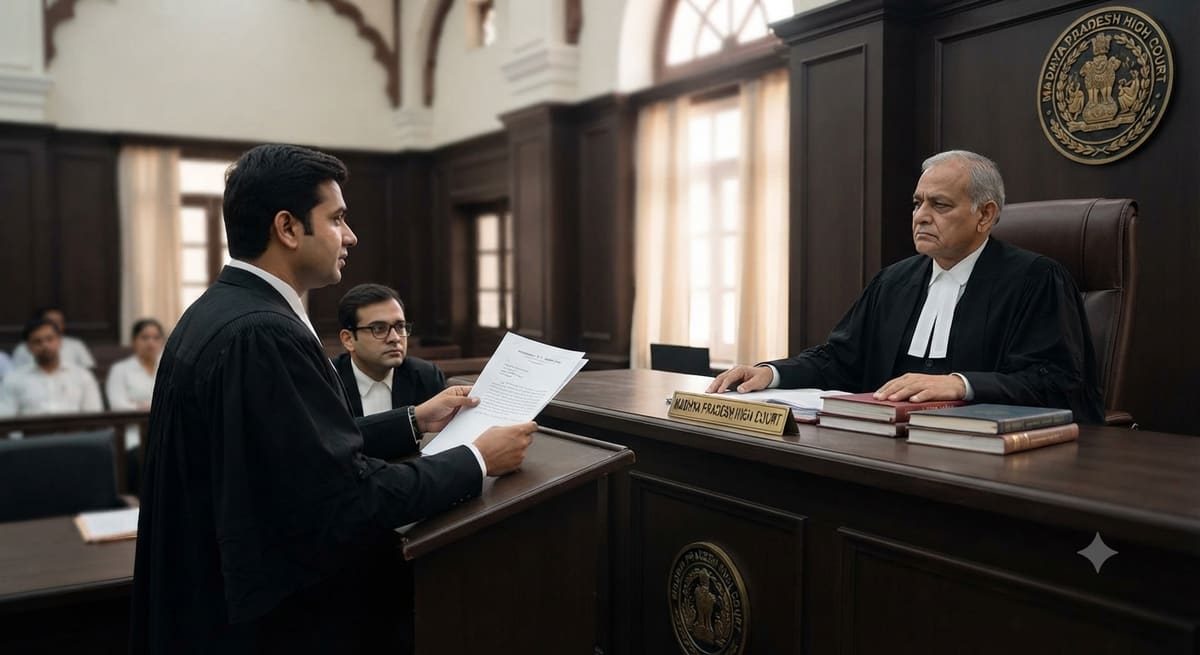
The Uttarakhand High Court has firmly reaffirmed that writ jurisdiction cannot be invoked to interfere with administrative postings based on personal grievances or unsubstantiated allegations of animosity. This judgment underscores the limits of public interest litigation when it veers into private vendettas, reinforcing that no legal right is infringed merely because a public officer is posted near a petitioner’s residence.
Background & Facts
The Dispute
The petitioner, Ram Prakash Sundriyal, filed a writ petition seeking a writ of mandamus to direct the State of Uttarakhand to transfer respondent No. 5, Manoj Rawat, Executive Engineer, Badkot, from his current place of posting. The petitioner alleged that respondent No. 5 harboured personal animosity against him and that this enmity would adversely affect his interests. He further contended that since respondent No. 5 had received his education in the same village, his continued posting there was unjustified and should be altered.
Key Facts
- The petitioner is a former Pradhan of the village where respondent No. 5 is posted
- No specific incident of harassment, obstruction, or official misconduct by respondent No. 5 was alleged
- The petitioner did not claim any violation of statutory rights, service rules, or procedural fairness
- No evidence was submitted to substantiate the claim of animosity
- The petitioner did not seek any relief against his own treatment or service conditions
Procedural History
- 19.03.2026: Writ Petition (S/B No. 145 of 2026) filed before the High Court of Uttarakhand, Nainital
- 19.03.2026: Hearing conducted before the Division Bench
- 19.03.2026: Judgment delivered on the same day
The Parties' Positions
Petitioner: Argued that respondent No. 5’s presence in the village created a hostile environment and that his posting should be changed to prevent potential harassment.
Respondents: Contended that the petition was an abuse of process, lacking any legal basis, and that administrative postings are discretionary and not subject to personal challenges by private individuals.
Relief Sought
The petitioner sought a writ of mandamus directing the transfer of respondent No. 5, Executive Engineer, Badkot, from his current place of posting.
The Legal Issue
Can a writ petition under Article 226 of the Constitution be maintained to compel the transfer of a public officer based solely on the petitioner’s allegation of personal animosity, without any infringement of a legal right or violation of statutory procedure?
Arguments Presented
For the Petitioner
The petitioner’s counsel argued that the continued posting of respondent No. 5 in the same village, where the petitioner resides and formerly served as Pradhan, created an atmosphere of hostility. He contended that the officer’s educational background in the same locality made his posting inappropriate and that the court should intervene to prevent potential harassment.
For the Respondent
The State’s counsel submitted that the petition was devoid of any legal foundation. Administrative postings are made in public interest and based on administrative exigencies. A private individual cannot invoke writ jurisdiction to challenge postings on grounds of personal enmity, especially when no legal right or statutory provision is violated. The petition was an abuse of the court’s process.
The Court's Analysis
The Court examined the nature of the relief sought and found that the petitioner had no enforceable legal right to demand the transfer of a public officer. The Court observed that the mere existence of a personal disagreement, even if true, does not create a justiciable grievance under Article 226. The writ jurisdiction is not a forum for settling private disputes or retaliatory demands.
"The writ petition is apparently mala fide as the petitioner alleges enmity with respondent No. 5 and, therefore, wants to create obstacle in the posting of respondent No. 5 at his village."
The Court emphasized that public officers are posted in accordance with service rules and administrative requirements, and such decisions are not subject to challenge by private individuals absent a violation of constitutional or statutory rights. The petitioner’s status as a former Pradhan conferred no legal entitlement to influence postings. The Court further noted that the petition was filed without any supporting evidence and appeared designed to harass or inconvenience a public servant.
The Verdict
The writ petition was dismissed as wholly frivolous and mala fide. The Court imposed a cost of Rs. 25,000 to be deposited by the petitioner with the High Court Legal Services Authority within fifteen days from the date of judgment. Failure to pay the cost will result in recovery of the amount in accordance with law. All pending applications were disposed of.
What This Means For Similar Cases
Writ Petitions Cannot Be Used for Personal Vendettas
- Practitioners must advise clients that personal grievances against public officers, without any violation of legal rights, are not grounds for writ relief
- Courts will not entertain petitions seeking transfer of officials based on alleged animosity, especially where no official action has been taken against the petitioner
- Filing such petitions risks imposition of costs under the court’s inherent power to prevent abuse of process
Administrative Posting Decisions Are Non-Justiciable Without Statutory Breach
- Posting of public officers is an administrative function governed by service rules and public interest
- Courts will not substitute their discretion for that of the administration unless there is arbitrariness, mala fide, or violation of procedure
- Petitioners must demonstrate a direct infringement of a fundamental or statutory right to invoke writ jurisdiction
Frivolous Litigation Invites Cost Consequences
- Courts are increasingly vigilant against misuse of judicial process for private purposes
- Costs imposed in such cases serve as a deterrent to future abuse
- Legal practitioners must conduct a rigorous pre-filing assessment to avoid sanctions for filing vexatious writs