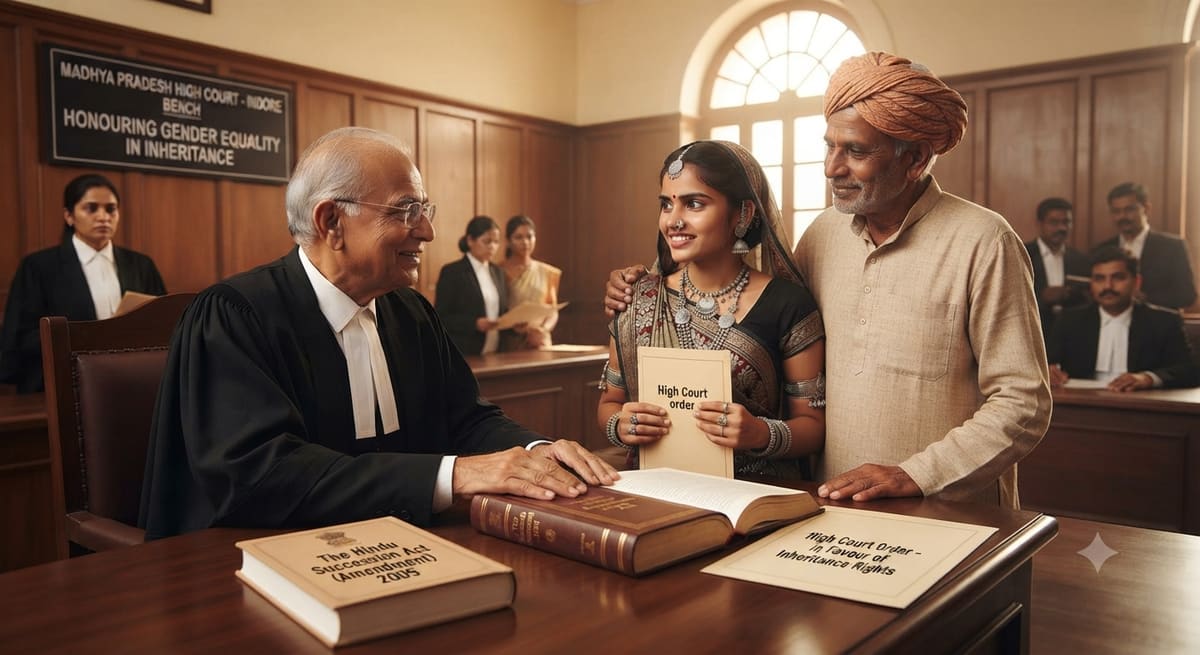
The Gujarat High Court dismissed a second appeal concerning inheritance rights over agricultural land, holding that a Scheduled Tribe woman who inherited property from her husband could validly bequeath it via will in the absence of any proven tribal custom prohibiting such disposition. The Court affirmed lower courts' findings that the plaintiff failed to establish either his claim under rule of survivorship or that the suit properties were restricted-tenure lands under Section 73AA of the Gujarat Land Revenue Code.
Background & Facts
The Dispute
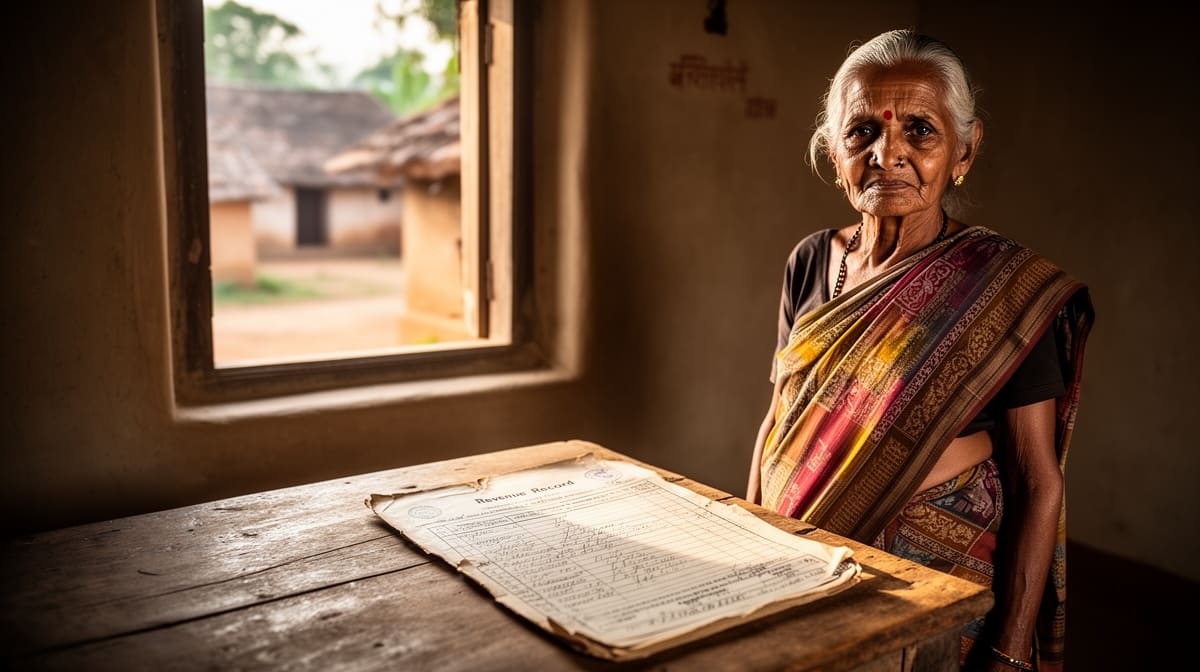
The original plaintiff (Ranchhodbhai Jesingbhai) claimed to be the brother of Chhaniben, who died issueless on 15.07.1991. Chhaniben was married to Jivlabhai Chogdabhai, who held agricultural lands by tenancy rights in Village Nogama, Taluka Mandvi, District Surat. Jivlabhai died issueless prior to Chhaniben, around 1958-59, so she inherited the suit properties.
Key Facts
- Chhaniben executed a registered Will dated 24.07.1972 in favor of her son Raysangbhai (plaintiff's claim)
- However, plaintiff could not produce this Will; instead, it appeared Chhaniben executed a registered Will dated 01.07.1991 in favor of the defendant (Anchhibhai Kavjibhai Chaudhari)
- Plaintiff also claimed to have executed a Will on 01.07.1991 in favor of defendant but cancelled it on 04.07.1997
- Power of attorney issued by plaintiff in favor of defendant was cancelled on 27.05.2002
- Suit properties were restricted-tenure lands under Gujarat Land Revenue Code, 1879
- Parties belong to Scheduled Tribe (Chaudhari Community)
- Plaintiff belongs to Scheduled Tribe and claimed exemption from court fees (caste certificate at Exhibit-58)
Procedural History
- 27.09.2002: Regular Civil Suit No. 26 of 2002 instituted by plaintiff seeking declaration and injunction
- 07.12.2011: Judgment and decree passed by Principal Senior Civil Judge, Bardoli in Special Civil Suit No. 111 of 2011
- 24.06.2026: Judgment and decree passed by 3rd Additional District Judge, Surat at Bardoli in Regular Civil Appeal No. 51 of 2015 (Old RCA No. 183 of 2012 & 2 of 2012)
- 11.09.2026: Present judgment delivered by Gujarat High Court
The Parties' Positions
Appellant-Plaintiff's Position:
- As brother of Chhaniben (who died issueless), he was sole legal heir under rule of survivorship
- Chhaniben inherited suit properties from husband Jivlabhai
- Since both died issueless, plaintiff should inherit properties
- Hindu Succession Act, 1956 not applicable to Scheduled Tribes per Section 2(2)
- Suit properties restricted-tenure lands, so Section 73AA of Gujarat Land Revenue Code, 1879 bars transfer by will
- Defendant could not derive rights via Chhaniben's will
Respondent's Position:
- Chhaniben executed valid will dated 01.07.1991 in favor of defendant
- Will was properly proved before Trial Court
- Plaintiff failed to prove his will dated 24.07.1972 or its cancellation
- No evidence of tribal custom preventing women from inheriting/having testamentary power
- Community followed Hindu tradition where Hindu Succession Act applied
- Plaintiff admitted in cross-examination that Kavlabhai (brother-in-law of Chhaniben) was alive at her death
- Kavlabhai filed Regular Civil Suit No. 46 of 1991 against both parties
Relief Sought
Plaintiff sought:
- Declaration that Chhaniben had no right to execute will in favor of defendant
- Declaration that plaintiff should be sole owner of suit properties under rule of survivorship
- Direction for defendant to hand over possession of suit properties (Block Nos. 51 and 366) along with mesne profits
- Permanent injunction restraining defendant from interfering with plaintiff's possession
- Declaration that will dated 24.07.1972 executed by Chhaniben in favor of defendant shall be illegal
The Legal Issue
The central question was whether the Courts below erred in law by relying upon the Hindu Succession Act, 1956 and old Hindu law to adjudicate the lis between parties belonging to a Scheduled Tribe, despite Section 2(2) of the Act, 1956 expressly excluding its application to Scheduled Tribes, and whether the suit properties being restricted-tenure lands attracted the bar under Section 73AA of the Gujarat Land Revenue Code, 1879 preventing transfer of property by will.
Arguments Presented
For the Appellant/Petitioner
Mr. N.V. Gandhi, learned advocate for the appellant-plaintiff, submitted that the Courts below committed a serious error in law by relying upon the Hindu Succession Act, 1956 or Hindu Law while adjudicating the lis between parties, as the deceased Chhaniben was a woman belonging to a Scheduled Tribe and, per Section 2(2) of the Act, 1956, its provisions are not applicable to Scheduled Tribes. He argued that the judgment and decree passed by the Courts below were perverse and grossly erroneous and required interference by this Court solely on the ground that the issues decided were based on provisions of Hindu law, which are inapplicable to Scheduled Tribe. He contended that the plaintiff, being the brother of Chhaniben who died issueless, was the only legal heir who could inherit her property after her death as a rule of survivorship, especially since Chhaniben had inherited the suit property from her husband Jivlabhai and both died issueless. He further submitted that the suit properties were restricted-tenure lands and, as per Section 73AA of the Gujarat Land Revenue Code, 1879, Chhaniben could not have bequeathed the suit property by way of will, and as such, the defendant had no right to receive the property by way of her will. He relied upon the decision of the Coordinate Bench of this Court in LH of Late Jashvantbhai Abhesingbhai Vasava & Ors. Vs. Jesingbhai Abhesingbhai Vasava & Ors. rendered in Second Appeal No. 113 of 2024, dated 19.11.2024.
For the Respondent/State
The respondent's position, as gleaned from the judgment, was that Chhaniben executed a valid registered will dated 01.07.1991 in favor of the defendant, which was duly proved before the Trial Court by examining witnesses including the Registrar. The plaintiff failed to prove the execution of his alleged will dated 24.07.1972 in favor of his son Raysangbhai or its cancellation on 04.07.1997. The respondent noted that the plaintiff admitted in cross-examination that Kavlabhai Chogdabhai (brother-in-law of Chhaniben) was alive at the time of her death, who happens to be the elder brother of her husband Jivlabhai. The respondent argued that since no custom was proved within Jivlabhai's tribe regarding devolution of an issueless widow's property passing only to her birth family, the plaintiff's prayer for declaration of sole ownership under doctrine of survivorship must fail. Furthermore, the second grievance regarding restricted-tenure lands was never pressed before the Courts below, and there was no record of any revenue proceeding initiated by the plaintiff under Section 73AA(3)(a) of the Code, 1879 before the Collector concerned.
The Court's Analysis
The Court began by noting that the facts were not in dispute: the plaintiff is the brother of Chhaniben (though not her real brother, as they share the same mother but different fathers), Chhaniben died issueless on 15.07.1991, and her husband Jivlabhai Chogdabhai died around 1958-59, whereby she inherited her husband's properties (the suit properties).
The Court acknowledged that it is true the provisions of the Act, 1956 are not applicable to Scheduled Tribe communities as per Section 2(2) of the Act, 1956. However, it held that in the absence of any custom of a particular tribe which prohibits a woman from inheriting property from her husband and/or ancestor, the Court can always believe that such woman has a right of inheritance. The plaintiff had not specifically pleaded in the plaint and, as such, failed to lead any evidence to show that any custom prevailing in the community of the parties (Tribal/Adivasi Chaudhari) whereby, in a case like the present one, if a widowed sister dies issueless, her property which was inherited by her from her husband passes only to her brother. Rather, as noted in para-6 of the defendant No.1's affidavit in lieu of examination in chief, it was deposed that since their community followed the Hindu tradition and as per tradition, Hindu Succession Act applied to their community, accordingly, Chhaniben became absolute owner of the suit properties. Mr. Gandhi, learned advocate, had fairly conceded before this Court during the course of his argument that no such evidence was led before the Trial Court by the plaintiff.
Having noted that none of the provisions of the Act, 1956 are applicable to the parties and in the absence of any such custom whereby the plaintiff could seek a declaration that, as a rule of survivorship, he should be declared the sole owner of the suit properties, being the brother of Chhaniben, and non-applicability of the Act, 1956, the Court is bound to adjudicate the lis on the principles of justice, equity and good conscience.
The Court found it not disputed by the plaintiff that the suit property was inherited by Chhaniben from her husband. Chhaniben's husband, Jivlabhai, was holding the suit land and had acquired by way of tenancy rights and both died issueless. The Court referred to and relied upon the recent past judgment of the Hon'ble Apex Court in the case of Ram Charan and Ors. Vs. Sukhram and Ors. reported in AIR 2025 (Civil) SC 2363, wherein in a somewhat similar factual scenario and circumstances, the Hon'ble Apex Court observed and held that since the Hindu Law has no application, the next possibility to be considered is that of the application of the custom. For the application of a custom to be shown, it has to be proved, but it was not in the present case. The Courts below proceeded, in the Court's view, with an assumption in mind and that assumption was that there was an exclusionary custom in a place where daughters would not be entitled to any inheritance and expected the appellant-plaintiffs to prove otherwise. An alternate scenario was also possible where not exclusion, but inclusion could have been presumed and the defendants then could have been asked to show that women were not entitled to inherit property. This patriarchal predisposition appears to be an inference from Hindu law, which has no place in the present case.
The Court held that it is trite in law that the principle of justice, equity and good conscience can be applied only when there is a void or, in other words, in the absence of any law governing that aspect. Since no custom to the effect that women were entitled to the property was proved, the application thereof would be consistent with this position. The Court noted that justice, equity and good conscience today plays a supplementary role in enabling courts to mould the relief to suit the circumstances that present themselves before courts with the principal purpose of ensuring a just outcome. Where the existing statutory framework is inadequate for courts to adjudicate upon the dispute before them, or no settled judicial doctrine or custom can be availed of, courts may legitimately take recourse to the principles of justice, equity and good conscience to effectively and fairly dispose of the case.
Applying the aforesaid principle to the facts of the case, the Court held that once Chhaniben inherited the suit property from her husband, it became her self-acquired property. In such circumstances, she was not prohibited from executing the will, inasmuch as no such custom was brought to the notice of the Courts below and/or this Court by the plaintiff, whereby she was prohibited to execute the will of her property. Furthermore, it has come on record and, as such, admitted by the plaintiff that Chhaniben's brother-in-law, Kavlabhai Chogda, was alive, who happens to be the elder brother of Chhaniben's husband, namely, Jivlabhai. Since no custom was proved within Jivlabhai's tribe regarding the devolution of an issueless widow's property passes only in favour of her birth family, the plaintiff's prayer for a declaration of sole ownership under the doctrine of survivorship must fail. Rather, as per the tenets of Hindu law (though not applicable), in a case like the present one, the property of Chhaniben passes to the next heir of the male from whom she inherited it, i.e., Kavlabhai (her brother-in-law). Since the said Kavlabhai was not joined as a party to the suit, this issue does not warrant any further deliberation. Nevertheless, the plaintiff cannot claim that, being the brother of the deceased Chhaniben, he is the sole person entitled to the ownership of the suit properties upon the death of his sister.
Regarding the second grievance, the Court held that the suit properties being restricted-tenure lands, the bar under Section 73AA of the Code, 1879 is attracted, but the defendant could not derive any right, title, interest and/or occupy the suit land by virtue of the will. The Court noted that the said grievance and or argument was never pressed into service before the Courts below, and there is also nothing on record to show that any revenue proceeding was initiated by the plaintiff as per Section 73AA(3)(a) of the Code, 1879, before the Collector concerned. Moreover, nothing was brought on record to show that even revenue authority at given point of time suo motu initiated any inquiry/proceeding against mutation of the revenue entry in favour of the defendant. In the absence of any such material evidence on record, prima facie, at the stage of the Second Appeal, the plaintiff cannot be allowed to raise such a new plea. Furthermore, the decision of this Court in the case of LH of Late Jashvantbhai Abhesingbhai Vasava & Ors. (supra) is not applicable to the case at hand, inasmuch as the defendant herein has neither filed any counter-claim nor sought any declaration that they should be declared as owner by virtue of the execution of the will by Chhaniben in their favour. Whereas, in the cited case, the appellant therein, who happens to be a plaintiff, went to the Court seeking a declaration that the plaintiff be declared as the absolute owner and occupier of the suit property on the basis of the will executed by the deceased concerned in favour of the plaintiff, and, in light of such fact, it was held that restricted property (as per Section 73AA of the Code, 1879), cannot be transferred on the strength of the will. It was also observed that before claiming right over the property, the plaintiff ought to have obtain the probate, which was not obtained. Thus, in light of the said peculiar facts and circumstances, this Court dismissed the second appeal.
The Court concluded that the concurrent findings and final conclusion recorded by the Courts below cannot be said to be either perverse or grossly erroneous nor do they run contrary to the settled position of law declared by the Hon'ble Apex Court. In such circumstances, no interference by this Court is warranted under Section 100 of the CPC. The present Second Appeal is found to be meritless and, accordingly, it is hereby dismissed in limine. The judgments and decree passed by the Courts below are hereby confirmed. There shall be no order as to costs. Decree shall be drawn accordingly.
The Verdict
The appellant-plaintiff's second appeal was dismissed in limine. The Court held that the concurrent findings and final conclusion recorded by the Courts below were neither perverse nor grossly erroneous and did not run contrary to the settled position of law declared by the Hon'ble Apex Court. The judgments and decree passed by the Courts below are hereby confirmed. There shall be no order as to costs. The decree shall be drawn accordingly. No quantified monetary relief, interest rates, or compliance timelines were granted or specified in the judgment.
What This Means For Similar Cases
Tribal Custom Must Be Proved, Not Presumed
In matters of inheritance among Scheduled Tribes, courts cannot presume the existence of customs that restrict women's testamentary or inheritance rights. The party asserting such a custom bears the burden of proving its existence and applicability to the specific case. Absent such proof, the principles of justice, equity and good conscience must guide the determination of property rights, particularly where statutory personal laws like the Hindu Succession Act, 1956 are inapplicable.
Self-Acquired Property Governs Testamentary Power
When a Scheduled Tribe woman inherits property from her husband and both die issueless, the inherited property becomes her self-acquired property. In the absence of any proven tribal custom prohibiting testamentary disposition, she retains full authority to bequeath such property via will. Courts must distinguish between ancestral property (subject to customary devolution rules) and self-acquired property (governed by individual testamentary freedom).
Restricted-Tenure Lands Require Specific Pleading
A claim that property transfer via will is barred under Section 73AA of the Gujarat Land Revenue Code, 1879 due to restricted-tenure status must be specifically pleaded and substantiated with evidence before the trial court. Such a plea cannot be raised for the first time in second appeal without prior initiation of revenue proceedings or material evidence on record. The burden lies on the party asserting the restriction to demonstrate both the property's status and compliance with statutory requirements like probate acquisition.