The Madras High Court has delivered a landmark ruling affirming the finality of a decades-long demarcation of a composite Wakf-Alal-Aulad property in Mylapore, Chennai, quashing a Government Order that sought to undo the apportionment between public and family interests. The judgment reinforces the principle that once a wakf's structure is judicially settled and implemented, subsequent executive interference without legal basis is impermissible.
Background & Facts
The Dispute
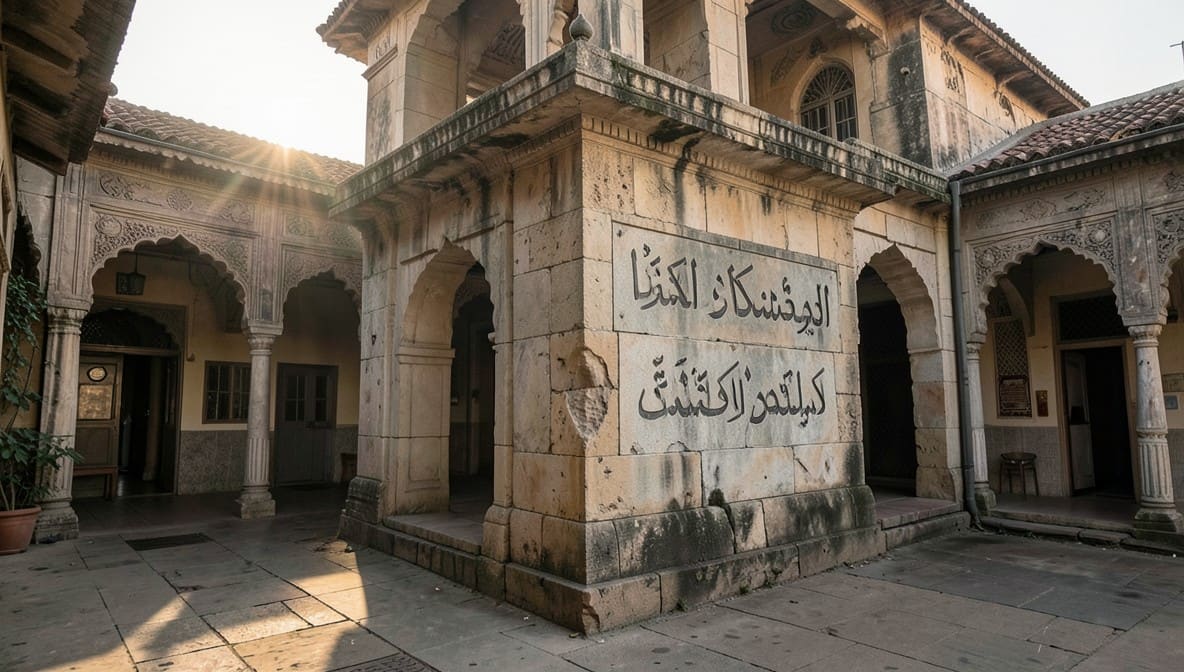
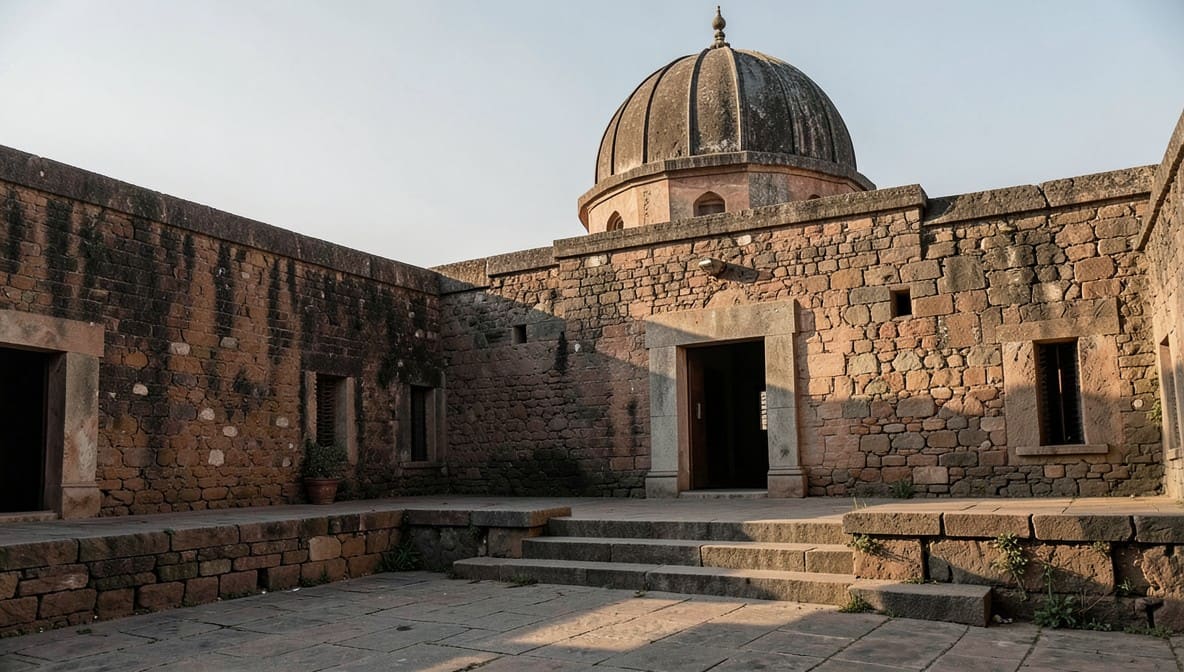
The dispute centres on a 95 grounds and 1,748 sq. ft. property in Survey No. 2024, Arundale Street, Mylapore, Chennai, claimed by two branches of the Fakhri Family as descendants of Shah Abdul Quadir, and contested by the Tamil Nadu Wakf Board, the Masjid Committee, and rival title claimants. The property includes a mosque, a private burial ground, a residential house, and vacant land. The core legal question is whether the entire property constitutes a single Wakf-Alal-Aulad (a charitable endowment for both religious purposes and family maintenance) or whether it can be lawfully apportioned into public and private portions.
Key Facts
- The property was granted by the Nawab of Carnatic to Shah Abdul Quadir, who established a mosque and burial ground on the land.
- On 20.05.1959, the Madras State Wakf Board issued a notification declaring the property a Wakf under the Wakf Act, 1954.
- In O.S. No. 1838 of 1960, the Fakhri Family challenged the notification. The City Civil Court, in its 1964 appellate decree (A.S. No. 21 of 1964), held that the entire property was dedicated as a Wakf-Alal-Aulad for two concurrent purposes: (i) maintenance of the mosque and burial ground, and (ii) maintenance of the male descendants of Shah Abdul Quadir.
- The Appellate Court rejected the family’s claim of private ownership, finding that the property had been dedicated by user, not merely used by the family.
- In 1968, the Estate Duty Assistant Controller apportioned the property’s income as 1/3 for family maintenance and 2/3 for charitable purposes.
- In 1991, the Fakhri Family challenged the Wakf Board’s attempt to assume direct control. The Madras High Court, in W.P. No. 6846 of 1991, held that the Wakf Board’s jurisdiction extended only to the portion dedicated for religious/charitable purposes and directed the Board to apportion the property accordingly.
- On 19.04.1998, the Wakf Board resolved to demarcate 30 grounds as a public wakf (for mosque upkeep) and release 60 grounds to the Fakhri Family for their enjoyment.
- On 31.03.2003 and 25.04.2003, an Agreement of Handing Over and Taking Over was executed, demarcating the property into four schedules: 30 grounds (public wakf), 60 grounds (family portion), 5 grounds (mosque), and 1,748 sq. ft. (private burial ground).
- On 28.04.2003, a revised proforma was published, and patta was issued in the names of the Fakhri Family for the 60 grounds.
- On 25.09.2003, the Wakf Board resolved to develop the 30 grounds into a Working Women’s Hostel for Muslim women, and a public notice inviting proposals was issued on 11.11.2003.
- On 27.08.2003, a Gazette notification confirmed the demarcation and transfer of possession.
- In 2004, the Masjid Committee challenged the demarcation before the Wakf Tribunal, which remanded the matter for fresh consideration.
- In 2013, the Madras High Court Division Bench dismissed challenges to the demarcation, holding that the matter had attained finality and third-party rights had been created.
- The Supreme Court dismissed Special Leave Petitions filed by the Wakf Board (2015) and Masjid Committee (2017).
- On 05.12.2019, S. Mohammed Ibrahim submitted a representation to the Wakf Board seeking reconsideration.
- On 19.04.2021, the Government of Tamil Nadu issued G.O. (Ms) No. 27, cancelling the 1998 and 2003 resolutions, declaring them ultra vires, and directing the property to revert to a single undivided Wakf-Alal-Aulad.
Procedural History
- 20.05.1959: Wakf notification issued by Madras State Wakf Board.
- 1960: O.S. No. 1838 filed by Fakhri Family challenging notification.
- 21.01.1966: Appellate Court decree in A.S. No. 21 of 1964 declaring property Wakf-Alal-Aulad for dual purposes.
- 1968: Estate Duty Assistant Controller apportions income 1/3:2/3.
- 1991: W.P. No. 6846 filed by Fakhri Family challenging Wakf Board’s assumption of control.
- 15.12.1995: Madras HC judgment in W.P. No. 6846 of 1991 directing apportionment.
- 19.04.1998: Wakf Board resolution demarcating 30 grounds as public wakf and 60 grounds for family.
- 31.03.2003 & 25.04.2003: Handing Over and Taking Over Agreement executed.
- 28.04.2003: Revised proforma published.
- 27.08.2003: Gazette notification confirming demarcation.
- 04.09.2003: Patta issued to Fakhri Family for 60 grounds.
- 25.09.2003: Wakf Board resolution to develop 30 grounds as Women’s Hostel.
- 11.11.2003: Public notice inviting development proposals.
- 15.03.2004: O.A. No. 3 of 2004 filed by Masjid Committee before Wakf Tribunal.
- 20.12.2007: Wakf Tribunal sets aside 1998 resolution for non-application of mind.
- 22.10.2008: Madras HC upholds Tribunal’s remand order.
- 20.12.2013: Division Bench dismisses appeals, upholds finality of demarcation.
- 08.07.2015: Supreme Court dismisses SLP (C) No. 10837 of 2015.
- 23.11.2017: Supreme Court dismisses SLPs filed by Masjid Committee.
- 19.04.2021: Government issues G.O. (Ms) No. 27 cancelling demarcation.
- 16.07.2021 & 21.08.2021: W.P.Nos. 16776 & 21288 filed challenging G.O.
- 26.02.2026: Reserved.
- 07.04.2026: Judgment pronounced.
The Parties' Positions
- Fakhri Family - I & II: Argued that the 1998 and 2003 demarcations were judicially sanctioned, implemented for over two decades, and protected by finality of judgments. The 60 grounds were not private property but a Wakf-Alal-Aulad portion for family maintenance.
- Wakf Board: Initially supported demarcation but later, under the Chief Executive Officer’s direction, argued the demarcation was ultra vires and sought its cancellation.
- Masjid Committee: Claimed the entire property should be a public wakf, and the 60 grounds should not be released to the family.
- Rival Title Claimants: Claimed absolute ownership based on a 1915 sale deed and a 2022 Civil Court decree, asserting the property was never a wakf.
- Government of Tamil Nadu: Supported cancellation of demarcation, arguing the Wakf Board lacked jurisdiction to partition the property.
- Subsequent Purchasers: Claimed rights over portions of the 60 grounds purchased from the Fakhri Family.
Relief Sought
The petitioners sought quashing of G.O. (Ms) No. 27 dated 19.04.2021, confirmation of the 1998 - 2003 demarcation, and directions to proceed with the development of the 30 grounds as a Women’s Hostel. The rival title claimants sought recognition of their title and cancellation of all wakf proceedings.
The Legal Issue
The central legal questions were: (1) Whether the 1998 - 2003 demarcation of the Wakf-Alal-Aulad property into 30 grounds (public wakf) and 60 grounds (family portion) attained finality and could be lawfully cancelled under Section 26 of the Wakf Act, 1995; (2) Whether the Government could override judicially settled apportionments after 25 years of implementation and third-party rights; and (3) Whether the rival title claimants’ civil court decree could override the wakf status established by judicial findings.
Arguments Presented
For the Appellant/Petitioner
The Fakhri Family, represented by Zaffarullah Khan and Hema Sampath, argued that the demarcation was not an executive act but the implementation of a final judicial decree from A.S. No. 21 of 1964 and W.P. No. 6846 of 1991. They cited M.S. Muhammad Yahya v. Tamil Nadu Wakf Board to establish that Wakf-Alal-Aulad permits dual dedication. They emphasized that the 1998 resolution was adopted with the family’s consent, implemented through physical demarcation, gazette notification, patta issuance, and development plans. They contended that Section 26 of the Wakf Act, 1995, permits reconsideration only if the resolution is unimplemented - but here, the property had been physically divided, patta issued, and development initiated. They relied on res judicata and the maxim bon judicis est lites dirimere to argue that reopening the matter after 25 years and multiple judicial affirmations was an abuse of process.
For the Respondent/State
The Government, represented by Advocate General P.S. Raman, argued that the Wakf Board had no jurisdiction to partition the property under Section 26, as the entire property was a single Wakf-Alal-Aulad under Islamic law. They contended that the 1/3:2/3 apportionment was merely an income allocation from Estate Duty proceedings, not a property division. They asserted that the Wakf Board’s resolutions were void ab initio because they violated the principle that once a wakf is created, it cannot be divided. They relied on Sayyed Ali v. A.P. Wakf Board and Chhedi Lal Misra v. Civil Judge to argue that wakf property vests in God and cannot be alienated. The Government claimed the Chief Executive Officer’s referral under Section 26 was lawful because the resolutions were never fully implemented.
The Court's Analysis
The Court undertook a meticulous review of the judicial history, statutory provisions, and Islamic legal principles. It began by affirming the finality of the 1964 Appellate Court decree, which established the property as a Wakf-Alal-Aulad for dual purposes - religious and familial. The Court held that the 1991 High Court judgment did not create a new wakf but directed the Wakf Board to apportion the property to reflect the dual dedication, thereby bringing the religious portion under its supervision.
"The Appellate Court’s decree did not declare the property as partly private. It declared it as Wakf-Alal-Aulad to the extent dedicated for the mosque, and the balance for the male descendants - a composite dedication under Islamic law."
The Court rejected the Government’s argument that the Wakf Board lacked jurisdiction to demarcate. It noted that the 1998 resolution was not an arbitrary act but a direct implementation of the 1991 judgment, which had itself been affirmed by the Division Bench in 2013 and the Supreme Court in 2015. The Court observed that the demarcation was not merely administrative but involved physical acts - boundary stones, gazette notifications, patta mutations, and agreements - all of which constituted implementation.
The Court further held that Section 26 of the Wakf Act, 1995, permits reconsideration only if a resolution is unimplemented. Here, the property had been physically demarcated, revenue records altered, and development plans initiated. The Court stated:
"The Wakf Board’s resolution of 1998 was not merely a paper exercise. It was implemented on the ground, in the revenue records, and in the public domain. To cancel it after 25 years, after third-party rights were created, and after the Supreme Court had affirmed the finality of the arrangement, is to subvert the rule of law."
The Court also dismissed the rival title claimants’ claim based on the 2022 Civil Court decree. It held that the decree was between private parties and did not involve the Wakf Board as a proper party. The Court noted that the Wakf Board had been impleaded suo motu but did not file a written statement, and the decree was not binding on non-parties. It cited Satyender v. Saroj to hold that a counterclaim cannot bind a third party like the Wakf Board.
The Court upheld the 30-ground public wakf as valid and necessary for the mosque’s upkeep. It emphasized that the 60-ground portion remained a Wakf-Alal-Aulad, not private property, and that the Fakhri Family held it as beneficiaries, not owners. The Court noted that the Wakf (Amendment) Act, 2025, which prohibits discrimination against female heirs, was not stayed in its entirety, raising potential future issues - but these were not before the Court.
The Verdict
The petitioners succeeded in part. The Court quashed G.O. (Ms) No. 27 dated 19.04.2021. The demarcation of 30 grounds as a public wakf and 60 grounds for the Fakhri Family’s enjoyment, as per Annexure-III, was upheld. The Wakf Board was directed to develop the 30 grounds into a Women’s Hostel. The Board must prepare a cost estimate within 6 months, secure funding through its own resources, government grants, or public donations, select a contractor within 60 days of securing funds, commence construction within one year, and complete it within two years from the date of this order. Costs of Rs. 10,000 each were imposed on both petitioners for submitting incorrect copies of the 1964 judgment. The rights of the rival title claimants to pursue their civil claims were kept open. The Fakhri Family members, including female heirs, may approach the Wakf Tribunal to determine the nature of the 60-ground portion.
What This Means For Similar Cases
Finality of Judicially Implemented Wakf Demarcations Is Absolute
- Practitioners must treat any wakf demarcation that has been judicially directed, physically implemented, and affirmed by higher courts as final and immune from executive cancellation.
- Section 26 of the Wakf Act, 1995, cannot be invoked to undo a resolution that has been implemented through physical, legal, and administrative acts.
- Delay of over 20 years in challenging a demarcation, after multiple judicial affirmations, constitutes an abuse of process.
Wakf-Alal-Aulad Permits Dual Purpose Without Violating Islamic Law
- A Wakf-Alal-Aulad can validly serve both religious and familial purposes simultaneously.
- Income apportionment (e.g., 1/3:2/3) from Estate Duty proceedings can inform, but not override, judicial findings on property apportionment.
- The 2025 Amendment’s emphasis on female heirs does not invalidate existing Wakf-Alal-Aulad structures but may trigger future challenges - requiring proactive inclusion of female heirs in succession planning.
Third-Party Rights Created After Wakf Demarcation Are Protected
- Any sale, lease, or development based on a judicially sanctioned wakf demarcation creates enforceable third-party rights.
- Courts will not permit retrospective invalidation of such rights, even if the underlying wakf status is contested.
- Revenue records, patta mutations, and development approvals constitute conclusive evidence of implementation.